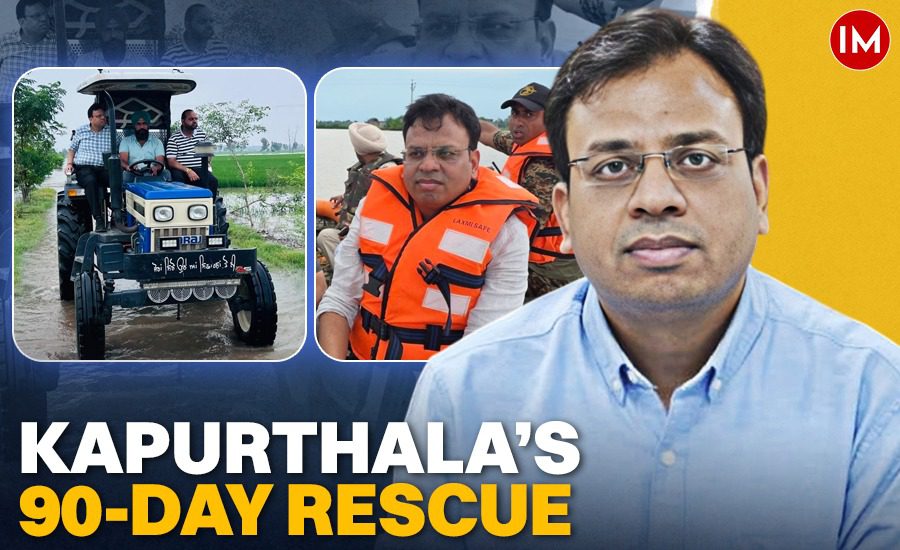
In early August, the first breach of a temporary embankment in Sultanpur Lodhi signalled trouble. Within hours, rising waters from the River Beas began swallowing fields, homes, and roads. What followed was not just a flood; it was an extended emergency that would test District Kapurthala like never before.
At the helm stood IAS Amit Panchal (2016 batch, Punjab cadre), Deputy Commissioner of Kapurthala, navigating a crisis that would stretch for nearly three months, possibly one of the longest continuous flood management operations in Punjab.
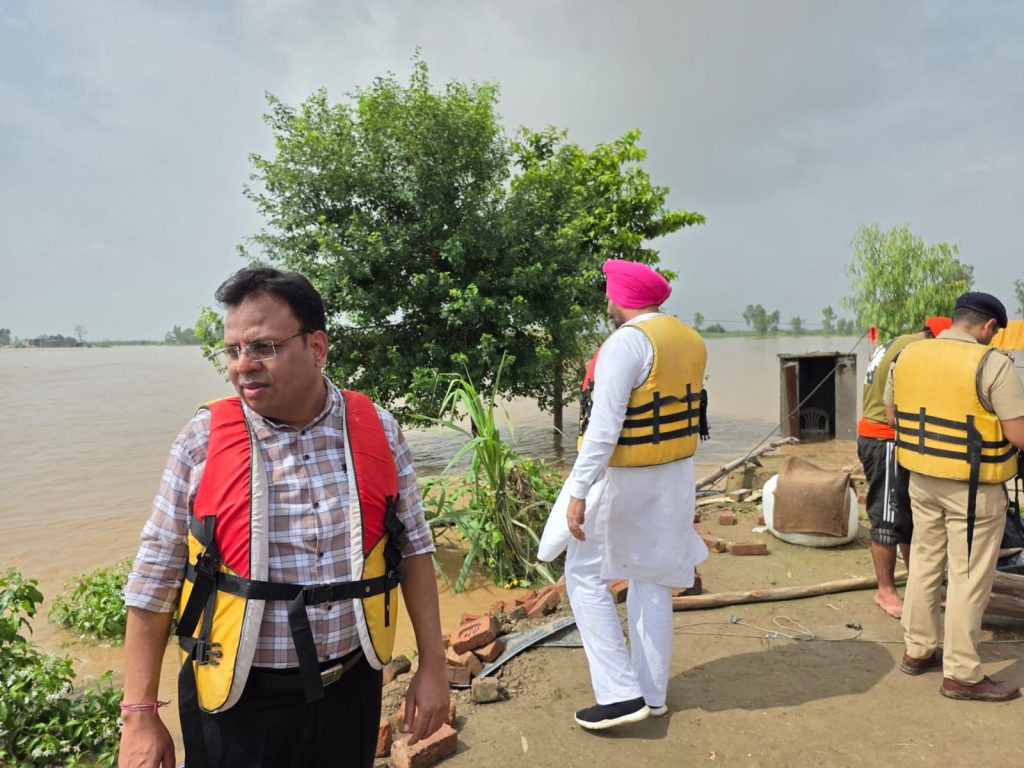
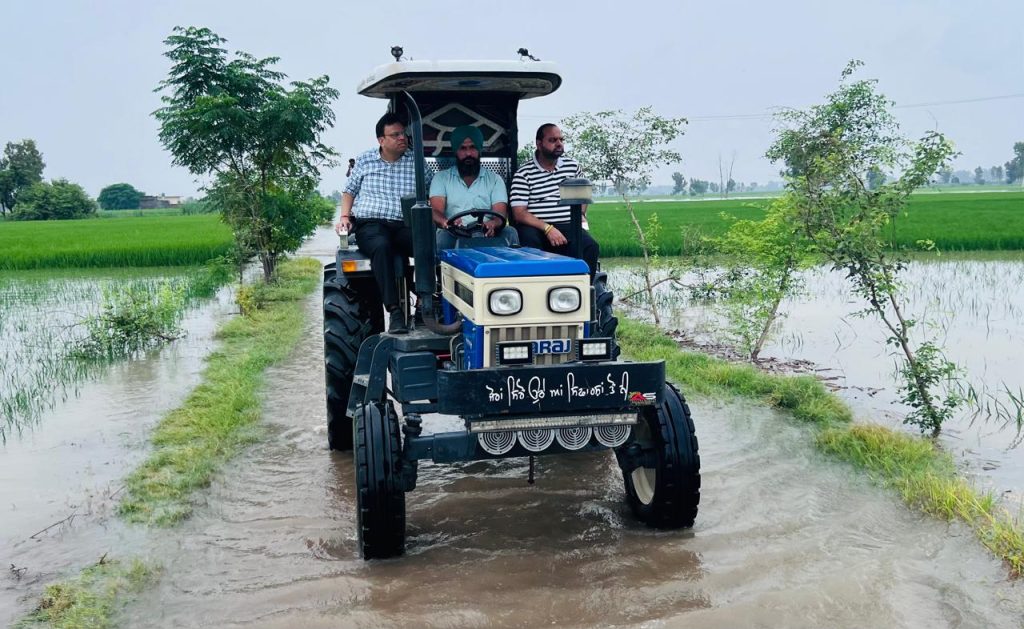
The district’s geography made matters worse. Kapurthala, with its three sub-divisions, Kapurthala, Sultanpur Lodhi, and Bhulath, lies along the Beas. The fourth sub-division, Phagwara, is geographically separate, located beyond Jalandhar. When the river surged, vast mand areas were submerged under 10 to 15 feet of water.
“Water levels at one point reached up to fifteen feet. The biggest challenge was access: reaching people trapped in completely inundated villages,” Panchal shared in an exclusive conversation with Indian Masterminds.
Read More : A Police-Led Education Movement: The Story of Disha Initiative in Bhandara
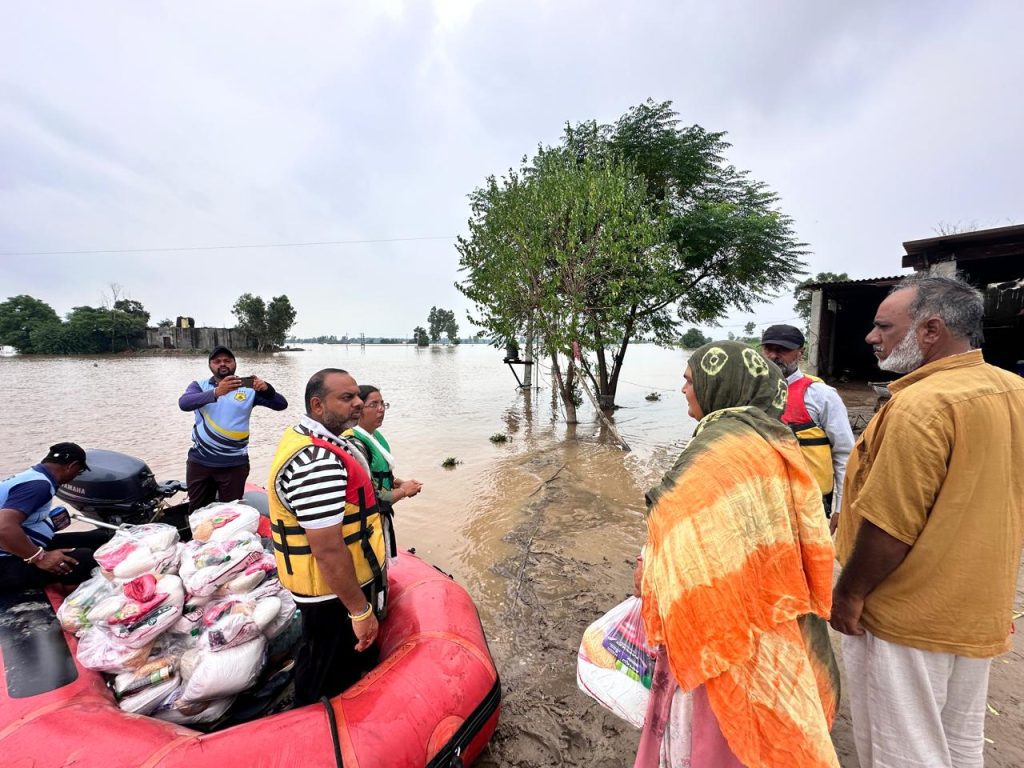
A DISTRICT FIRST HIT, AND LAST TO RECOVER
Kapurthala was among the first districts in Punjab to be hit when floodwaters entered. Ironically, it was also among the last where waters receded.
“Our topography makes certain areas like Balapur and Mayapur particularly vulnerable,” Panchal explains. “We were hit early, and we remained submerged the longest.”
For nearly twelve weeks, large stretches remained underwater. Crops were destroyed. Homes were cut off. Roads disappeared. Entire habitations turned into islands.
But amid this scale of devastation, one fact stands out: not a single human life was lost.
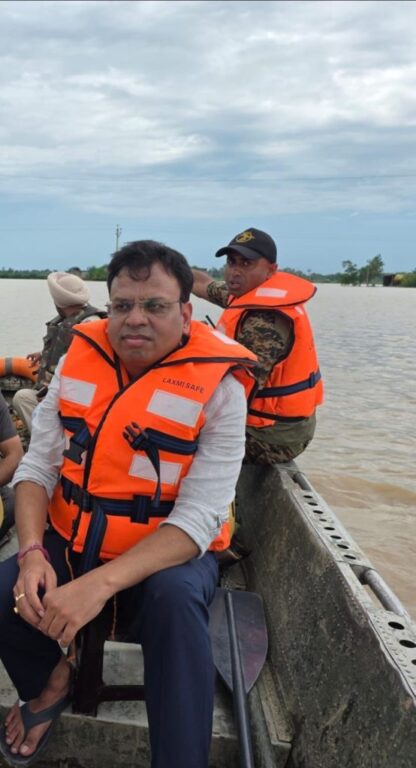
THE RELENTLESS 3-MONTH OPERATION
From the moment the breach was reported, the district administration swung into action.
Control rooms were activated. Rapid Action Teams were formed. Medical teams were placed on standby. Supply chains were reorganised. The State Disaster Response Force (SDRF) joined hands with local officials.
Everything ran on coordination.
“As a team, we managed the situation despite extreme hardship,” Panchal says. “The entire area was submerged for around three months. But we ensured food, medicines, and essential commodities reached everyone.”
Motorboats became lifelines. Daily rescue operations were conducted. Supply routes were maintained through water corridors. Special attention was given to women, children, and senior citizens. Dedicated rescue centres were established to provide shelter and support.
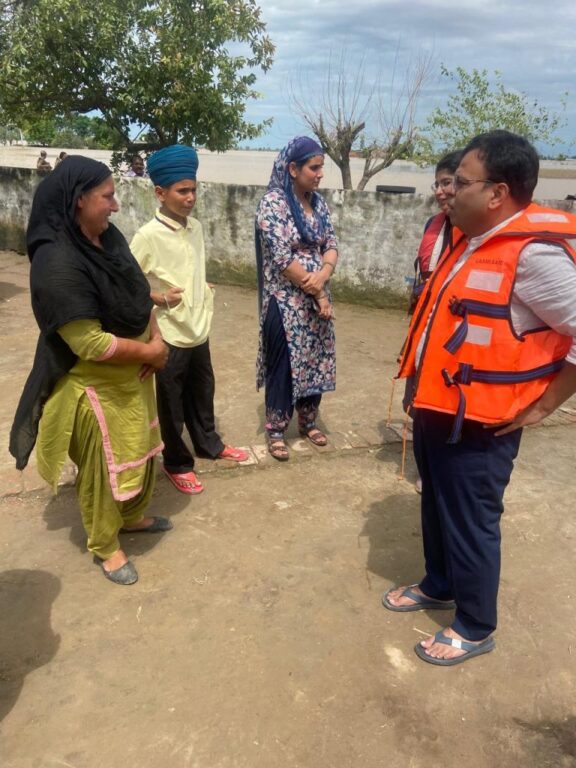
One of the toughest challenges? Convincing people to leave their homes.
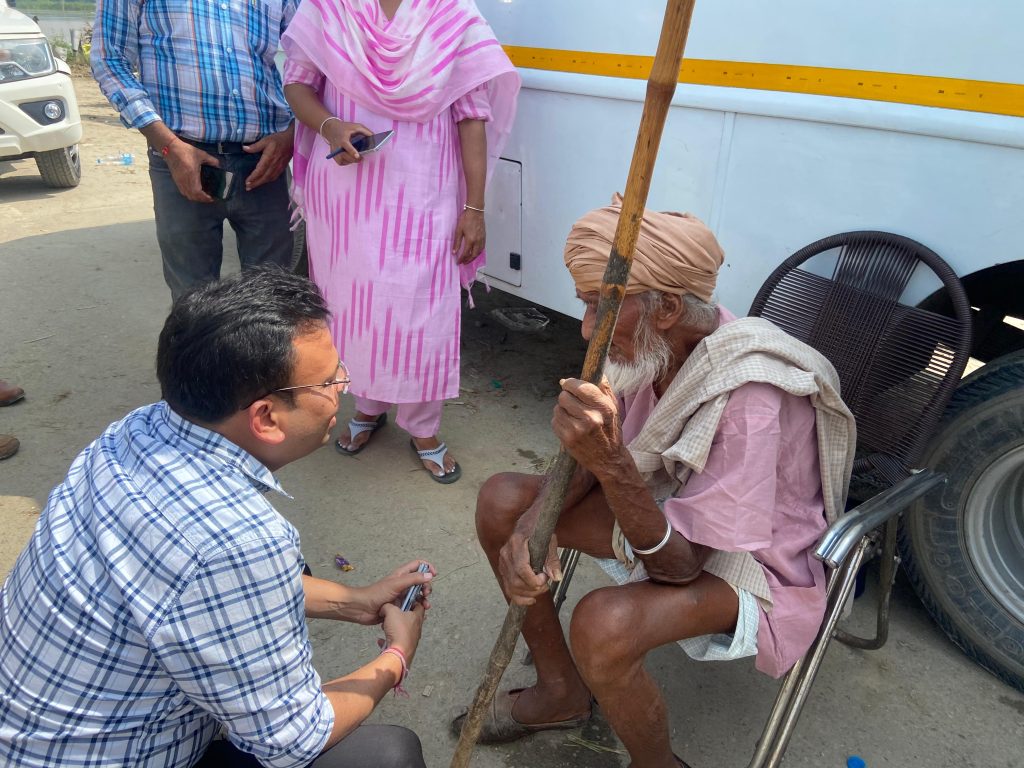
“Despite repeated requests and warnings, many residents, especially elderly men, refused to evacuate,” Panchal shares. “Our responsibility was to ensure nothing untoward happened to them and that they received basic facilities.”
In many cases, instead of forced evacuation, the administration ensured delivery of essentials directly to inundated homes.
THE 100-YEAR-OLD MAN AND A MOMENT THAT STAYED
In the middle of daily operations, one call stood out. A message reached the control room: a 100-plus-year-old man was critically ill and stranded in a flooded village.
“Immediately, the entire team rushed. Our medical team was kept on hold, and even a doctor boarded the motorboat in case immediate post-rescue care was required,” he told Indian Masterminds.
Through deep waters, the rescue team navigated toward the submerged house. The elderly man was safely brought out and given medical attention on the spot.
“After rescuing him, we lifted him into the boat. It was emotional,” Panchal shared. In a disaster of such scale, moments like these became reminders of why the mission mattered.
MANAGING THE UNMANAGEABLE
The flood didn’t just threaten lives; it crippled livelihoods. Standing crops were destroyed. Animal lives were at risk. Villages were cut off.
Yet, throughout the crisis, supply lines for food and medicines were maintained. Medical emergencies were responded to without delay. Rescue operations continued daily, rain or shine.
“It was challenging because of the depth of water and the access routes,” Panchal explains. “The entire mand area was submerged. But with the help of SDRF and coordinated planning, we managed.”
The operation continued until mid-November, when the floodwaters finally receded.
WHAT STANDS OUT
When asked what he considers the highlight of the entire exercise, Panchal doesn’t hesitate.
“The best part is that there was no loss of human life,” he says. “Despite such prolonged submergence and so many hardships, that remains the most important outcome.”
In disaster management, numbers often define success: number of rescues, number of camps, and number of supplies delivered. But in Kapurthala’s case, the most powerful number was zero.
Zero casualties. In a district where water rose up to fifteen feet. In villages submerged for months. In one of Punjab’s longest flood responses.
AFTER THE WATERS
With the water finally receding by mid-November, the focus shifted to restoration and rehabilitation, such as rebuilding homes, restoring livelihoods, and supporting affected families. But the memory of those three months remains etched in Kapurthala’s collective consciousness.
It was a period when geography turned hostile, when roads disappeared, when boats replaced ambulances, and when an administrative team worked around the clock to ensure that every life counted.
And at the centre of it stood DC Amit Panchal, not as an individual hero, but as the anchor of a coordinated district-wide effort that refused to let a natural disaster claim a single life.