By Vijay Kumar Dutt IRSEE, Ex Additional Member, Railway Board
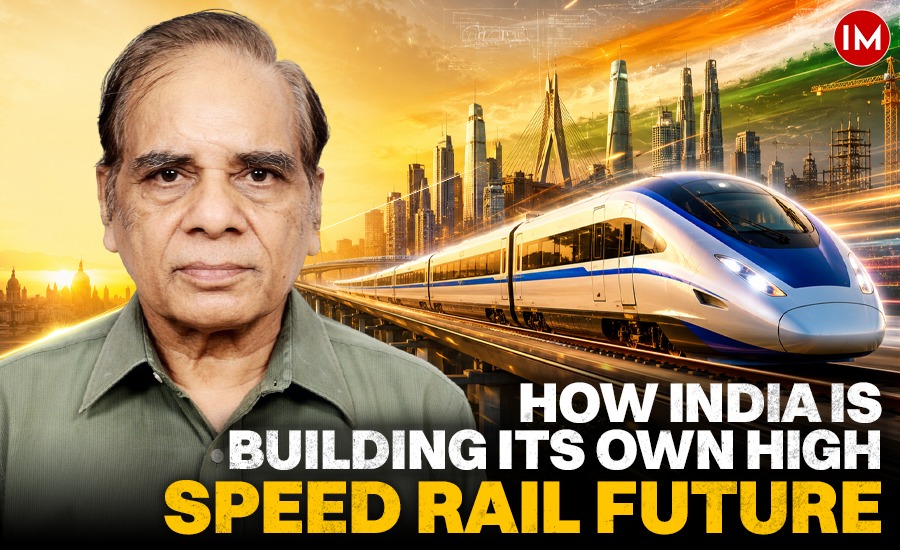
Japan is providing its next-generation E10 series Shinkansen trains to India for the Mumbai-Ahmedabad High-Speed Rail (MAHSR) project,
This train system is still under development and may be available in the early 2030s. Meanwhile, the construction work on MAHSR project is progressing as per schedule. First section is slated to be opened in 2027.
In a social media post a former Japanese Minister Hideki Makihara San regarding the project, has reportedly blamed MAHSR project officials for the timeline delays. Also concerns were raised on choice of CBTC type signalling system over track circuit based signalling system used in Shinkansen trains.
Japan has been playing a key role in the implementation of the mega project in terms of financing it as well as sharing technology and engineering expertise, which is a joint development being undertaken by High Speed Rail Authority of India.
Since the static Infrastructure of the project like Track, Bridges and Over Head Electrical Equipment (OHE) is almost complete to start the operations with an Indian high-speed train, which is slated to run at an operational speed of 280 kmph is a very logical decision. The Surat-Bilimora section in Gujarat is one such continuous section (About 80 Kilometres, 16% of the total project Rail Route length) and may be ready for operations by August 2027. This will also ensure start of returns from the project.
The train being developed indigenously by BEML Limited and the Integral Coach Factory who are the two organisations devoted to production of train sets for many years.
The work of installation of signalling systems along the bullet train corridor stretch is being executed by Ms. Siemens who are a world leader organisation in this technology, with a view to begin the operations by 2027. In this context it may be noted that CBTC system is supposed to be more reliable and is being proven in Indian Conditions in Metro Railway applications. Since this technology is now available with requirements of RAMS (Reliability, Availability, Maintainability and Safety) for this complex project the decision of Indian Engineers is based on sound technical considerations. Even Japanese organisations are using European CBTC Technology for similar projects being executed by them in Europe and elsewhere.
The CBTC signalling is a part of the European Train Control System (ETCS), which is a modern, radio-based digital signalling architecture. The radio-based ETCS system represents a significant upgrade over traditional coaxial copper cable systems, which suffer from signal distortion and are highly vulnerable to localised copper cable thefts.
This interim phase will also allow Indian Railways to develop operational familiarity and establish system confidence before transitioning to the 320 kmph Japanese E10 sets in 2030.
The success of indigenous Vande Bharat Trains which are based on similar Train Set Technology and Tested up to 180 KMPH speed during trails and has given very reliable operation since introduction in 2019 for the last seven years has provided confidence that Indian High Speed system will be successful. This will also demonstrate our capability for executing High Speed Railway Projects at much lower costs.
Background of the Project:
India and Japan had signed a memorandum of understanding (MoU) on 12th December, 2015 on cooperation and assistance in the Mumbai–Ahmedabad High Speed Rail (HSR) Project also referred to as ‘Bullet Train Project’. Japan had offered an assistance of over Rs. 79,000 crore for the project. The loan is for a period of 50 years with a moratorium of 15 years, at an interest rate of 0.1 per cent. The project is a 508-kilometre Railway line costing a total of Rs. 97,636 crore (initially), to be implemented in a period of seven years. It was decided that for the Mumbai – Ahmedabad HSR Project Japan’s Shinkansen Technology, known for its speed, reliability and safety, will be adopted. Transfer of technology and “Make in India” are be essential part of this assistance package. Japan also agreed to assist India in training of personnel for HSR. The two countries also entered into two comprehensive technological cooperation agreements on 11th December, 2015, for modernization and up gradation of Indian railways.
These agreements were signed during the official visit to India of His Excellency Mr. Shinzo Abe, the then Prime Minister of Japan, during December 11-13, 2015. Speaking on the occasion, Prime Minister Hon. Shri Mr Narendra Modi ji said that the decision to introduce High Speed Rail on the Mumbai-Ahmedabad sector through the Japan’s Shinkansen is no less historic.
He said “We greatly appreciate Prime Minister Abe’s extraordinary package of approximately 12 billion U.S. dollars and technical assistance, on very easy terms, for this project. This enterprise will launch a revolution in Indian railways and speed up India’s journey into the future. It will become an engine of economic transformation in India.”
With this significant development, the stage was all set for acceleration of commissioning of Indian High Speed Rail Project which had been in various stages of planning for the last one decade.
Future Outlook:
The current focus is on indigenisation. Orders have been placed on Indian Companies like BEML and Integral Coach Factory for Indigenous production of Rolling stock. Indian Companies have started production of Key components of Track in India under transfer of Technology from Japan.
Progress on Hyper loop technology: The Govt. of India has directed IIT Madras and IIT BHU for work on indigenous Hyperloop system. Start ups like Avishkar Hyperloop have produced prototype models. IIT Madras has achieved patent for Tunnel design. Govt. has announced target of first commercial hyper loop service in India by 2047 in line with target of Achieving Viksit Bharat Status.
Conclusion: In the fields of High Speed Trains India has achieved significant progress in all fields including attaining self sufficiency in Design, Manufacture Commissioning and operations of Bullet trains.
(The author was in Indian Railway Service of Electrical Engineers (IRSEE). He had been Additional Member (Electrical) Railway Board.)