Narendra Modi who had led the BJP to victory in 2014 May, was ensconced in Gujarat Bhawan, trying to figure out his prospective cabinet, when a former IAS officer called on him. Modi smiled to him and said, “You will hear soon from me”. Little had that officer, Nripendra Mishra, realised at that time that he was soon going to be the Principal Secretary to Prime Minister of India, supposed to be one of the most powerful positions in the country’s bureaucracy.
Most of the major projects conceived by PM Modi in his first term, were realised on the ground by Mishra and his men. The 1967-batch IAS officer of Uttar Pradesh Cadre has so far spent 58 grand years in public service, remaining as hardworking, agile and sagacious as ever. It was in fitness of things that he was honoured with Padma Bhushan, third highest civilian award in 2021 for his services to the nation.
Mishra demitted the office in 2019 but not the limelight. He was appointed Chairman of the trust formed on orders of the Supreme Court to oversee construction of Ram Janmabhoomi temple in Ayodhya, a project very close to Mr Modi’s heart. Not only that he was also entrusted with another responsibility – Chairman of Prime Ministers’ Museum in New Delhi. That shows his importance in PM Modi’s scheme of things.
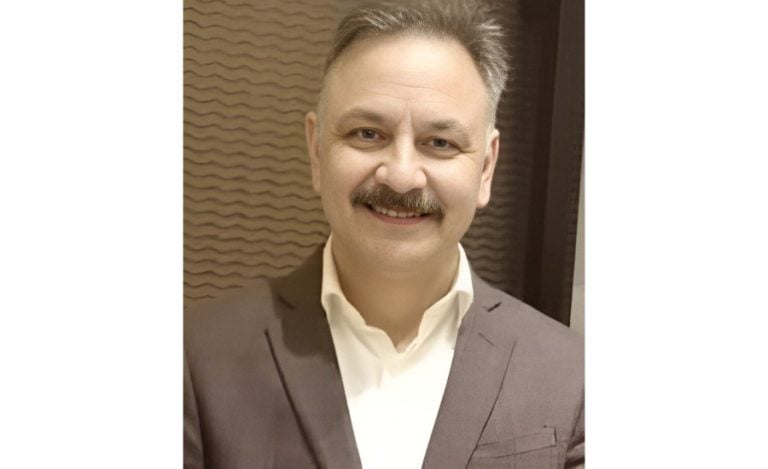
Nripendra Mishra, has etched his name into the annals of Indian governance and cultural heritage. His career, reflects a rare blend of administrative acumen, visionary leadership, and unwavering commitment to public service. From steering transformative policies in the Prime Minister’s Office (PMO) to overseeing the historic construction of the Ram Temple in Ayodhya, Mishra’s journey is a testament to the profound impact a bureaucrat can have on a nation’s destiny.

ARCHITECT OF MODI’S VISION
In 2014, Prime Minister Narendra Modi handpicked Mishra as his Principal Secretary, a role he held until 2019. Often dubbed the “nerve center” of the PMO, this position placed Mishra at the heart of India’s policy-making engine. His mandate was to translate Modi’s vision into actionable governance.
Mishra’s tenure was marked by meticulous execution. He played a pivotal role in flagship initiatives like Digital India, which catapulted India into a digital superpower, and Swachh Bharat, a sanitation revolution that built over 110 million toilets. His ability to bridge the PMO with ministries ensured seamless coordination, a hallmark of Modi’s governance.
One of his most significant contributions was steering the Goods and Services Tax (GST) implementation. Navigating federal complexities, Mishra’s quiet diplomacy harmonized state and central interests, ushering in India’s most ambitious tax reform. Colleagues recall his 24/7 availability and attention to detail. “He was the quiet force behind the scenes,” noted a former cabinet minister, “ensuring the PM’s vision became reality.”
A CULTURAL MILESTONE
In 2020, Mishra embarked on a new chapter as Chairman of the Shri Ram Janmabhoomi Teerth Kshetra Trust, tasked with constructing the Ram Temple in Ayodhya – a project of immense cultural and religious significance. His appointment reflected Modi’s trust in his ability to handle sensitive, high-stakes assignments.
Mishra’s leadership ensured the temple’s construction was both swift and symbolic. He navigated legal, logistical, and communal challenges with finesse, ensuring the project remained a unifying force. He not only planned and supervised the temple construction to the last detail, hiring the best of talents available, he has also taken care to adhere to the preserve its cultural heritage.
In 2025, the temple stands completed, a testament to his project management skills and cultural sensitivity. “This is not just a temple; it’s a symbol of India’s civilizational ethos,” Mishra remarked at the inauguration.
A PRIVATE MAN OF PUBLIC SERVICE
Despite his public profile, Mishra remains intensely private. A voracious reader, he is known for his love of history and economics. His Harvard days left him with a penchant for jazz, a rare hobby among Indian bureaucrats. Awarded the Padma Bhushan in 2021, Mishra’s humility shines through. “Awards are for institutions, not individuals,” he once quipped, underscoring his belief in collective progress.

A BUREAUCRAT FOR THE AGES
Nripendra Mishra’s legacy is multifaceted. As a bureaucrat, he exemplified the ideal of a neutral, efficient civil servant, navigating political currents without compromising integrity. His work in the PMO accelerated India’s development trajectory, while his stewardship of the Ram Temple project cemented his place in cultural history.
In an era of rapid change, Mishra’s career offers timeless lessons: the power of quiet leadership, the importance of global perspectives, and the enduring impact of public service. As India strides toward its centenary of independence, Nripendra Mishra’s contributions will be remembered as foundational to its governance and cultural renaissance.
FOUNDATIONS OF EXCELLENCE
Born on March 8, 1945, in Uttar Pradesh, Nripendra Mishra grew up in an era of post-independence optimism. His father, a respected educator, instilled in him values of integrity and service. Mishra’s academic brilliance shone early; he graduated with a degree in Mathematics from Allahabad University, a cradle of intellectual giants. His thirst for knowledge took him to the Harvard Kennedy School, where he earned a Master’s in Public Administration (MPA). This global exposure, rare for Indian bureaucrats of his time, equipped him with a unique perspective on governance and policy-making.
A JOURNEY BEGINS IN BUREAUCRACY
In 1967, Mishra cleared the Civil Services Examination, joining the IAS in the Uttar Pradesh cadre. His early postings were a baptism by fire. As a young District Magistrate in Faizabad, he tackled communal tensions with tact, earning a reputation for fairness and resolve. Later, as Secretary to the Chief Minister of Uttar Pradesh, he honed his skills in navigating political complexities—a trait that would prove invaluable in his future roles.
In fact, he one of those rare bureaucrats who had the honour to serve as Principal Secretary to Chief Minister to two Chief Ministers that too of absolutely opposite ideologies – Mulayam Singh Yadav and Kalyan Singh. That shows that integrity efficiency are the hallmarks of a true bureaucrat.
SHAPING POLICY AND PROGRESS
Mishra’s career is studded with high-impact assignments. As Secretary, Ministry of Fertilisers (2002–2004), he spearheaded reforms to modernize India’s agricultural input sector, ensuring timely fertilizer availability – a critical step toward food security. His tenure as Chairman of the Telecom Regulatory Authority of India (TRAI) (2006–2009) was transformative; he championed policies that democratized telecom access, laying the groundwork for India’s mobile revolution.
In 2011, Mishra’s appointment as Executive Director at the International Monetary Fund (IMF) showcased his global stature. Representing India, he influenced policies on economic stability and growth, advocating for emerging economies. These experiences enriched his understanding of governance, which he later applied to India’s development agenda.
Mr Mishra has not only served the country’s bureaucracy but also worked to improve its economy, infrastructure and overall development besides of course launching a cultural renaissance.