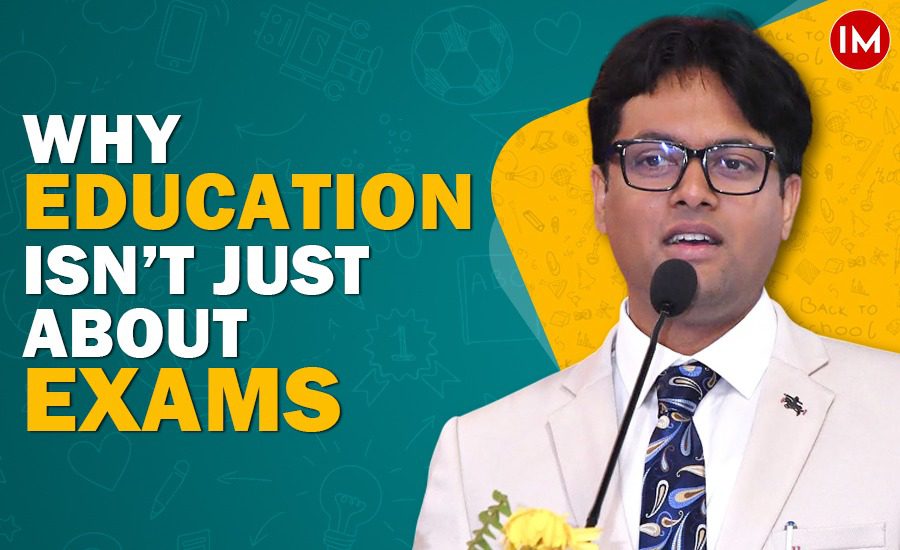
An opinion piece by Raghav Gupta, IRS
An age-old question has always intrigued me: what sculpts the sum total of an individual’s personality—nature or nurture? Is it the former, the internal, the genes, the hereditary information that a person is born with, the natural tendencies? Or is it the latter—the environment, the upbringing, the social fabric that a person grows up in and interacts with?
Yet asking “nature or nurture?” is falling for a self-made trap, since it gives the impression that it is an “either-or” situation. Upon closer introspection, one realises that while nature embodies the traits one is born with and is hence static, nurture is a more dynamic variable—continuously changing and thus impacting the overall evolution of an individual’s behaviour and outlook. In my experience so far, the simplest answer to this question is: both.
And among the most powerful nurturing environments one passes through in life is school. It is a complex institution that contributes in so many subtle yet critical ways, and plays a formative role that is often appreciated only in hindsight. For instance, me wearing a tie to school and coming back home with it still reasonably intact was something I never imagined would stay with me. But even today, I wear a tie to the office every single day. A habit formed then, internalised unconsciously, and lived out now. I’m sure everyone has such small stories that shaped big behaviours.
Looking back at the 12 years I spent at my school, I find it impossible to list all the ways in which those years shaped me. The vocabulary we have often fails to capture the deluge of memories and gratitude I carry for my school.
I vividly remember the thrill of unboxing new books before the academic session began, the smell of fresh ink and untouched pages, and the long registers and notebooks. That same enthusiasm carried into my adult life—treasuring magazines, journals and books while preparing for the UPSC Civil Services Examination. That connection between childhood rituals and adult discipline proved crucial.
As a civil servant, I’ve often been asked about the journey to cracking UPSC. I always say this: the best strategy is to study the way we did in school—with rigour, routine and regularity, sustained over time. A proper schedule that includes extracurriculars and hobbies keeps the mind fresh and focused. That is exactly what worked for me. The structure and spirit of my school life became the blueprint for my UPSC preparation and eventual success.
But maintaining hobbies beyond school is not always easy. Balancing work and life often comes down to prioritisation. When hobbies become a regular part of your schedule, they don’t feel like an indulgence—they feel essential. They are your emotional anchors during stressful times, offering peace and recharging your soul.
For me, hobbies like astronomy, music, wildlife, poetry writing and quizzing—all picked up at school—helped me discover myself, my strengths and my limitations. Like stained glass, these interests add colour to my life. They keep me young, grounded, and forever curious.
Today, one part of my life sees me shuffling papers, conducting meetings, or typing intensely on my laptop, while the other takes me into the lap of nature—trekking through forests, lying low in swamps, or capturing birds through the lens as a wildlife conservationist and educationist.
Let me take you through a glimpse of my wildlife journey. Lying for hours in shallow waters at Nalsarovar (Gujarat), braving the cold at Gurudongmar (Sikkim) searching for the Tibetan Sand Fox, trudging through the Banni grasslands in search of the wild ass, documenting the bristled grassbird in Kanpur, and watching baby Olive Ridley turtles dash to the sea at Rushikulya (Odisha)—each of these moments made me discover a deeper version of “Incredible India.” The biodiversity of this country is as staggering as its cultural diversity. And even after wandering through its wilderness for years, I remain in awe of how much more there is to explore.
Living these dual lives for over a decade—civil servant and wildlifer—has shown me how they complement each other. The bureaucrat in me helps document and advocate for conservation; the wildlifer in me sharpens my ability to notice details, remain patient, and always see the bigger picture.
But if there’s one thing I feel we are gradually losing in education today, it is ethics and values. As a civil servant accountable to the public, I’ve learned that integrity and conduct are non-negotiable. Civic sense, gender sensitivity, empathy, respect, environmental consciousness—these must be central to education, not just add-ons.
A child spends nearly half their childhood at school. Schools are not just institutions—they are second homes, and educators are moral anchors. I recall with great fondness my Class I teacher, Aloma Das Ma’am, who cheered up a homesick boy by impersonating Michael Jackson during lunch breaks. Her empathy stayed with me. When I visited her classroom 12 years later, grown-up and confident, I still looked for that shy little boy who had once needed so much nurturing—and found him smiling in memory.
I remain connected with over 50 of my teachers on social media, who continue to encourage my journey with their kind words. What stronger support system could one ask for?
Today, the role of educators is expanding. They are not just instructors but mentors, counsellors, and value-givers. With the explosion of information, students need guides more than ever—especially those who can help them integrate values, hobbies, and emotional intelligence into their lives. That’s where reskilling and upskilling of educators becomes crucial.
At the same time, we must resist artificially siloing academic disciplines. Real-life problems don’t come labelled by subject. Interdisciplinary learning must begin early—encouraging students to link concepts from across domains.
And in this era of AI and startups, let us not forget the value of human intelligence, empathy, and compassion. As we race towards innovation, we must carry forward the timeless values of sincerity, integrity, and kindness.
I thank my school, my teachers, and the values they nurtured in me—for they made me who I am. And I truly believe that if we commit ourselves to nurturing future generations with the same sincerity, the pride and satisfaction we derive from that work will be unmatched.
About the Author
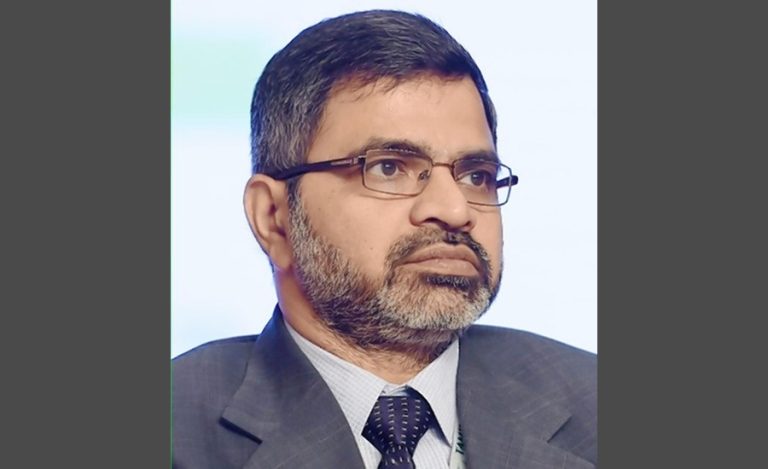
Mr Raghav Gupta is an Indian Revenue Service (IRS) officer of 2012 batch who has served in various capacities in the Income-tax Department such as investigation, assessment and administration. He is currently on deputation to Ministry of Home Affairs and is the only Indian officer on the expert panel of instructors in the OECD Academy for Tax and Financial Crime Investigation. He completed his graduation in science from St. Stephen’s College, University of Delhi and post-graduation in taxation and business laws from NALSAR, Hyderabad. He is the first IRS officer to have completed the Advanced Professional Certificate in International Taxation (APCIT), IBFD, Amsterdam.
A passionate wildlife conservation photographer, he was awarded a certificate of excellence in wildlife conservation photography by Union Finance Minister and has won acclaim at international and national forums, including Natural History Museum (NHM), U.K., Zoological Survey of India (ZSI), Mangrove Foundation, Saevus, Sanctuary Asia. His photographs have been published by India Post, The Hindu and other prestigious platforms. Mr. Gupta has conducted sessions across India at LBSNAA, IITs, IIMs, BNHS, Wildlife Institute of India (WII), Centre for Environment Education (CEE) and Turtle Survival Alliance (TSA) for over 3,000 youth.
Besides, his poems published in Sahitya Akademi’s bimonthly journal Indian Literature. He has keen interest in astronomy, Egyptology and teaching.