New Delhi: In a historic moment for Indian governance, the Union Public Service Commission (UPSC) stepped into its 100th year of existence today. Founded in 1926 under British officer Sir Ross Barker, the UPSC has transformed into India’s most respected constitutional body for recruiting civil servants who form the backbone of the country’s administrative framework.
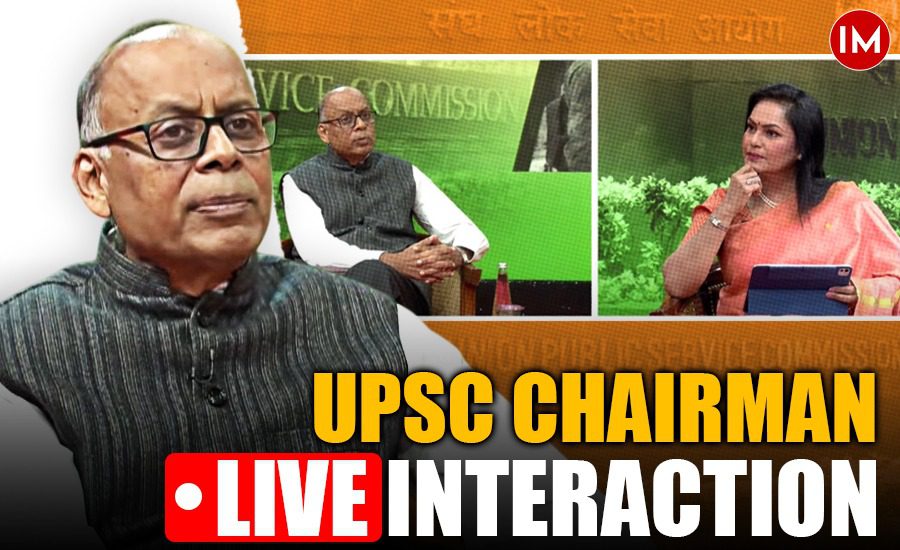
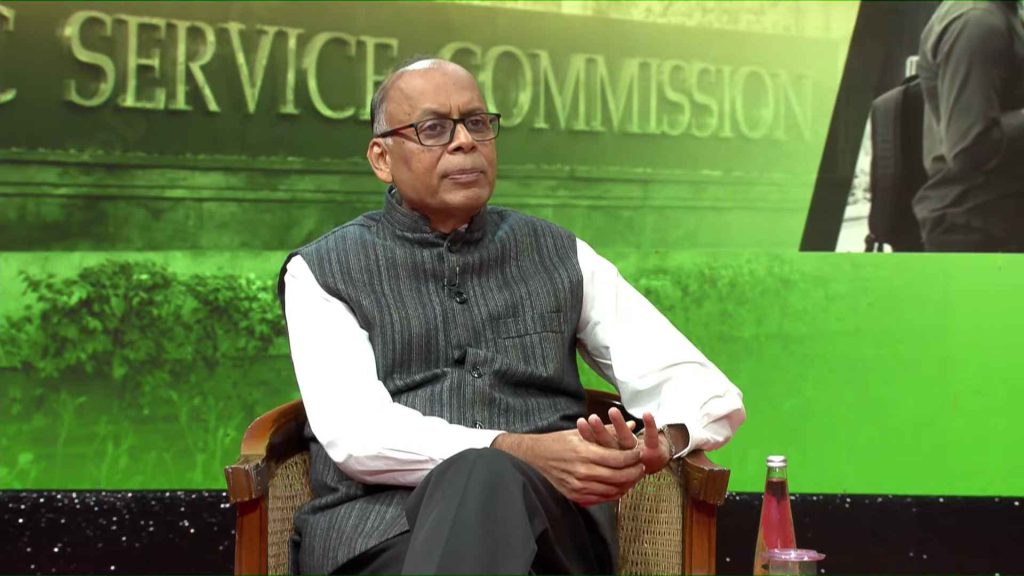
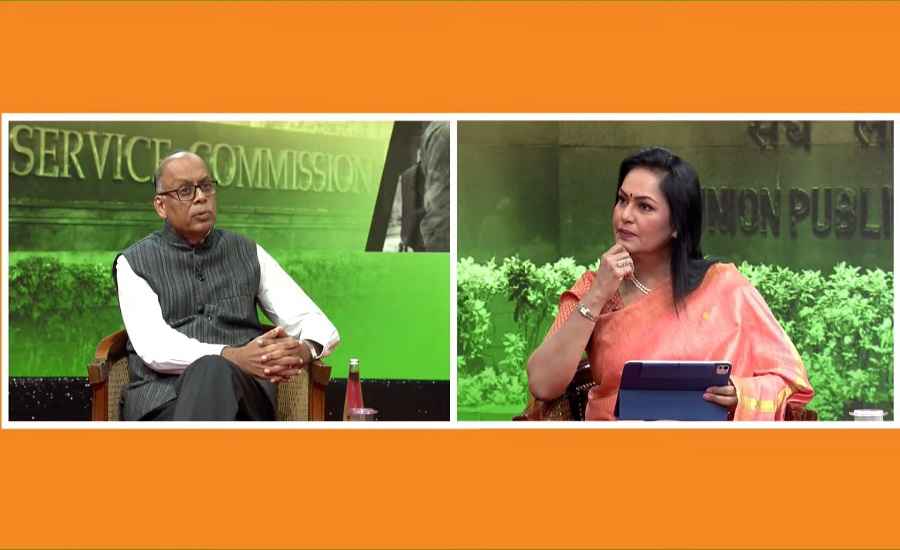
Marking the occasion, UPSC organized its first-ever Virtual Town Hall, a live interactive session chaired by Ajay Kumar, a 1985-batch IAS officer and the current UPSC Chairman.
The session, streamed live from 12 PM to 1 PM on DD News’ YouTube channel, attracted thousands of UPSC aspirants from across the nation, who interacted using the hashtag #AskChairmanUPSC.
“UPSC is a Concept, Not Just an Exam” – Chairman Ajay Kumar
In his opening remarks, Chairman Ajay Kumar described the UPSC as more than a recruitment agency.
“UPSC is not just an exam, it’s a commitment to the country. This ‘Gen Z’ is dynamic and writes new stories every day. UPSC is a proud part of this journey,” he said.
He emphasized the non-political and pressure-free nature of the Commission –
“UPSC is completely apolitical and independent. It never comes under any pressure, and our basic mantra is confidentiality.”
He revealed that even as Chairman, he doesn’t have full knowledge of ongoing exam procedures, underlining the airtight confidentiality mechanisms that ensure integrity and meritocracy.
“Only those who should know, know. At UPSC, success has only one key – merit. Not money, not background, not privilege – only merit.”
Inclusivity at the Core: From Every Corner of India
Highlighting the democratic nature of the exam, Kumar stated –
“Today, aspirants apply from nearly every district in India. Over 80-90% of candidates come from Tier-2, Tier-3 cities. UPSC is perhaps the most inclusive exam platform in the country.”
He further remarked that the Civil Services Exam is –
“…the most sophisticated and complex exam in the world, with over 12 lakh applicants annually.”
Complex But Fair: Exam Logistics at Scale
IAS Ajay Kumar explained the herculean logistics behind the exam process –
- 23 languages (22 constitutional + English)
- 48 optional subjects
- Over 2,500 exam centres nationwide
- Specialized papers for physically disabled candidates
Drawing a colorful analogy, he likened UPSC’s precision to Mumbai’s famed dabbawalas –
“Every aspirant gets exactly their own paper, just like every person gets their own tiffin.”
Zero Tolerance for Cheating
Reiterating UPSC’s strict stance on malpractices –
“Cheating is absolutely unacceptable. We have a zero-tolerance policy. If caught, strict action is taken – including bans and FIRs.”
He urged aspirants to stay on the right path –
“Please, don’t even look at cheating. It can ruin your long-term career.”
Why the August 1st Cut-off? Clearing the Confusion
Responding to widespread confusion about the cut-off date for eligibility (currently August 1st), Ajay Kumar clarified –
- Exams held in the second half of the year use August 1 as cut-off.
- Those held in the first half use January 1.
- This system has been in place since the 1960s and 70s for uniformity.
- Changing the date would benefit some but harm others due to degree completion timelines.
He emphasized –
“Planning becomes easier with a consistent date. State PSCs are free to choose their own dates — UPSC doesn’t interfere.”
CSAT: Biased Toward Engineers? Chairman Responds
A question frequently raised by humanities students is about CSAT (GS Paper 2) favoring engineering students.
Ajay Kumar clarified –
- CSAT is qualifying only (33% required).
- It has three balanced components: comprehension, logical reasoning, and quantitative aptitude.
- “Humanities students may excel in comprehension; science students may do better in quant. But you only need 33% to pass.”
He emphasized that CSAT is meant to test core civil service skills like logic and comprehension.
Transparency on Answer Keys and OMR Sheets
On the demand to release answer sheets immediately after the exam, Kumar explained –
- Inputs are invited post-exam from all candidates.
- Expert panels review and revise answers if needed.
- Answer keys are released after finalization, not immediately.
Regarding OMR sheets –
- Candidates can obtain their OMR sheets after results.
- UPSC follows due process and has informed the Supreme Court, where a related matter is subjudice.
Optional Subjects: Why They Still Matter
Responding to a popular question on the relevance of optional subjects, Ajay Kumar explained –
- There are 2 optional subject papers out of 7 main written papers.
- Optional papers allow aspirants to showcase depth in a subject of their choice.
He said –
“Optional subjects test deep understanding and help gauge your grasp over complex issues — a key skill for civil servants.”
There is no current proposal to remove optional papers.
Why Are Questions Dropped from the Paper?
The process of setting UPSC exam papers involves multiple subject experts, not officers. Once questions are drafted, they are reviewed and answers are validated by separate panels of experts. However, if a question is found to have more than one valid interpretation or perspective – something that may not align with the original intent of the question-setter – it is reviewed by two independent panels. If both panels conclude that the question is ambiguous or has multiple interpretations, it is dropped from the paper to maintain fairness and clarity.
No Change in Age Limit or Attempt Rules
Addressing frequent rumors, Ajay Kumar stated –
“There is no proposal to change the age limit or number of attempts. These are well-balanced, time-tested rules.”
Urban vs Rural Bias: Breaking the Myth
Dismissing notions that urban candidates have an advantage –
“In evaluation, no one knows where the candidate is from. UPSC ensures absolute neutrality. Most of our selected candidates today are from small towns and villages.”
On the coaching industry, he clarified –
- Coaching is not essential for success.
- “Every year, many top-rankers succeed without coaching. I myself never took coaching.”
He acknowledged the commercial angle behind the coaching industry and called it a larger systemic issue being addressed through NEP (National Education Policy).
Upcoming Reforms and Digital Integration
Looking ahead, Kumar listed several digital reforms being introduced –
- Aadhaar integration to prevent impersonation.
- Facial recognition at exam centers.
- e-Certificates via DigiLocker to verify authenticity.
- New candidate portal for transparency and improved services.
‘Pratibha Setu’: Opening New Doors for Non-Selected Candidates
Perhaps the most innovative initiative revealed was Pratibha Setu – a platform for candidates who cleared the interview stage but didn’t make the final list.
With their consent, their profiles are shared with public and private sector organizations.
“These candidates are extremely talented. Many have already been picked up by top firms. Pratibha Setu is a big success,” said Kumar.
Strict Action in High-Profile Cheating Cases
Referencing the Pooja Khedkar case, Kumar reiterated –
- Minimum 3-year ban for fraudulent candidates.
- Criminal FIRs filed in severe cases.
“We will use technology to ensure such frauds are caught early. Please don’t go down this dark path.”
Improving Grievance Redressal Systems
On criticism of UPSC’s helpdesk and grievance redressal –
- Kumar acknowledged the issue and promised improvements.
- “Yes, there is scope for better service. It’s being worked on.”
5 Success Mantras for Aspirants
Chairman Kumar concluded the town hall with five golden principles –
- Stay Curious – Always question and learn.
- Be Consistent – Discipline matters more than intensity.
- Focus on Your Goal – Avoid distractions and stay true to your why.
- Adopt a Positive Mindset – Learn from failures.
- Manage Time Wisely – Use time smartly; it’s your biggest asset.
Inspiring Closing Message: “Not Clearing UPSC Isn’t the End”
Ajay Kumar wrapped up with a heartfelt message –
“You are not just aspirants – you are future nation builders. Even if you don’t clear UPSC, there are many other ways to serve India.”
Apology for Language Choice
The UPSC Chairman apologized for conducting the town hall in Hindi, acknowledging concerns about language inclusivity. He assured that such interactive sessions will continue in the future and mentioned the possibility of making the town hall an annual event.
A Year of Celebration and Introspection
As UPSC enters its centenary year, a series of celebrations are planned –
- National and regional lectures
- Outreach programmes in educational institutions
- Commemorative publications showcasing UPSC’s evolution
Ajay Kumar stands as a bridge between the Commission’s colonial legacy and its modern, tech-enabled, inclusive future.
UPSC to Celebrate 100th Anniversary in 2026
The UPSC, which conducts key examinations like the Civil Services Examination for recruitment into the IAS, IPS, and IFS, will celebrate its 100th anniversary in 2026. Established on October 1, 1926, as the Public Service Commission under the Government of India Act 1919 based on the Lee Commission’s recommendations, it was renamed the Federal Public Service Commission in 1937, and later became the UPSC with the adoption of the Indian Constitution on January 26, 1950. The centenary celebrations will begin on October 1, 2025, and continue for a year.
- Established: October 1, 1926
- Origin: Based on the recommendations of the Lee Commission, under the Government of India Act, 1919
- Initial Name: Public Service Commission
- Renamed in 1937: Federal Public Service Commission
- Final Name in 1950: Union Public Service Commission (with the adoption of the Indian Constitution)