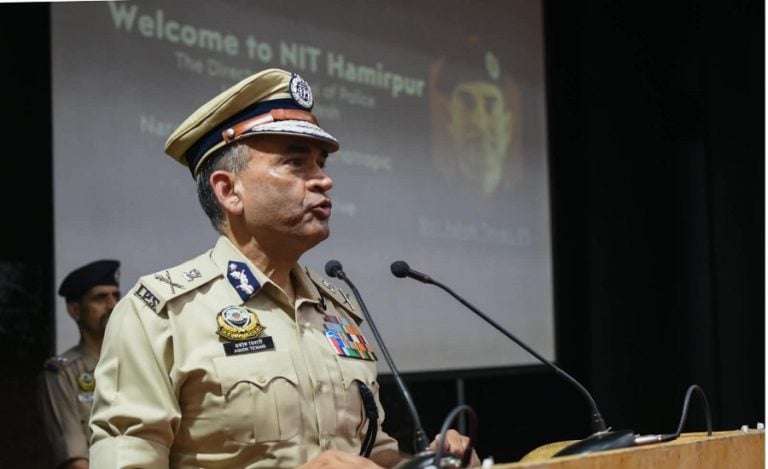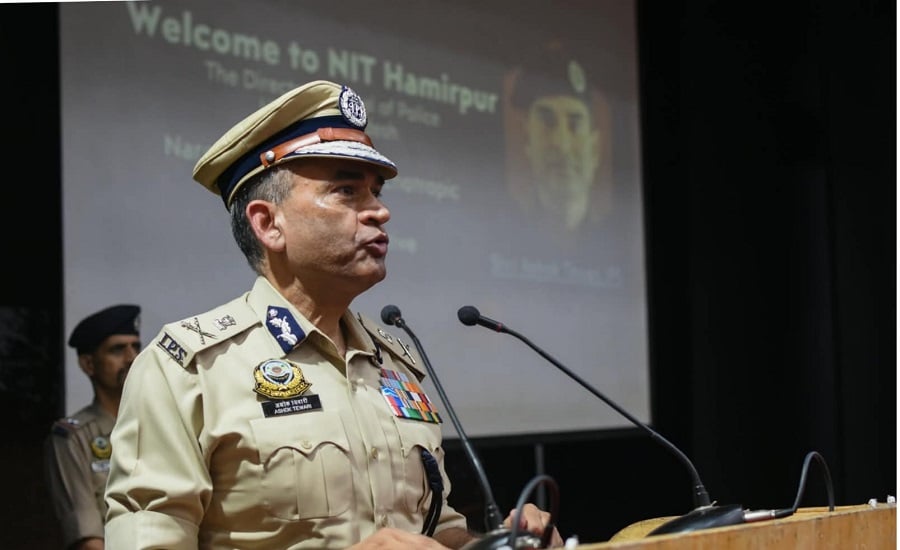
Shimla: Himachal Pradesh Director General of Police (DGP) Ashok Tewari, an IPS officer of 1993 batch, has called upon students, parents and teachers to actively participate in the state government’s ongoing anti-chitta drive, emphasising that protecting young people from drug abuse requires collective efforts by families, educational institutions, the police and society.
Addressing students and parents as the chief guest at the annual day function of the Convent of Jesus and Mary (CJM), Chelsea, in Shimla on Saturday, Tewari said the campaign against chitta must extend beyond law enforcement and become a broader people’s movement to safeguard the future of the state’s youth.
He stressed that awareness, open communication, early identification of warning signs and timely intervention were essential to preventing substance abuse, particularly among young people.
Anti-Chitta Drive Must Become a People’s Movement
Tewari said the anti-chitta drive should not be viewed merely as a police campaign against drug traffickers. Instead, it should involve active participation from students, families, schools and communities.
He urged students to become ambassadors of the campaign among their friends and family members, helping spread awareness about the harmful consequences of drug abuse. He also called upon parents and teachers to remain vigilant against the growing threat posed by chitta, a commonly used term in Himachal Pradesh for illicit drugs, particularly heroin.
Read Also: Telangana DGP C.V. Anand Warns Drug Suppliers of Tough Action, EAGLE Force to Intensify Crackdown
The DGP emphasised that law enforcement alone could not eliminate the problem without the support of society. Preventing young people from falling into substance abuse requires awareness, guidance and a supportive environment in which they can seek help when facing difficulties.
‘Prevention of Drug Abuse Must Begin at Home and in Schools’
Highlighting the importance of early intervention, Tewari said efforts to prevent drug abuse must begin at home and in educational institutions.
“Prevention of drug abuse must begin at home and in schools through awareness, open communication, early identification of warning signs and timely intervention,” he said.
He particularly appealed to parents to spend quality time with their children, listen carefully to their concerns and create an atmosphere of trust in which children felt comfortable discussing their problems.
According to the DGP, young people often face pressure related to academic performance, acceptance among peers and social expectations. Without adequate emotional support, such pressures can affect their decisions and make them more vulnerable to negative influences.
He stressed that parents should maintain open communication with their children and pay attention to changes in behaviour that might indicate distress or other difficulties.
DGP Emphasises Role of Parents in Protecting Children
Tewari underlined the foundational role of families in shaping children’s values, confidence and decision-making abilities.
“The home is a child’s first school, and parents are the first teachers. The values, confidence and courage we give our children today will shape the decisions they make tomorrow,” he said.
He encouraged parents to build relationships based on understanding and trust rather than relying solely on academic expectations or disciplinary measures.
The DGP’s message placed particular emphasis on emotional support and timely guidance, highlighting the need for parents to help children navigate the pressures they encounter during their formative years.
He also called on teachers to contribute to prevention efforts by promoting awareness in schools, remaining attentive to students’ concerns and helping identify warning signs at an early stage.
‘Ocean Odyssey’ Theme Inspires Message on Courage and Character
Drawing inspiration from the annual day theme, Ocean Odyssey, Tewari encouraged students to approach life with curiosity, courage and kindness.
He told the students that success should not be measured only through academic achievements or professional positions. The values they uphold and the kind of people they become are equally important.
The DGP urged students to stand up for what is right, resist negative peer pressure and avoid allowing temporary setbacks or failures to determine their future.
His message linked the school’s annual day theme with the broader importance of developing resilience, sound judgement and responsible behaviour among young people.
By encouraging students to make informed choices and remain confident in difficult situations, he reinforced the role of education in shaping individuals who can contribute positively to society.
DGP Appreciates Students’ Performances at Annual Day
Tewari also appreciated the students’ performances during the annual day celebrations, which featured a range of activities, including drills, band displays, karate and skating.
He congratulated the students, teachers and parents for their dedication and efforts in organising the programme.
The event provided an opportunity to engage with students and parents on issues extending beyond academics, including personal development, responsible decision-making and the importance of protecting young people from drug abuse.
ERSS-112 Awareness Stall Set Up at School
As part of the programme, the police department also set up an awareness stall on the Emergency Response Support System (ERSS-112) at the school.
The initiative provided an opportunity to familiarise students, parents and other attendees with the emergency response service and its role in public safety.
The stall complemented the wider focus on awareness and community participation, highlighting the importance of knowing how to access emergency assistance when required.
Collective Action Key to Himachal Pradesh’s Anti-Chitta Campaign
Tewari’s appeal underscores the importance of a coordinated approach to tackling drug abuse in Himachal Pradesh. While police action against traffickers remains important, prevention also depends on the involvement of families, educational institutions and local communities.
His message called for greater awareness among students, stronger communication between parents and children, and early intervention when warning signs emerge.
By encouraging young people to resist negative peer pressure and urging adults to provide guidance and emotional support, the DGP sought to reinforce the idea that the anti-chitta drive must extend into homes, schools and communities to help protect the state’s next generation.
Read Also: Dr Pushpendra Rana: The IFS Officer Using AI to Transform Forest Restoration in Himachal Pradesh