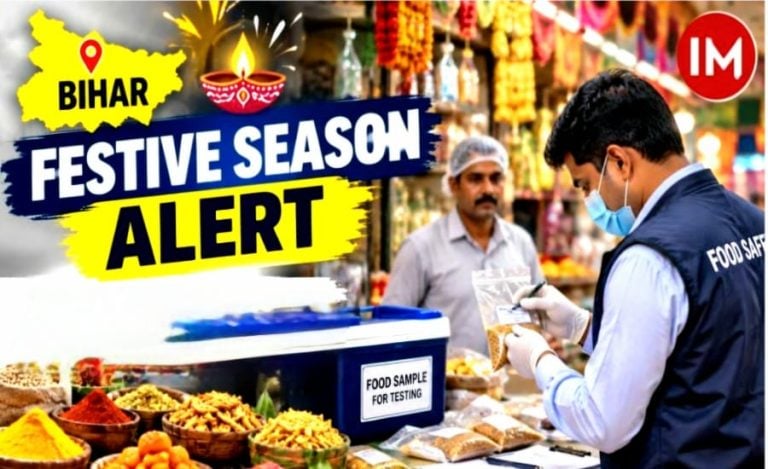
Patna: Bihar’s Food Safety Department has intensified inspections of sweet shops, food manufacturing units and restaurants ahead of the festive season, taking action against establishments where officials reported expired products, poor storage conditions and hygiene-related shortcomings.
The inspection drive, which continued across the state until October 12, resulted in the seizure and destruction of food products, the collection of samples for laboratory testing and notices to businesses over alleged violations of food safety requirements.
The department suspended the licence of Cozy Sweets and cancelled licences linked to two Sweet Home establishments in Patna. Officials also destroyed hundreds of kilograms of sweets and other food products at several premises.
Secretary-cum-Food Safety Commissioner Kumar Ravi directed officials to strengthen inspections and ensure that food businesses follow prescribed safety and hygiene standards.
Cozy Sweets Licence Suspended After Inspection
The department suspended the licence of Cozy Sweets following an inspection and reportedly asked the establishment to submit an explanation within three days.
Officials collected samples of gur and chamcham for laboratory testing. The results will help determine whether the products meet the required food safety standards.
The suspension is an administrative action taken during the inspection drive. Further action will depend on the department’s assessment of the establishment’s response and the relevant findings.
Read also: Small Businesses, Big Impact: Bihar Records 54 Lakh MSMEs and 2 Crore Jobs
Sweet Home Units Face Licence Cancellation
Inspections at two Sweet Home establishments in Buddha Colony, Patna, led to the cancellation of their licences, according to the inspection report.
At the Sweet Home factory, officials found expired stocks of gram flour, refined flour and wheat flour. They seized food products valued at approximately ₹18,335 and destroyed around 70 kg of expired gram flour worth ₹6,300.
Officials also collected samples of paneer, khoya, refined flour and wheat flour for laboratory analysis.
At Sweet Home Confectionery, inspectors seized and destroyed expired custard powder, a product described in the report as “Qumi flavour sulphate”, and baking powder. Five samples, including flour, gram flour, sugar-free liquid and cashew-coconut biscuits, were also sent for testing.
The action highlights the department’s focus on checking ingredients used in food production, particularly during a period when demand for sweets and other festive products rises.
Shivam Sweets: 645 Kg of Products Destroyed
At Shivam Sweets, officials seized and destroyed approximately 630 kg of kalakand, 10 kg of barfi and 5 kg of laddoo. The products had a reported total value of around ₹1 lakh.
Inspectors collected four samples—kalakand, barfi, laddoo and silver leaf—for laboratory testing.
Officials also reported that the establishment could not produce a water-testing report or health certificates for its workers. The unit was reportedly using skimmed milk powder and received a 14-day improvement notice to address the identified shortcomings.
The notice requires the establishment to improve compliance with prescribed food safety and hygiene standards.
Neha Trades: Spoiled Ingredients and Sanitation Issues Found
At Neha Trades, officials seized and destroyed 31 kg of skimmed milk powder, 34 kg of semolina, 20 kg of milk cake and 14 kg of sugar.
Samples of doda barfi, skimmed milk powder and milk cake were collected for laboratory analysis.
According to the inspection report, the skimmed milk powder showed signs of spoilage, including an unpleasant odour and fungal growth. Inspectors also noted sanitation concerns, including damaged walls and flooring and an unclean toilet.
These findings formed part of the department’s assessment of food storage and hygiene conditions at the premises.
Hari Lal Ventures and Patna Biryani Mahal Receive Notices
Officials collected samples of plain chamcham and gajak at Hari Lal Ventures. Inspectors also reported drainage and hygiene-related shortcomings and issued a 14-day improvement notice.
At Patna Biryani Mahal, officials collected samples of chaat masala and cinnamon for laboratory testing.
The restaurant reportedly could not produce documents relating to water testing, pest control and employee medical examinations during the inspection. Officials instructed the establishment to address the identified shortcomings.
The collection of samples does not, by itself, establish that the products failed laboratory tests. The results will help the department assess compliance.
Bikaner Factory Products Destroyed
During an inspection at a Bikaner factory, officials found wafer packets bearing an expiry date of October 13, 2026. The packets were destroyed to prevent their reuse, according to the report.
Officials also collected samples of cashew nuts and raisins for laboratory testing.
The inspection formed part of the wider effort to monitor the quality, storage and handling of food products during the festive season.
Food Safety Department Steps Up Festive-Season Checks
The Bihar Food Safety Department has instructed food businesses to store products properly and ensure that expired or spoiled ingredients do not enter production or reach consumers.
Officials have also emphasised the need for clean premises, proper drainage, pest control, safe drinking water and appropriate hygiene practices among workers.
Businesses that receive improvement notices are expected to address the shortcomings within the stipulated period. Laboratories will examine the samples collected during inspections, helping officials assess whether the products meet prescribed standards.
Why the Drive Matters for Consumers
Festive-season inspections play an important role in protecting consumers when demand for sweets, snacks and restaurant food increases. Expired ingredients, poor storage and inadequate sanitation can create food safety risks, making regular monitoring and compliance checks essential.
The latest action in Patna includes licence cancellations, a licence suspension, destruction of food products and notices requiring businesses to improve their practices. Further action against individual establishments will depend on inspection records, laboratory findings and responses submitted to the department.
For consumers, the drive underscores the importance of buying food from establishments that maintain proper hygiene and safe storage practices. For food businesses, it reinforces the need to check expiry dates, maintain required records and follow food safety standards throughout the year.
Read also:Bihar Bridges Education and Ecology as Patna Women’s College Signs Biodiversity MoU