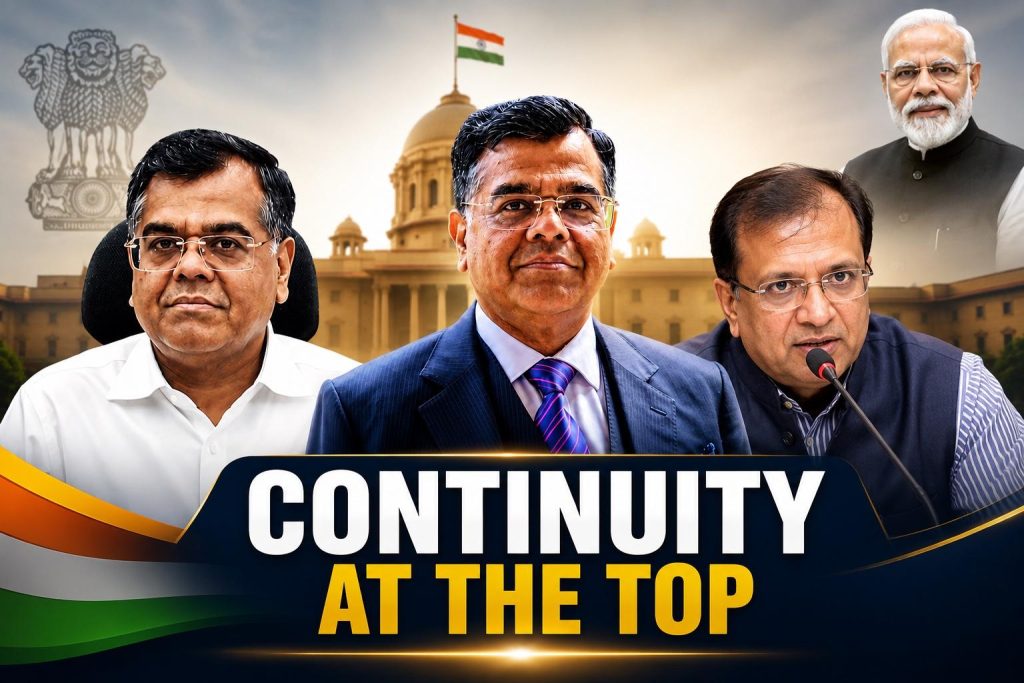
New Delhi: In a significant decision aimed at ensuring continuity at the highest levels of governance, the Appointments Committee of the Cabinet (ACC) has approved a one-year extension in the service of Cabinet Secretary Dr T.V. Somanathan (IAS:1987:TN) and Union Home Secretary Govind Mohan (IAS:1989:SK).
Dr Somanathan will continue as Cabinet Secretary for a further period of one year beyond August 30, 2026, while Govind Mohan’s tenure as Home Secretary, Ministry of Home Affairs, has been extended beyond August 22, 2026, up to August 22, 2027, or until further orders, whichever is earlier.
The extension granted to Govind Mohan has been approved in relaxation of the provisions of Fundamental Rule 56(d) and Rule 16(1A) of the All India Services (Death-cum-Retirement Benefits) Rules, 1958.
Continuity at the Top Continues
The twin extensions reinforce the Centre’s preference for continuity in key administrative positions, particularly at a time when several flagship government programmes, governance reforms and national security initiatives are underway.
The decision also follows a long-established precedent of extending the tenure of Cabinet Secretaries to ensure administrative stability during critical phases of governance.
Read Also: Major Bureaucratic Reshuffle Likely Soon? Centre Puts Key Secretary-Level Transfers on Hold
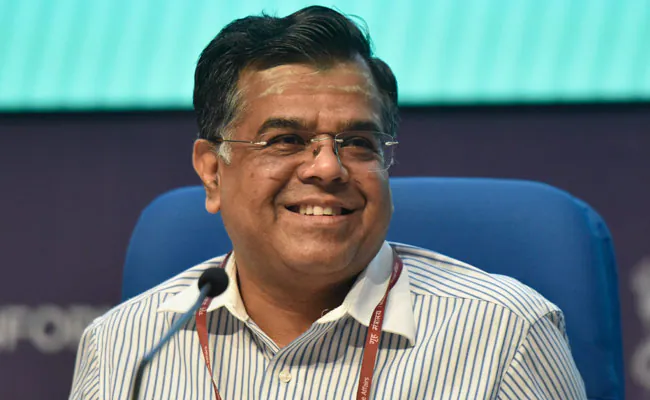
T.V. Somanathan Took Charge in 2024
Dr. Somanathan assumed office as Cabinet Secretary on August 30, 2024, succeeding Rajiv Gauba, after serving briefly as Officer on Special Duty (OSD) in the Cabinet Secretariat.
A 1987-batch IAS officer of the Tamil Nadu cadre, he was initially appointed for the standard two-year fixed tenureprescribed for the Cabinet Secretary.
Before assuming the country’s highest bureaucratic office, Somanathan had established himself as one of India’s foremost experts in public finance and governance.
His distinguished career includes serving as:
- Finance Secretary (Department of Expenditure)
- Secretary, Ministry of Corporate Affairs
- Joint Secretary and Additional Secretary in the Prime Minister’s Office (PMO)
- Additional Chief Secretary (Finance), Government of Tamil Nadu
- Managing Director, Chennai Metro Rail Limited
- Director, World Bank Group under its Young Professionals Programme
Extension Continues a Well-Established Trend
The extension granted to Dr Somanathan follows the pattern set by his predecessors.
Ajit Seth served as Cabinet Secretary from June 2011 and received a one-year extension in 2013, followed by another six-month extension after the change of government in 2014.
His successor, P.K. Sinha, remained in office for more than four years after receiving three successive extensionsbetween 2017 and 2019.
The longest-serving Cabinet Secretary has been Rajiv Gauba, who completed a full five-year tenure after receiving three consecutive one-year extensions between 2021 and 2023 before demitting office in August 2024.
The latest decision indicates that the Centre continues to favour continuity at the apex of the civil services.
A Proactive Administrative Style
During his tenure, Dr Somanathan has been widely recognised for adopting a proactive administrative approach.
Unlike the traditionally low-profile coordinating role associated with the Cabinet Secretariat, he has regularly issued detailed advisories to Secretaries across ministries, urging:
- Faster decision-making
- Timely implementation of projects
- Improved governance standards
- Greater administrative efficiency
- Stronger institutional accountability
His emphasis on accelerating programme implementation and improving delivery mechanisms has made his tenure distinctive within the bureaucracy.
An Academically Accomplished Civil Servant
Born on May 10, 1965, Dr Somanathan secured All India Rank 2 in the 1987 Civil Services Examination.
He possesses an exceptional academic profile, including:
- Ph.D. in Economics
- Master’s degree in Economics
- Executive Development Programme from Harvard Business School
- Chartered Accountant (CA)
- Cost Accountant (CMA)
- Company Secretary (CS)
Apart from his administrative career, he is an accomplished author and public policy scholar.
His books include:
- Derivatives
- The Economics of Derivatives
- State Capability in India
He has also authored more than 80 research papers and contributed to leading academic publications, including The Oxford Handbook of the Indian Constitution.
Govind Mohan to Continue as Home Secretary
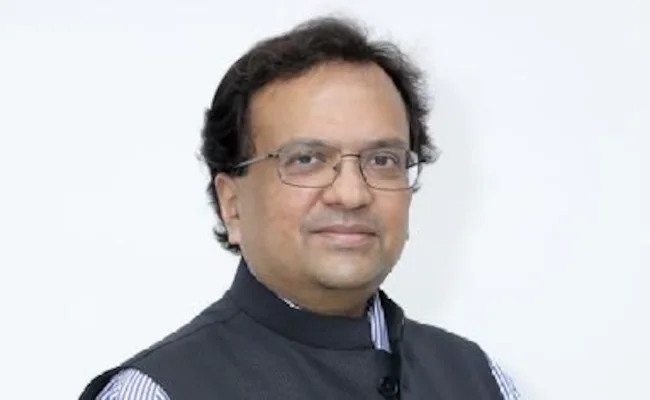
The ACC has also approved a one-year extension for Mr Mohan (IAS:1989:SK) as Union Home Secretarybeyond August 22, 2026.
He will continue in office up to August 22, 2027, or until further orders.
Mr Mohan assumed charge as Home Secretary on August 23, 2024, succeeding Ajay Kumar Bhalla.
A 1989-batch IAS officer of the Sikkim cadre, he is regarded as one of the country’s most experienced administrators in internal security and governance.
Distinguished Career Across Key Ministries
Over a career spanning nearly four decades, IAS Mohan has held several critical assignments.
His major positions include:
- Union Home Secretary
- Secretary, Ministry of Culture
- Additional Secretary, Ministry of Home Affairs
- Joint Secretary, Ministry of Home Affairs
- Joint Secretary, Department of Economic Affairs
- Joint Secretary, Cabinet Secretariat
Principal Resident Commissioner, Government of SikkimAs Culture Secretary, he played a leading role in implementing national initiatives such as Azadi Ka Amrit Mahotsavand Har Ghar Tiranga.
He also played an important coordinating role during the COVID-19 pandemic, overseeing interactions between the Centre and the States.
Strong Academic Credentials
Born on September 21, 1965, IAS Mohan hails from Uttar Pradesh.
He completed his schooling at St. Francis’ College, Lucknow, earned a B.Tech in Electrical Engineering from IIT (BHU), Varanasi, and later obtained a Post Graduate Diploma in Management from IIM Ahmedabad before joining the Indian Administrative Service.
Government Reinforces Continuity in Governance
The simultaneous extension of the country’s Cabinet Secretary and Home Secretary reflects the government’s continued emphasis on institutional continuity at the highest levels of administration.
By retaining two of its most experienced civil servants, the Centre has ensured stability in governance, policy implementation and internal security management at a time when several major national initiatives are underway.