New Delhi: The Government of India has constituted a High Level Committee on Banking for Viksit Bharat to undertake a comprehensive review of the country’s banking sector and recommend reforms aimed at making Indian banks globally competitive, financially inclusive and resilient.
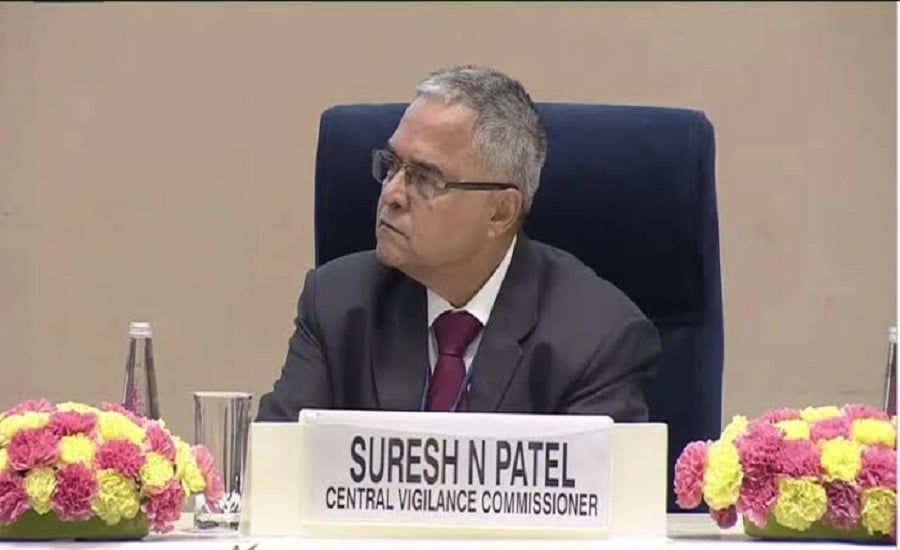
Former Central Vigilance Commissioner Suresh N. Patel has been appointed Chairman of the committee, which will also include senior banking and financial sector experts, including a serving Deputy Governor of the Reserve Bank of India (RBI).
The committee was announced by Union Finance and Corporate Affairs Minister Nirmala Sitharaman in her Union Budget 2026-27 speech. Its recommendations are expected to help align India’s banking system with the country’s long-term development objectives under Viksit Bharat 2047.
Suresh N. Patel to Chair Committee; Three Banking Experts Named Members
The government has appointed Suresh N. Patel, former Central Vigilance Commissioner, as Chairman of the High Level Committee on Banking for Viksit Bharat.
Shirish Chandra Murmu, Deputy Governor of the Reserve Bank of India, has been appointed as a member of the committee. He will be joined by Padmaja Chunduru, former Managing Director and Chief Executive Officer of Indian Bank, and N. S. Vishwanathan, former Deputy Governor of the RBI.
The Joint Secretary (Banking) in the Department of Financial Services will serve as Member Secretary of the committee.
The committee has been given a tenure of six months to review the banking sector and formulate recommendations covering structural, institutional, regulatory and legislative reforms.
Read also: Who Is Sudhakar Malli? RBI Appointed Him Executive Director from Oct 1
Committee Announced in Union Budget 2026-27
The formation of the committee follows an announcement made by Finance Minister Nirmala Sitharaman during the presentation of the Union Budget 2026-27.
The proposed review is intended to examine whether India’s existing banking architecture is adequately equipped to meet the financing requirements of a developed economy by 2047.
The committee will assess banking practices, regulatory arrangements, access to capital, technological preparedness and financial inclusion mechanisms.
Its mandate extends beyond commercial banks to include Regional Rural Banks, Cooperative Banks, Development Financial Institutions and Non-Banking Financial Companies, wherever relevant to the assigned review.
Roadmap for Globally Competitive Indian Banks
One of the committee’s principal responsibilities will be to assess existing banking practices and prudential norms in India.
It will examine international best practices and identify measures that could be suitably adapted to the Indian banking system.
The committee will also prepare a roadmap for developing globally competitive banks, taking into account the requirements of India’s expanding economy and the changing international financial environment.
The review is expected to cover the structural and institutional changes necessary to improve the efficiency, competitiveness and resilience of Indian banking institutions.
Review of Banking Laws and Regulatory Framework
The committee has been tasked with examining the existing legal and regulatory frameworks governing banks.
This review will include Regional Rural Banks and Cooperative Banks, which play an important role in providing banking services to rural communities, agricultural households and smaller economic centres.
The committee will recommend reforms intended to improve operational efficiency and facilitate ease of doing banking.
Its examination will cover potential regulatory and legislative changes required to support the objectives of Viksit Bharat 2047.
Long-Term Capital Requirements and Credit Growth
Another major responsibility of the committee will be to assess the long-term capital requirements of India’s financial institutions.
The exercise will include banks, Development Financial Institutions and Non-Banking Financial Companies.
The committee will examine the sources of funding available to these institutions and recommend mechanisms that could support future credit expansion.
Access to adequate capital will be an important area of examination, particularly in the context of financing investment, infrastructure development and broader economic growth.
The panel will also examine differences in the cost of capital faced by businesses and suggest policy measures to encourage private investment and sustainable growth.
Artificial Intelligence, Digital Banking and Cybersecurity
The committee will prepare a roadmap for the adoption of artificial intelligence and digital innovation across banking institutions.
The mandate recognises the growing importance of technology in banking operations, financial services delivery and institutional efficiency.
At the same time, the committee will recommend safeguards against cybersecurity risks associated with expanding digital financial infrastructure.
Its recommendations will address the need to balance technological innovation with the security and resilience of banking systems.
The panel will also examine talent acquisition and capacity-building requirements to ensure that banking institutions have a workforce equipped to manage future technological and operational demands.
Priority Sector Lending and Lead Bank Scheme Under Review
The government has also asked the committee to review the existing Priority Sector Lending framework and the Lead Bank Scheme.
The review will assess their relevance and effectiveness in supporting inclusive and balanced credit delivery.
The committee will examine whether these mechanisms are sufficiently aligned with evolving economic priorities and financial inclusion objectives.
It will also assess coordination among banking institutions and recommend improvements to support more data-driven credit delivery.
The exercise is intended to examine how existing frameworks can continue to support underserved sectors and regions while responding to changing economic requirements.
Focus on Financial Inclusion and Balanced Development
Financial inclusion is a central component of the committee’s mandate.
The government has asked the panel to recommend reforms that can strengthen the ability of the banking system to meet the financial needs of different sections of society and the economy.
This includes improving the effectiveness of credit delivery mechanisms and ensuring that institutional and regulatory frameworks remain responsive to changing development priorities.
The committee’s work will therefore encompass both the competitiveness of large banking institutions and the broader objective of making banking services more accessible and efficient.
Six-Month Tenure to Submit Banking Reform Recommendations
The High Level Committee on Banking for Viksit Bharat will have a tenure of six months.
During this period, it is expected to undertake its review and formulate recommendations covering banking practices, regulatory frameworks, institutional capital requirements, the cost of capital, digital innovation, cybersecurity, workforce development and financial inclusion.
The government may also refer additional matters to the committee for examination.
The committee’s recommendations are intended to provide a reform roadmap for strengthening India’s banking system and aligning it with the country’s ambition of becoming a developed nation by 2047.