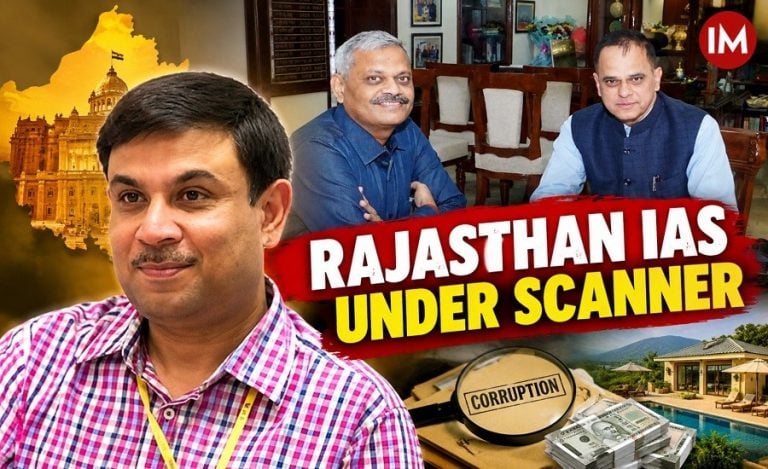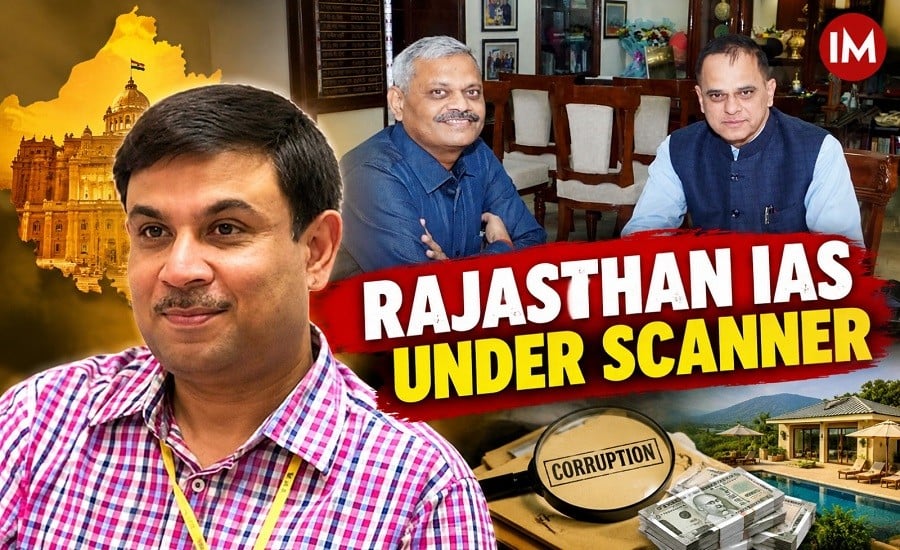
Jaipur: The controversy surrounding senior Rajasthan IAS officer Shikhar Agrawal has intensified after former Chief Minister Ashok Gehlot demanded a probe by the Central Bureau of Investigation (CBI) and the Enforcement Directorate (ED) into reported purchases of 40 villas and cottages by the officer’s family. A Jaipur-based organisation has also approached the CBI, seeking an investigation into alleged corruption, disproportionate assets and possible benefits extended to the company involved in the transactions.
The developments have brought renewed attention to the Rajasthan government’s stated commitment to a “zero tolerance for corruption” policy. Separately, the Chief Secretary of Rajasthan V. Srinivas (1989 batch IAS) met Director General of Police, Anti-Corruption Department, Govind Gupta, an IPS officer of 1993 batch, on October 30, 2026. According to the information shared about the meeting, the government’s zero-tolerance policy towards corruption and its implementation were discussed. Against the backdrop of the ongoing Shikhar Agrawal case, the meeting is likely to draw public attention to how the state’s anti-corruption policy is implemented in practice. However, no direct connection between the meeting and the property controversy has been established.
The state government has already placed Agrawal on Awaiting Posting Orders (APO), citing administrative reasons. The action came after media reports detailed the family’s reported property acquisitions, which have raised questions about the timing of the transactions, the subsequent leasing arrangements and the government concessions reportedly granted to the company associated with the resorts.
The allegations are yet to be established through an investigation. Agrawal has maintained that the property purchases were legal and had been disclosed in his income tax returns and Immovable Property Returns (IPRs).
Ashok Gehlot Demands CBI and ED Investigation
Former Rajasthan Chief Minister Ashok Gehlot has called for an independent investigation into the controversy and questioned Chief Minister Bhajan Lal Sharma over the circumstances surrounding the reported transactions.
Reacting to reports that the family had acquired 40 villas and cottages, Gehlot described the scale of the purchases as shocking and argued that placing the officer on APO would not resolve the questions raised by the case.
He said the Chief Minister should take responsibility and address the allegations publicly, particularly because the matter involves an officer who had held important positions in the state administration.
Gehlot also pointed out that the Union government is the controlling authority for IAS officers and urged it to hand the matter over to the CBI and ED. In his view, a central investigation would help establish the facts behind the transactions and the questions being raised about the company involved.
His demand has added a political dimension to the controversy, with questions being raised about administrative accountability, possible conflicts of interest and the need for a transparent investigation.
Complaint Sent to CBI Director by Jaipur Organisation
The demand for a probe is not limited to the political opposition. Senior advocates Poonam Chand Bhandari and T.N. Sharma, representing the Jaipur-based organisation Public Against Corruption, have reportedly sent a formal complaint to the CBI Director seeking registration of an FIR and a detailed investigation.
The complaint raises allegations relating to possible corruption, disproportionate assets, the reported purchase prices of the properties and alleged benefits extended to the company from which the family acquired the villas and cottages. It also calls for scrutiny of alleged misuse of forest land and government policies.
According to the complaint, the family reportedly acquired the properties at an average price of around ₹15 lakh each. The complainants have questioned whether these prices were consistent with prevailing market rates, arguing that property prices in Rajasthan have risen substantially.
The complaint represents allegations and requests for investigation; it does not establish that any offence has occurred. Whether an FIR is registered, and what any subsequent investigation establishes, will be important in determining the substance of the claims.
What Are the 40 Resort Property Transactions?
The controversy centres on reports that Agrawal, his wife Prashakha Mathur, an IPS officer, their two sons and his parents-in-law purchased 40 villas and cottages from a single company over approximately two and a half years.
The properties are reported to be located at two resort developments: 20 villas at Ajabgarh Resort in Alwar district and 20 cottages at Bujhda in Udaipur district, associated with Ananta Resort.
According to the reports, the family spent approximately ₹6.165 crore on the acquisitions. The properties were subsequently leased back to Goyal Fashions, the company associated with the resort developments.
The reported lease arrangements place the annual rent for each Bujhda cottage at ₹4 lakh and for each Ajabgarh villa at ₹5 lakh. Taken together, these figures amount to an annual lease value of approximately ₹1.8 crore for all 40 properties.
The reported figures have prompted questions about the commercial terms of the transactions, including the prices paid, the lease rates and the relationship between the buyers and the company. The gross rental figure, however, should not automatically be treated as a net investment return, since the available information does not detail taxes, maintenance expenses, financing costs or other liabilities.
The fact that properties were reportedly bought from and leased back to the same company is a key element of the controversy. Critics have asked whether the arrangements were commercially ordinary and whether the transactions should be examined alongside the company’s dealings with the state government.
Agrawal has said the purchases were legal and disclosed in his financial declarations. The available material does not independently establish that the properties were acquired through illegal means.
Why the RIPS 2019 Package Has Become a Major Issue
One of the most significant questions concerns a government package reportedly approved for Goyal Fashions under the Rajasthan Investment Promotion Scheme (RIPS) 2019.
According to the reports, on March 27, 2026, Agrawal and members of his family purchased 20 villas at Ajabgarh Resort. On the same day, the Finance Department issued an order granting a special package to Goyal Fashions.
The package had reportedly been approved at a Board of Investment meeting held on February 14, 2026. The meeting was chaired by Chief Minister Bhajan Lal Sharma, and Agrawal attended in his capacity as Additional Chief Secretary for Industries and Investment.
The reported concessions included a 75 per cent subsidy on state taxes for 10 years and a 100 per cent exemption from electricity duty.
The proximity between the property transaction and the government order has become a central issue in the allegations. Critics argue that the sequence warrants scrutiny because Agrawal held senior responsibilities connected with industries and investment while members of his family were reportedly entering into property transactions involving the company.
The timing alone, however, does not establish that the property purchases and the government package were linked or that the officer improperly influenced the decision. Establishing any such connection would require examination of the approval process, the officer’s role, relevant records and the commercial arrangements.
The key questions are whether the company qualified for the concessions under the applicable rules, how the package was processed, what role individual officials played in the decision and whether any conflict-of-interest requirements applied.
Questions About the Bujhda Land Conversion in 2006
The controversy has also revived scrutiny of an earlier administrative decision taken when Agrawal was serving as Collector of Udaipur.
According to the reports, on November 24, 2006, he approved the conversion of 13.70 hectares of land at Bujhda, where Ananta Resort is located, for use as a tourism unit. The approval reportedly included 11 conditions.
One of those conditions required the company to obtain a completion certificate for construction based on a project report and layout plan approved by the Senior Town Planner in Udaipur.
The reports state that the condition was removed on October 28, 2007, after the company’s director submitted an application on October 26. The change reportedly allowed construction to proceed on the basis of a building plan approved by the Commissioner of the Tourism Department.
The short interval between the application and approval has raised questions about the rationale for modifying the original conditions and whether the prescribed procedures were followed. These are matters that would need to be assessed against the relevant orders, rules and official records.
The earlier land-conversion decision has become relevant to the present controversy because the property transactions reportedly involve cottages at the same resort location. But the existence of an earlier administrative approval does not, by itself, establish wrongdoing. Any allegation that rules were bypassed would need to be substantiated through a review of the documents and decision-making process.
The source material also refers to allegations of regulatory lapses during Agrawal’s tenure as chairman of the Rajasthan State Pollution Control Board, but it does not provide sufficient detail to assess those claims independently.
Why Was Shikhar Agrawal Placed on APO?
The Department of Personnel placed Agrawal on APO late on Wednesday, according to the reports, citing administrative reasons. The action followed media coverage of the family’s reported purchase of 40 properties.
Agrawal is a 1993-batch IAS officer who has served in several senior positions in Rajasthan. At the time of the controversy, he was serving as Additional Chief Secretary in the Industries Department and held important portfolios connected with investment and the Rajasthan State Industrial Development and Investment Corporation (RIICO). He had also served as Additional Chief Secretary to Chief Minister Bhajan Lal Sharma.
The APO order has drawn attention because reports describe it as the first such action against the officer in his 33-year career. Its timing, coming soon after the property purchases were reported publicly, has prompted questions about the government’s assessment of the matter.
An APO placement is an administrative status and should not be treated as a finding of guilt. The Department of Personnel’s stated reason was administrative, and the available information does not establish the outcome of any formal investigation into the allegations.
The government’s response will ultimately be judged not only by the initial administrative action but also by whether the relevant records are examined fairly and the questions raised are addressed transparently.
Agrawal and His Wife Are Reportedly on Leave in the United States
Reports state that Agrawal and his wife, IPS officer Prashakha Mathur, were on a private visit to the United States after taking approximately three weeks of leave. They were expected to return on November 12, 2026.
When contacted by the media on October 26, Agrawal reportedly said he was on leave and visiting the United States. He has maintained that the property acquisitions were lawful and that the required information was disclosed in his income tax returns and property declarations.
He has also reportedly attributed a discrepancy in his wife’s IPR to an error in attaching documents. The details of the declarations, the properties disclosed and the alleged discrepancy would need to be examined against the relevant records before any conclusion can be drawn.
The distinction is important: questions about disclosure and transparency can warrant scrutiny without automatically proving that assets were acquired improperly.
Earlier Controversies During His Administrative Career
The current controversy has also brought renewed attention to earlier episodes involving Agrawal.
In 2016, during his tenure as Commissioner of the Jaipur Development Authority, a dispute arose over the removal of encroachments outside the Rajmahal Palace Hotel. The episode attracted public and political attention at the time.
Reports have also referred to friction between Agrawal and then Chief Secretary Sudhansh Pant during Agrawal’s tenure in the Chief Minister’s Office. Some accounts have linked the reported differences to subsequent administrative changes, but the precise connection remains unestablished in the material available.
Agrawal has held senior positions under different governments and has been regarded as an influential bureaucrat in Rajasthan. His administrative career and the current allegations are separate matters: earlier controversies or professional assessments do not establish whether the present claims are true.
What the Case Raises About Property Disclosures and Conflicts of Interest
Beyond the individual allegations, the case has raised broader questions about the financial disclosures of senior public servants and the safeguards required when their official responsibilities intersect with private investments by family members.
Immovable Property Returns are intended to provide a record of assets in accordance with the applicable service rules. When questions arise over the completeness or consistency of declarations, scrutiny of the original filings and supporting documents can help establish whether a discrepancy reflects an error, an omission or something more serious.
The issue becomes especially sensitive when an officer has responsibilities connected with investment approvals, industrial policy or government incentives and family members are reportedly engaged in transactions with a company that receives state concessions. Such circumstances can create a perceived conflict of interest even before wrongdoing is established.
A proper assessment would need to examine the ownership and registration records, sale deeds, valuation evidence, lease agreements, IPRs, relevant approvals under RIPS 2019 and the roles played by officials in the package’s approval. It would also need to establish whether the transactions complied with applicable service rules and disclosure requirements.
The reported figures and timing have prompted calls for a probe, but only documentary scrutiny and a fair investigation can establish whether the allegations have merit.
What Happens Next?
The immediate questions are whether the CBI will act on the complaint submitted by Public Against Corruption, whether the Centre or state government will order any further inquiry, and whether the relevant property and investment records will be examined.
Gehlot’s demand for a CBI-ED investigation has increased political pressure for a response. The state government’s APO order has addressed the immediate administrative question of Agrawal’s posting, but it does not resolve the allegations about the transactions, the company’s concessions or the property declarations.
The meeting between the Rajasthan Chief Secretary and Anti-Corruption Department Director General Govind Gupta on October 30 has also brought the government’s stated zero-tolerance policy into the public conversation. No direct link between that meeting and the Agrawal case has been established, and its significance should be assessed on the basis of the official agenda and any subsequent action.
For now, the controversy centres on reported property acquisitions, lease arrangements, government incentives and earlier administrative decisions. The decisive test will be whether the allegations are examined transparently, the officer’s response is considered alongside documentary evidence, and any findings are based on verifiable facts rather than political claims or speculation.