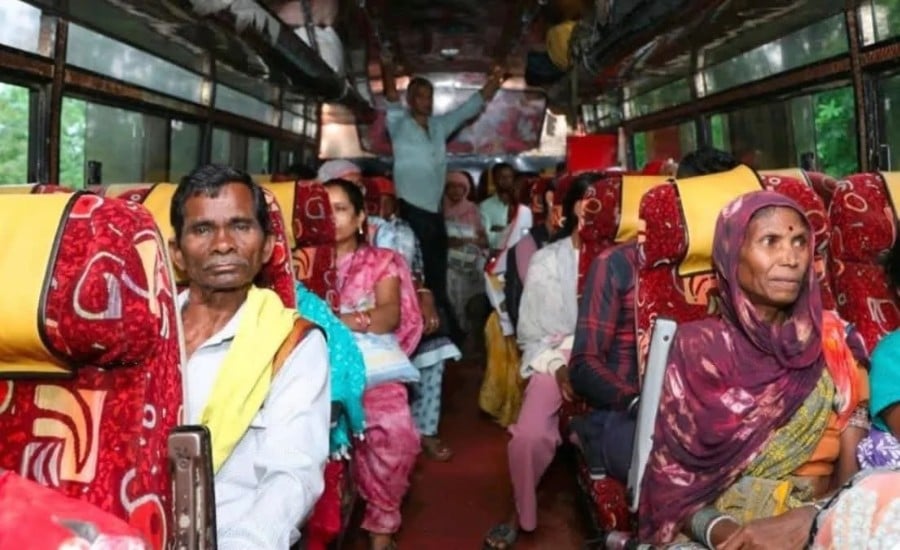
Raipur: The Chhattisgarh government is preparing to expand the Mukhyamantri Gramin Bus Yojana to Scheduled Areas in eight additional districts, with plans to bring 4,368 villages currently without regular bus services under the scheme.
The proposed second phase will cover 85 tribal development blocks and is expected to benefit around 14.57 lakh people. Between 60 and 80 buses have been proposed for the expansion, while digital fare payments through UPI and QR codes are also being planned.
850 Villages Connected in First Year
The scheme completed its first year on October 4, having been launched from Jagdalpur on October 4, 2025. It currently operates 107 buses on 106 routes across 13 districts in the Bastar and Surguja divisions.
The buses have covered approximately 24 lakh kilometres during the first year and currently travel around 17,500 km a day across a notified route network of about 5,300 km. Regular bus services have reached 850 villages for the first time under the scheme.
Read Also: From Singapore’s Gardens to Nava Raipur: Chhattisgarh Eyes a Greener Future
Chief Minister Vishnu Deo Sai said, “Providing safe and accessible transportation to the remotest villages is our government’s top priority and we will achieve it.”
The service has also provided residents in remote areas with regular transport to schools, hospitals, markets, development blocks and district headquarters. A June 2026 field assessment on the 83-km Konta-Jagargunda route in Sukma found that students were using the buses to travel to school, patients were able to reach health centres more easily, and residents were taking agricultural and forest produce to local markets.
Eight Districts in Second Phase
The proposed second phase will cover tribal development blocks in Mohla-Manpur-Ambagarh Chowki, Khairagarh-Chhuikhadan-Gandai, Balod, Gariaband, Gaurela-Pendra-Marwahi, Raigarh, Korba and Dhamtari.
The scheme uses financial assistance to make bus operations viable on routes where private operators may otherwise find regular services difficult to sustain. Operators receive assistance based on kilometres actually covered on notified routes, with operational data monitored through vehicle-location tracking systems. The scheme also provides live route and trip information through its digital platforms.
The model allows private bus operators to retain ownership and operate the vehicles while receiving state support for eligible routes. The proposed expansion will therefore add coverage without the state having to directly purchase the buses.
Read Also: From Villages to Vision: Chhattisgarh Puts Gram Sabhas at the Heart of Development