Raipur: The Chhattisgarh government has outlined a roadmap to strengthen the state’s tourism and cultural identity, with a target of establishing Chhattisgarh as a prominent destination for natural, cultural, eco-ethnic and spiritual tourism by 2028.
The plans include developing Chitrakote as a world-class tourism destination, preparing an integrated master plan for Sirpur, encouraging private investment, expanding homestays and tourism-linked employment, promoting religious tourism and digitally preserving the state’s folk traditions and heritage.
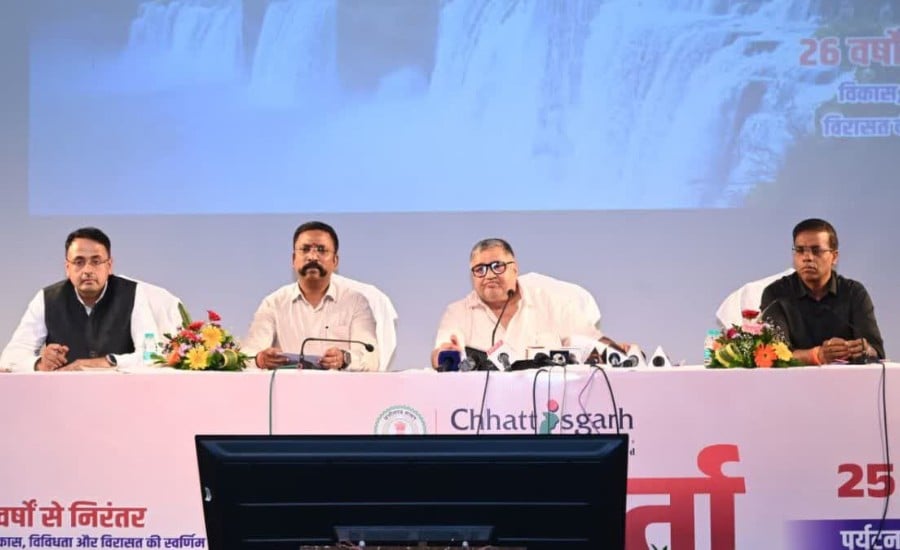
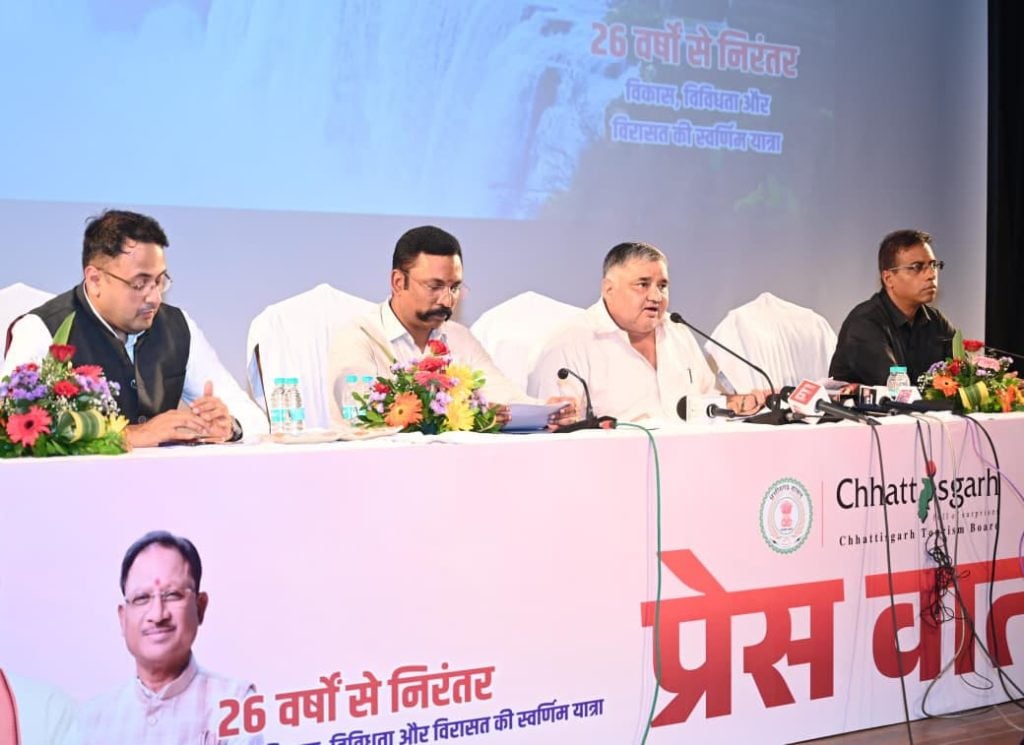
The roadmap was presented during a press conference held at the Chhattisgarh Samvad auditorium in Nava Raipur, where Tourism, Culture and Religious Trusts and Endowments Minister Rajesh Agrawal shared details of departmental achievements and upcoming initiatives.
Focus on Natural, Tribal and Heritage Tourism
The state government plans to promote destinations and heritage sites representing Chhattisgarh’s natural and cultural diversity.
Read Also: Chhattisgarh Pitches New Investment Opportunities as Bastar Emerges from Maoist Shadow
Key areas highlighted include:
- Chitrakote and Tirathgarh waterfalls for natural tourism.
- Bastar and Surguja for their tribal culture and traditions.
- Sirpur for its historical and archaeological heritage.
- Maa Danteshwari and Maa Mahamaya for religious tourism.
- Mainpat and Jashpur for improved tourist facilities and experiences.
Chitrakote is proposed to be developed beyond its identity as a waterfall destination, while an integrated master plan is being prepared for the broader tourism development of Sirpur.
Private Investment and Tourism Infrastructure
The government has highlighted private investment as an important component of its tourism development plans.
According to the information shared at the press conference, film city projects have received investment proposals worth ₹203.53 crore. Work is also being pursued towards developing a film city and convention centre, with an estimated cost of around ₹350 crore.
The state plans to develop 18 tourism properties through a lease-cum-development model involving private-sector participation.
The proposed projects are expected to attract investment of around ₹500 crore, with an estimated potential for 500 to 1,000 direct and indirect employment opportunities.
Religious Tourism Initiatives
Under the Ram Lalla Ayodhya Dham Darshan Yojana, operated in collaboration with IRCTC, 61 trains have been operated so far, taking more than 50,000 devotees to Ayodhya and Kashi.
The state has also sent proposals for the development of additional religious tourism destinations, including the Ratanpur Mahamaya Temple area.
The Union government has sanctioned ₹145.99 crore for the development of the Bhoramdev Corridor.
Homestays and Local Employment
The government is also seeking to expand the participation of local communities in tourism through homestays and other tourism-linked activities.
The approach is intended to connect local families and young people with opportunities involving:
- Local food and hospitality
- Handicrafts
- Tourist guiding
- Tourism operations
- Film production
- Digital content
The state currently has more than 390 registered tour operators and travel agents and 26 registered hotels. It has set a target of training at least 500 local youths for tourism-related employment.
Digital Tourism and Revenue
The Tourism Department is developing a new website and mobile application to bring together online booking, tourism information and related facilities.
Over the past two years, online bookings generated approximately ₹6.48 crore, while tourism units generated around ₹31.75 crore in revenue, according to the information presented by the department.
International Promotion of Chhattisgarh Tourism
The state plans to promote its tourism offerings beyond the domestic market through international tourism platforms.
The proposed promotional measures include:
- Participation in international tourism platforms
- Film and OTT-based promotion
- International media outreach
- International influencer familiarisation tours
- Promotion of eco-ethnic, natural and cultural tourism
The proposed Tourism Policy-2026 is expected to give priority to sustainable development, private investment, community-based tourism and local participation.
Under the Chief Minister Tourism Development Mission, work is also being undertaken towards an annual financial provision of ₹100 crore for the next five years.
Cultural Welfare and Support for Artists
The Culture Department has reported several measures aimed at supporting artists and writers.
Under the Artist Welfare Fund Medical Grant Scheme, 70 artists received approximately ₹30.03 lakh in assistance during the past two-and-a-half years. During 2026-27, assistance of around ₹15.30 lakh has so far been provided to 20 artists.
The Chief Minister Folk Artist Promotion Scheme has provided approximately ₹19.08 lakh to 87 artists over the past two-and-a-half years.
A monthly financial assistance scheme for senior artists and writers has provided pensions totalling around ₹82.12 lakh to 407 economically disadvantaged senior artists and writers during the same period. In the current year, 121 beneficiaries have received assistance so far.
Promoting Bastar’s Tribal Culture
The state is continuing cultural programmes aimed at preserving and promoting traditional art forms and tribal heritage.
The Bastar Pandum festival has been organised at village, block and district levels for the past two years. In 2026, a 209-member delegation comprising winning artist groups, Manjhi-Chalki representatives and Padma Shri awardees from Bastar Pandum had an interaction with President Droupadi Murmu at Rashtrapati Bhavan.
The government is also preparing an ‘Aadi Parv’ calendar to document and promote traditional festivals, fairs, yatras and cultural activities, particularly in Left Wing Extremism-affected districts.
Other cultural programmes, including Pavas Prasang, Rangtarang, Rangparab and Lokrang Parv, are being used to provide platforms for classical and folk arts, traditional musical instruments, folk theatre and forms such as Pandavani, Bharthari, Dadariya, Jasgeet, Karma, Panthi, Bansgeet and Dewar Geet.
Digital Archive for Folk Culture and Heritage
The Culture Department is preparing a digital archive of Chhattisgarh’s folk arts, folk songs, tribal traditions and historical heritage.
The initiative is aimed at preserving cultural material in digital form for future generations.
More than 12 lakh pages relating to Chhattisgarh have already been digitised and brought to Raipur. Cataloguing and metadata preparation is underway to make the digital records available to citizens, researchers and students through a web archive portal.
Sirpur and Heritage Conservation
The state is pursuing efforts to promote Sirpur as a World Heritage site. The archaeological site reflects Buddhist, Jain and Hindu architectural traditions.
The Sirpur Special Area Development Authority has prepared a nomination dossier in accordance with UNESCO standards and submitted it to the Government of India.
The state is also undertaking conservation work for 63 protected monuments. During the current financial year, facelift plans are being prepared for 12 state-protected monuments, covering conservation, upgrading and tourist facilities.
New Museum and Cultural Initiatives
The Mahant Ghasidas Memorial Museum in Raipur is proposed to receive a new Princely States Gallery, along with upgrades to its existing galleries.
At Purkhouti Muktangan, plans are being pursued for a light-and-sound show and evening programmes focusing on Chhattisgarh’s tangible and intangible cultural heritage. The proposed content will include tribal figures such as Shaheed Veer Narayan Singh and Gundadhur.
Archaeological Discoveries
The Archaeology Department has so far undertaken excavations at 11 archaeological sites.
Excavations at Mrittikagarh near Rewa in Lakhauli, Arang tehsil of Raipur district, have revealed evidence of a human settlement dating back approximately 2,750 years. The excavation has yielded remains from the early historical period through the Kalachuri period, along with gold, silver and copper coins associated with different ruling dynasties.
Tourism, Culture and Employment in the 2028 Roadmap
The state government’s tourism and culture plans combine destination development with heritage conservation, cultural programmes, local participation and employment initiatives.
The 2028 target includes strengthening Chhattisgarh’s profile in natural, cultural, eco-ethnic and spiritual tourism, while initiatives covering Chitrakote, Sirpur, Bhoramdev, Ratanpur, Bastar’s tribal traditions, artist welfare and digital archives form part of the broader roadmap.
Read Also: Chhattisgarh Plans AI Learning Modules for Tribal Students, Eyes Future-Ready Education