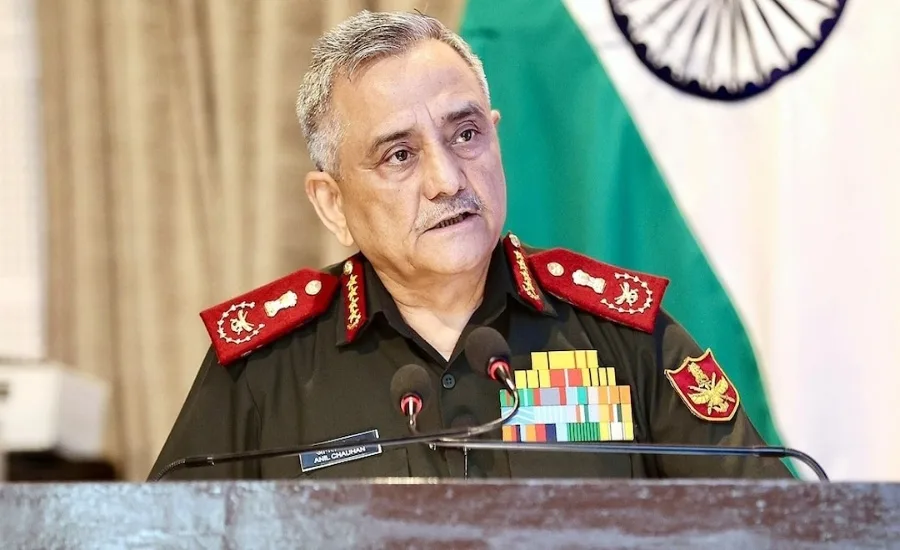
New Delhi: Cognitive Colonialism has emerged as a major national security concern, according to the Chief of Defence Staff (Retd.) General Anil Chauhan. Speaking at the 22nd Bharat Ratna Pandit Govind Ballabh Pant Memorial Lecture in New Delhi, General Chauhan highlighted how modern warfare is rapidly changing.
He warned that future conflicts will increasingly involve cyber attacks, information warfare, cognitive influence operations, and geopolitical competition alongside traditional military threats. His remarks provide an important perspective on India’s evolving security environment and long-term strategic challenges.
Gen Anil Chauhan Highlights Changing Nature Of Global Security
General Anil Chauhan said the global strategic environment is undergoing major changes. He pointed to shifting geopolitical alignments, technological disruptions, and the growing use of information as a weapon.
According to him, traditional power structures are weakening while new international arrangements remain incomplete. This has created a situation where countries increasingly form issue-based partnerships instead of long-term alliances.
What Is Cognitive Colonialism
One of the key themes of General Chauhan’s speech was Cognitive Colonialism. He described it as an attempt to influence how societies think, understand reality, build trust, and shape their future.
Unlike conventional warfare, cognitive colonialism targets people’s minds rather than physical territory. The objective is to influence beliefs, values, public opinion, and national decision-making processes.
Why Cognitive Colonialism For National Security
General Chauhan warned that information manipulation can become a powerful strategic tool. Hostile actors may use digital platforms, misinformation campaigns, and psychological operations to shape public perception. Such efforts can weaken social cohesion and create divisions within societies.
Future Wars Will Be Very Different
General Chauhan said future conflicts will not be fought only with tanks, aircraft, and missiles. He explained that cyber operations, electronic warfare, economic pressure, legal instruments, and information campaigns will play a much bigger role. These tools may sometimes replace direct military action altogether. According to him, the world is entering “a different kind of war.”
Lessons From Modern Conflicts
Recent global conflicts have demonstrated the growing importance of technology-driven warfare. Cyber attacks, drone operations, satellite intelligence, and digital influence campaigns have become key elements of military strategy. India must adapt quickly to these emerging realities.
Cognitive Colonialism: India Must Strengthen National Capacity
General Chauhan emphasized that India’s response should focus on strengthening national capabilities across both traditional and emerging domains. He stressed the importance of strong institutions, strategic planning, and national resilience.
According to him, a well-informed and engaged citizenry is also essential for national security.
Strength Beyond Military Power
The former CDS said strength should not be confused with aggression. Instead, strength means having the ability to protect national interests, deter threats, and make independent decisions. Such capabilities allow a nation to engage confidently with the world while preserving its identity.
Operation Sindoor And The Evolution Of Warfare
General Chauhan also referred to Operation Sindoor while discussing future conflict scenarios. He noted that military operations are increasingly supported by cyber capabilities, electronic warfare systems, economic measures, and information campaigns. This reflects a broader transformation in how nations prepare for and conduct warfare.
India’s Security Challenges From Pakistan
General Chauhan said Pakistan remains an important security concern for India. He referred to long-standing cross-border terrorism and the role of nuclear weapons in shaping regional security dynamics.
According to him, nuclear deterrence has created stability at the strategic level. However, it has also allowed instability to continue at lower levels of conflict. He described this phenomenon as the “stability paradox.”
Cognitive Colonialism: The China Challenge Remains Long-Term
General Chauhan described China as a different and more complex challenge. He noted that the India-China boundary issue remains unresolved. There is still no mutually agreed definition of the Line of Actual Control (LAC).
Infrastructure Development Along The Border
He pointed out that both countries continue to strengthen infrastructure along border regions. Combined with differing perceptions of the boundary, these developments can create friction and tensions. As a result, India must remain prepared for long-term strategic competition.
Cognitive Colonialism: Need For Preparedness Across All Domains
General Chauhan raised several important questions regarding India’s future preparedness. These include whether India is ready for short, intense conflicts as well as prolonged periods of national resilience. He also questioned how resources should be balanced between traditional military domains and newer areas such as space, cyber security, and information warfare.
According to him, India must continuously adapt its force structure to meet future challenges.
Read also: Unmanned, Unstoppable: How India Is Reshaping Modern Warfare With Hi Tech Drones
FAQs
Cognitive colonialism refers to attempts to influence how people think, form opinions, build trust, and understand reality through information and psychological influence operations.
He warned that future wars will increasingly involve cyber attacks, information warfare, electronic warfare, economic pressure, and cognitive influence campaigns alongside traditional military operations.
He highlighted cross-border terrorism from Pakistan, the long-term strategic challenge posed by China, cognitive colonialism, cyber threats, and rapidly changing geopolitical dynamics.