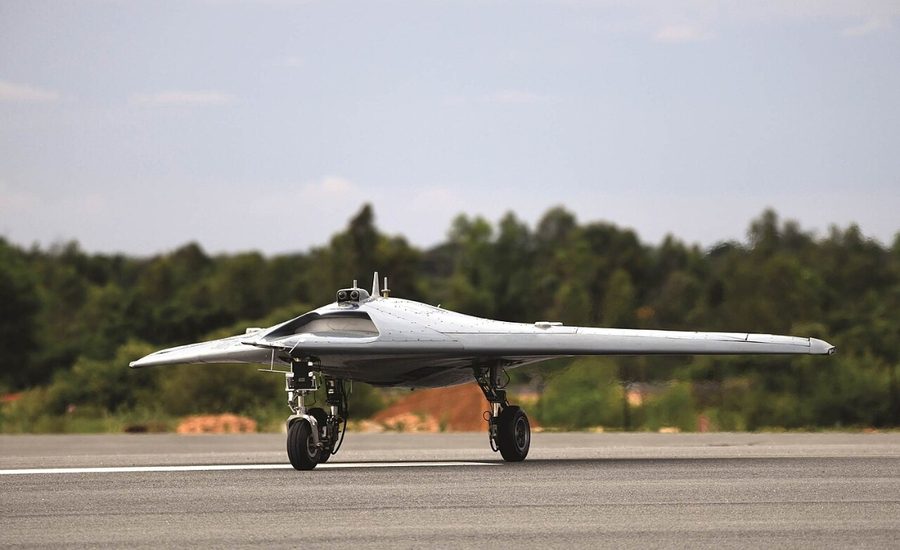
New Delhi: India’s future warfare strategy is rapidly shifting toward Unmanned Aerial Systems (UAS), with the Armed Forces now treating drones and autonomous systems as a core pillar of military operations. Senior Indian military leaders recently highlighted how modern conflicts, especially in Ukraine and West Asia, have changed the nature of air power and battlefield strategy.
According to official statements shared during a defence event in New Delhi, India is now focusing on:
- Integrated drone warfare
- Autonomous combat systems
- Counter-drone defence
- Joint operations between Army, Navy and Air Force
- AI-supported battlefield coordination
Read also: How Indian Army Plans to Turn Tank Smoke Launchers into Deadly Drone Systems for Future Warfare
The new doctrine marks a major transformation in India’s defence planning.
Why Drones Are Becoming Central to Modern Warfare
Military experts say unmanned systems are now changing combat faster than traditional fighter aircraft and tanks.
Recent global conflicts have shown that drones can:
- Strike deep inside enemy territory
- Conduct surveillance in real time
- Reduce risk to pilots
- Carry out precision attacks
- Support electronic warfare
- Destroy enemy infrastructure at lower cost
Indian defence officials said these systems are no longer just support tools. They are becoming direct combat weapons.
Details of India Unmanned Warfare Systems
Indian Air Force chief Air Chief Marshal AP Singh said future wars will depend heavily on decentralised and autonomous systems.
Officials explained that the battlefield is shifting away from traditional centralized air power toward networked drone operations. India is also improving coordination between the three armed services to operate drones in shared airspace.
The military leadership stressed that:
- All three services must work together
- Drone operations require unified command systems
- Counter-UAS systems are equally important
- Future conflicts may involve swarm drone attacks
This approach is aimed at ensuring faster response and better situational awareness during combat.
India Unmanned Warfare Systems: Operation Sindoor Highlighted Drone Warfare Capabilities
Indian officials referred to Operation Sindoor as an important example of unmanned warfare deployment.
During the operation, unmanned systems were reportedly used for:
- Deep surveillance
- Precision targeting
- Counter-drone defence
- Monitoring enemy movement
Officials stated that the operation demonstrated how drones can operate as frontline strike platforms in modern conflict scenarios.
India Expanding Indigenous Drone and Counter-Drone Systems
India is actively investing in domestic drone technology under the Make in India defence push.
Several indigenous systems are under development or testing, including:
- Combat drones
- Loitering munitions
- Drone swarms
- AI-enabled defence grids
- Autonomous surveillance platforms
Projects such as the HAL CATS Warrior are designed to support future air combat missions alongside manned fighter aircraft.
India is also strengthening integrated air defence systems like Akashteer to detect and neutralize hostile drones and missiles in real time.
India Unmanned Warfare Systems: Focus on AI, Electronic Warfare and Automation
Military experts believe future drone warfare will rely heavily on:
- Artificial Intelligence
- Automated targeting
- Secure communications
- Electronic warfare
- Autonomous navigation
Research studies also show that AI-driven systems can improve battlefield coordination and reduce operational delays in high-pressure combat environments.
Indian defence planners are now focusing on creating integrated battlefield networks that connect drones, radars, sensors and command centres.
Global Shift Toward Unmanned Military Forces
India is not alone in this transition.
Countries across the world are restructuring military strategy around unmanned systems. Russia recently established dedicated unmanned forces focused on drone warfare operations. European defence programs are also increasingly integrating manned-unmanned combat systems.
This global shift indicates that future wars may depend more on autonomous platforms than traditional military hardware alone.
What This Means for India’s Defence Future
India’s latest military strategy shows that unmanned systems are no longer experimental technologies.
They are becoming:
- Core combat assets
- Strategic deterrence tools
- Surveillance platforms
- Air defence components
- Force multipliers in future wars
The Indian Armed Forces now appear focused on building a highly connected, AI-supported and drone-driven warfare ecosystem for future conflicts.