New Delhi: India’s first indigenous 5 kN air-breathing detonation engine has successfully completed a major hot-fire demonstration, marking an important step in the country’s defence and aerospace technology. Developed by defence startup D-Propulse, the engine achieved Technology Readiness Level-5 (TRL-5) during testing at a DRDO facility. The milestone highlights India’s growing capability in next-generation propulsion systems and supports the vision of self-reliance in advanced defence technologies.
Details of Indigenous Rotating Detonation Engine
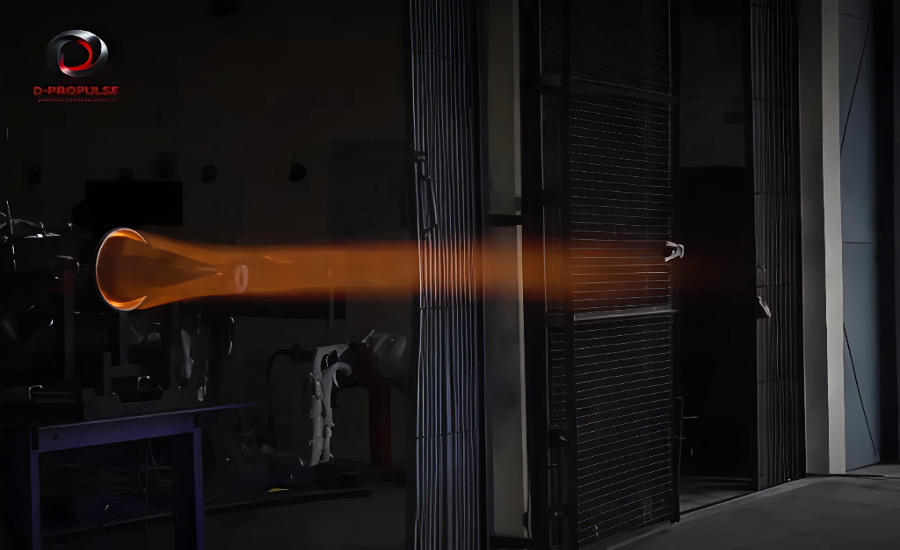
Indian defence propulsion startup D-Propulse, incubated at IIT Madras, has successfully demonstrated the country’s first 5 kN air-breathing Rotating Detonation Engine (RDE) integrated with an aerospike nozzle.
The successful hot-fire test was conducted at a DRDO test facility, where the engine produced a stable 5 kN thrust. The technology has now reached TRL-5, meaning it has been validated in a relevant operational environment beyond laboratory testing.
What Is A Rotating Detonation Engine
A Rotating Detonation Engine (RDE) is a new type of propulsion system that uses pressure-gain combustion instead of the normal combustion process used in traditional jet engines. Unlike conventional engines, the RDE creates continuous detonation waves inside the combustion chamber. This allows it to:
- Produce higher efficiency.
- Deliver more thrust with lower fuel use.
- Reduce the number of moving parts.
- Make engine design simpler and lighter.
Why Is The Aerospike Nozzle Important
The engine also uses an aerospike nozzle, a technology designed to maintain high efficiency across different altitudes. Unlike traditional bell-shaped nozzles that work best only at specific heights, an aerospike nozzle automatically adjusts to changing air pressure. This makes it suitable for advanced aerospace and defence applications.
Indigenous Rotating Detonation Engine: Better Efficiency Than Conventional Engines
According to D-Propulse, the new propulsion technology can provide 15% to 25% higher thermodynamic efficiency compared to conventional air-breathing propulsion systems. The company also says the engine can be manufactured using precision machining instead of complex turbine assemblies. This could reduce production costs and shorten manufacturing time.
Indigenous Rotating Detonation Engine: Flight-Ready Engine Targeted By 2027
D-Propulse said the successful demonstration marks the transition from laboratory validation to an integrated prototype. The company now aims to develop a flight-ready Rotating Detonation Engine by December 2027, which will be the next major milestone in the programme.
Potential Defence Applications
The technology is being developed for future defence platforms, including:
- Cruise missiles
- Target drones
- High-speed unmanned aerial vehicles (UAVs)
- Future advanced air-breathing propulsion systems
These applications could strengthen India’s indigenous defence manufacturing capabilities and reduce dependence on imported propulsion technologies.
What is the Importance of Indigenous Rotating Detonation Engine
The successful TRL-5 validation is an important milestone for India’s indigenous aerospace ecosystem. Advanced propulsion technologies such as Rotating Detonation Engines are currently being researched by only a limited number of countries. India’s successful demonstration shows growing expertise in next-generation defence technologies and supports the government’s Aatmanirbhar Bharat vision for self-reliance in defence manufacturing.
Read also: DRDO Photonic Radar: Everything You Need to Know About India’s Next-Generation Radar