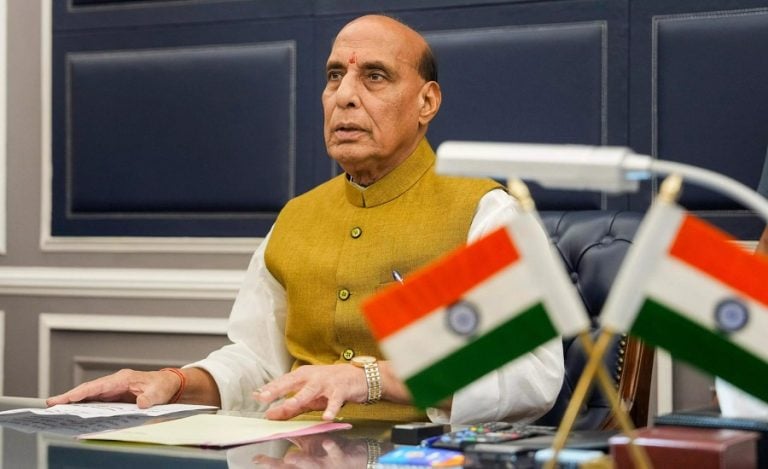
New Delhi: India’s plan to acquire more Rafale Jets will help establish a second fighter production line in India while supporting the country’s defence manufacturing goals. Defence Secretary Rajesh Kumar Singh said the proposed Rafale deal with France will strengthen indigenous aerospace capabilities and create new manufacturing opportunities without affecting the ongoing Tejas fighter aircraft programme.
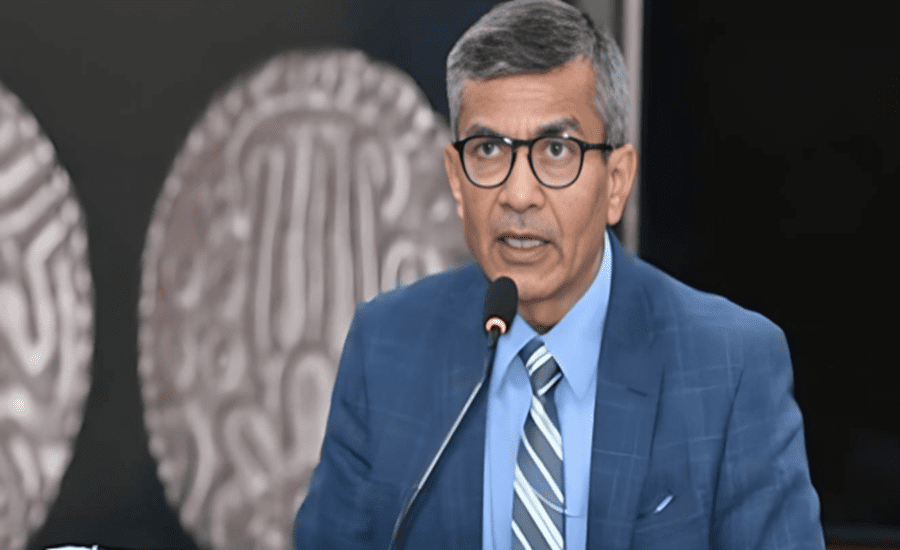
Speaking at the NDTV Defence Summit 2026, Singh clarified that the Rafale project and the Tejas programme will run together, helping India expand its fighter aircraft ecosystem while advancing self-reliance in defence production.
Defence Secretary Explains Need For More Rafale Procurement
Addressing a session on India’s evolving defence capabilities, Defence Secretary Rajesh Kumar Singh said India requires additional fighter aircraft to meet future operational needs.
Read also: Everything You Need to Know About Dassault’s 40-Year Support Plan for India’s Rafale Jets
He noted that France has agreed to support significant levels of indigenisation under the Rafale programme. This would allow India to develop a second fighter aircraft production line within the country. According to Singh, the move is not only about acquiring aircraft but also about expanding India’s manufacturing base and technological capabilities.
How A Second Fighter Production Line Will Benefit India
India currently relies heavily on domestic production facilities led by Hindustan Aeronautics Limited (HAL) for fighter aircraft manufacturing. A second production line would provide several advantages:
- Increased fighter aircraft production capacity
- Faster replacement of aging aircraft
- Greater technology transfer opportunities
- Expansion of the domestic aerospace supply chain
- More employment opportunities in defence manufacturing
The proposed Rafale manufacturing ecosystem could also strengthen India’s long-term aerospace industry.
India Rafale Procurement: Focus On Indigenous Manufacturing
The Defence Secretary emphasized that India is pursuing higher levels of local manufacturing in major defence acquisitions.
Under the proposed arrangement, a significant portion of production and component manufacturing is expected to take place within India, supporting the government’s “Aatmanirbhar Bharat” vision. This approach aims to reduce dependence on foreign suppliers while developing domestic expertise in advanced aerospace technologies.
Tejas Programme Will Continue Without Any Impact
One of the key concerns surrounding the Rafale deal has been its possible impact on the indigenous Light Combat Aircraft (LCA) Tejas programme.
Rajesh Kumar Singh clearly stated that additional Rafale procurement will not come at the cost of Tejas production being carried out by HAL. He stressed that the Tejas Mark 1A programme will continue as planned and remain a major priority for India’s defence modernization efforts.
Tejas Mark 1A Development To Continue
The Defence Secretary described the Tejas programme as a continuous development model.
According to him, India will keep improving the aircraft through advanced systems, indigenous weapons, and next-generation radar technologies. The goal is to steadily enhance the platform’s capabilities while expanding domestic defence expertise.
India Rafale Procurement: Indian Air Force Capability Gaps Being Addressed
Rajesh Kumar Singh highlighted progress in addressing several capability gaps within the Indian Air Force. He noted that the Air Force had identified three major concerns:
- Declining fighter squadron strength
- Need for additional airborne early warning and control (AEW&C) aircraft
- Requirement for more aerial refuelling aircraft
The government has initiated measures to address all three areas through procurement and modernization programmes.
India Rafale Procurement: Strengthening Air Combat Readiness
The Defence Secretary said that defence contracts may take time to deliver results, but once agreements are finalized, timelines become clearer and capability enhancement begins to take shape. These efforts are aimed at ensuring that the Indian Air Force remains prepared to meet future security challenges.
NDTV Defence Summit 2026 Focuses On Future Warfare
The remarks were made during the NDTV Defence Summit 2026, themed “India’s New Defence Edge.” The summit brought together senior government officials, military leaders, defence experts, and industry representatives to discuss India’s changing security environment and future military requirements. Topics included indigenous defence production, advanced military technologies, aerospace development, and future warfare concepts.
Why The India Rafale Procurement Matters
The proposed expansion of the Rafale programme reflects India’s dual strategy of strengthening operational readiness while boosting domestic manufacturing.
If implemented, the second fighter production line could enhance India’s defence industrial base, create new opportunities for local suppliers, and support long-term aerospace development. At the same time, the government has reiterated that indigenous programmes such as Tejas remain central to India’s defence modernization roadmap.
Read also: How This Technology of Rafale Jets Fooled Pakistani Missiles During Operation Sindoor
FAQs
India is considering additional Rafale jets to strengthen air combat capabilities and support the creation of a second fighter aircraft production line with higher levels of local manufacturing.
No. Defence Secretary Rajesh Kumar Singh has stated that the Rafale acquisition will not impact the ongoing Tejas Mark 1A production programme.
A second production line can increase manufacturing capacity, support technology transfer, strengthen the defence industrial ecosystem, and improve India’s self-reliance in aerospace production.