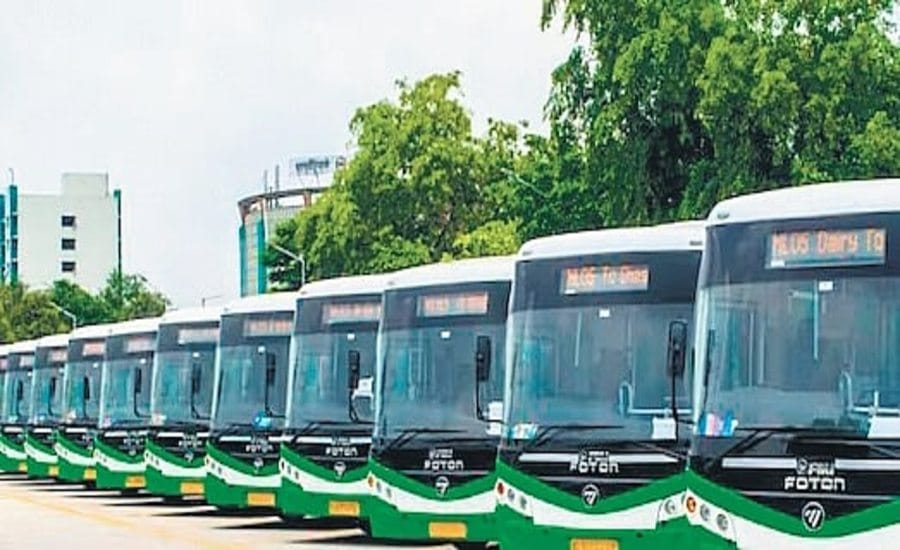
New Delhi: The Delhi government has approved ₹300.61 crore for developing electric bus charging infrastructure at seven depots in South West Delhi, strengthening the city’s push towards a fully electrified public transport bus fleet.
The charging infrastructure will come up at DTC and cluster bus depots in Dichaon Kalan, Kair, Kharkhari Nahar and Ghumanhera areas. Officials said the project will support the growing e-bus fleet and help Delhi expand its electric public transport network.
The Delhi Transport Corporation (DTC) currently operates more than 5,000 e-buses, while the government has set a target of increasing the fleet to 14,000 e-buses by 2029.
₹300 Crore Approved for Seven Depots
The approval came during a recent meeting of the Expenditure Finance Committee (EFC) chaired by Chief Minister Rekha Gupta.
According to the project plan, the total cost of the charging infrastructure is ₹300.61 crore. The government will initially release 40% of the amount, or ₹120.25 crore, to the power distribution company in the current financial year.
An amount of ₹120.07 crore has already been allocated for the project under the Special Assistance to States for Capital Investment scheme. The remaining ₹180.36 crore will be provided through the budget for the next financial year.
The work is expected to be completed within 18 months, according to the detailed project report prepared by BSES Rajdhani Power Limited.
Read Also: Big Healthcare Boost for East Delhi: GTB Hospital Gets Approval for 250-Bed Trauma Block
Advanced Charging Infrastructure at E-Bus Depots
The project is not limited to installing individual charging points. It involves developing a dedicated power infrastructure capable of handling the large electricity demand generated by electric buses.
The proposed system will include:
- 66 KV power in-feeds
- Three 66/11 KV grids
- Seven 11 KV switching stations
These facilities will be developed across the seven identified depots to support reliable and high-capacity charging operations.
With Delhi steadily adding electric buses to its public transport system, such infrastructure will play an important role in ensuring that buses can be charged efficiently before and during their operating schedules.
Power Capacity Planned Across Depots
The project also includes specific power-load allocations for each depot based on its operational requirements.
The planned allocations are 4 MVA at DTC Dichaon, 8 MVA at Cluster Depot Dichaon, 14.2 MVA at Cluster Kair, 7 MVA at DTC Kharkhari Nahar, 5 MVA at DTC Depot Ghumanhera, 9.6 MVA at Cluster Ghumanhera-1, and 11.4 MVA at Ghumanhera-2.
The different load allocations reflect the expected electricity requirements of individual depots and their electric bus operations.
Supporting Delhi’s 14,000 E-Bus Target
Delhi’s current e-bus fleet of more than 5,000 vehicles is expected to expand significantly over the next few years. The government’s target is to reach 14,000 e-buses by 2029.
This expansion requires charging infrastructure to grow alongside the fleet. Without adequate depot-level power systems, adding large numbers of electric buses could create operational challenges.
The newly approved project therefore focuses on building the supporting infrastructure required for the next phase of Delhi’s electric bus expansion.
What the Charging Network Means for Public Transport
For commuters, the expansion of e-buses is linked to a broader shift towards cleaner public transport. Electric buses can help reduce dependence on conventional fuels and support efforts to lower emissions from the transport sector.
The charging network will also strengthen the operational capacity of DTC and cluster bus depots as more electric vehicles are introduced into the system.
The project’s location across several South West Delhi depots is particularly significant because these facilities will form part of the infrastructure supporting the city’s expanding electric bus network.
Building Infrastructure Alongside Fleet Expansion
Delhi’s e-bus transition is moving beyond simply purchasing electric buses. The latest approval shows a parallel focus on the power systems, grids and switching infrastructure needed to keep the fleet operational.
With construction targeted for completion within 18 months, the seven-depot project is expected to create additional charging capacity as Delhi works towards its 14,000 e-bus target.
The ₹300.61-crore investment thus forms an important part of Delhi’s broader public transport electrification strategy, connecting fleet expansion with the infrastructure needed to operate it at scale.