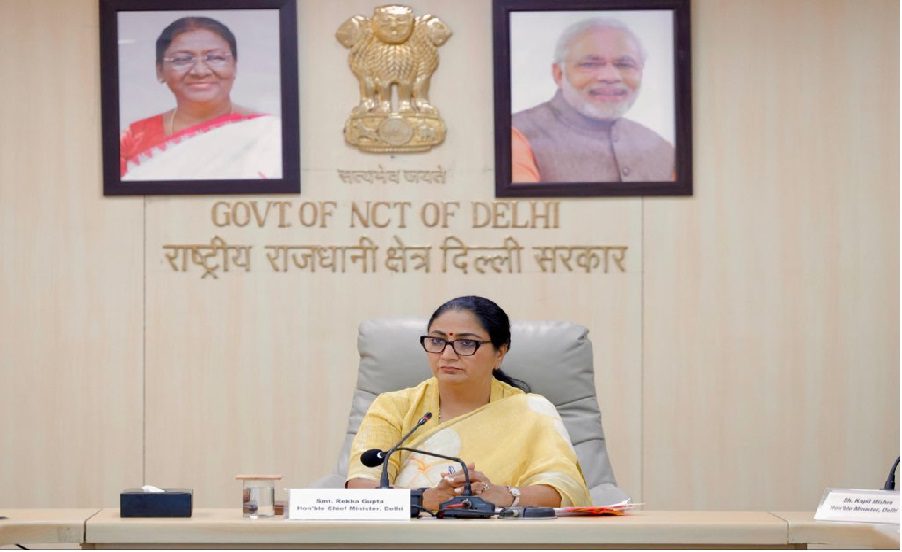
New Delhi: The Delhi government has tightened administrative protocols for senior bureaucrats, directing them to prioritise meetings convened by Chief Minister Rekha Gupta and ensure that key decisions taken during meetings with the Central government and the Lieutenant Governor (LG) are promptly communicated to the Chief Minister’s Office (CMO).
The directive follows concerns that some senior officers have skipped meetings chaired by the Chief Minister and failed to keep the CMO informed about decisions and directions emerging from meetings convened by the Centre or the LG. The move underscores the government’s push to improve coordination between the political executive and the bureaucracy and reinforce accountability within the administration.
Delhi Govt Makes CM’s Meetings a Priority
In a communication dated October 7, the General Administration Department (GAD) reiterated that meetings convened at the CMO under the Chief Minister’s chairpersonship must receive due priority. The instructions were circulated to additional chief secretaries, principal secretaries, secretaries, heads of departments and heads of government bodies, including autonomous bodies, boards, corporations and public sector undertakings.
The communication noted that some senior officers had been unable to attend meetings chaired by the Chief Minister and that similar instructions issued earlier on April 28 had not been followed adequately. The matter was reportedly viewed seriously by the Chief Minister.
Under the directive, officers concerned must ensure their attendance at meetings convened by the CM. If a scheduling conflict arises with a later-scheduled meeting, the organisers should be asked to reschedule it, with the CMO informed in advance. If the conflict cannot be resolved, the matter must be brought to the CMO’s notice for appropriate directions.
The instructions are intended to prevent avoidable absences and ensure that senior officials remain available for discussions on matters requiring the Chief Minister’s attention.
Officers Asked to Share Decisions Taken with Centre and LG
The directive also addresses the flow of information within the Delhi administration. Officers have been asked to ensure that decisions taken and directions issued during meetings convened by the Central government or the Lieutenant Governor are communicated to the CMO.
The requirement is significant because information about central schemes, administrative decisions and directions from the LG may have a direct bearing on the functioning of Delhi’s departments. Timely communication is intended to help the elected government remain informed and coordinate its response.
The instructions also reiterate the need to share important references, communications and correspondence received from the Government of India on new programmes, schemes and matters affecting subjects allocated to the Delhi government.
The emphasis on information-sharing points to the administration’s concern that gaps in coordination could hamper decision-making. However, the directive itself does not establish that all such lapses were deliberate or that every department was withholding information.
Chief Secretary’s Warning and Accountability Push
Reports have also highlighted concerns over officials repeatedly missing meetings called by the Chief Minister, with the Chief Secretary issuing warnings to officers over attendance and coordination failures.
The broader message is that senior bureaucrats are expected to manage their schedules in a way that allows them to attend key meetings convened by the political executive. Where conflicts arise, officials are expected to communicate in advance rather than allow important meetings to be missed without explanation.
The directive places greater emphasis on administrative discipline and coordination. It also brings into focus the relationship between the elected leadership and senior officials, particularly the need to ensure that the government has access to information required for policy decisions and implementation.
Separate Push to Clear Pending Public Grievances
Alongside the instructions on meeting attendance and information-sharing, the Delhi government has separately tightened monitoring of public grievances. Departments have been directed to expedite pending complaints and ensure that cases are resolved within prescribed timelines.
The directions cover complaints received through platforms including the Centralised Public Grievance Redress and Monitoring System (CPGRAMS), the Lieutenant Governor’s Listing system and the Public Grievance Monitoring System (PGMS).
Officials have been told that merely submitting a reply will not be sufficient to close a complaint. Each grievance must be examined on its merits, with a clear and reasoned response explaining the action taken. Heads of departments are to be held accountable for overdue complaints and poor-quality disposal, while regular reviews will monitor pending cases and delays.
The two sets of instructions reflect a wider administrative push: ensuring that senior officers coordinate effectively with the political executive while also delivering timely, meaningful responses to citizens.
A Test of Administrative Coordination
Delhi’s governance structure involves an elected government as well as the Lieutenant Governor and the Central government, making coordination among institutions particularly important. The latest directive seeks to ensure that meetings, decisions and official communications are handled through clearer procedures.
Whether the measures resolve the reported coordination gaps will depend on how consistently departments follow the instructions and how accountability is enforced. For now, the government has made its expectations clear: senior officers must prioritise meetings called by the Chief Minister, keep the CMO informed of important decisions and ensure that administrative responsibilities—including public grievance redressal—are not delayed.
Read also: Delhi Winter Pollution Plan: No Fuel Without PUC, Vehicle Curbs and AI Monitoring from November 1