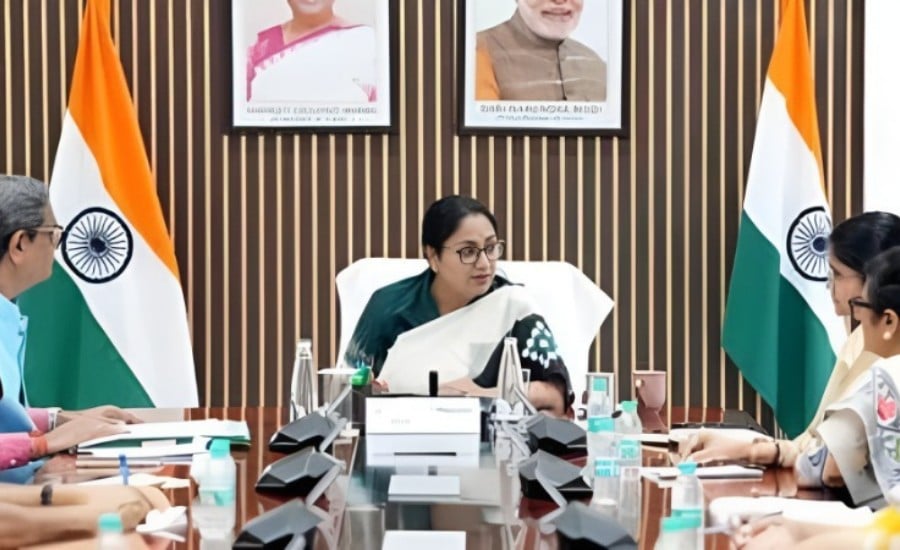
New Delhi: The Delhi government, led by Chief Minister Rekha Gupta, is preparing to implement a comprehensive Winter Action Plan from November 1 to February 28 to tackle air pollution in the national capital. The measures target vehicular emissions, construction dust and road dust, alongside efforts to encourage public transport and reduce traffic congestion.
The plan includes enforcing the ‘No PUC, No Fuel’ rule, restricting the entry of vehicles registered outside Delhi that do not meet BS-VI emission standards, and deploying technology to monitor construction sites. The government has also announced a 50% work-from-home arrangement and measures to expand mechanised road cleaning.
The winter framework brings together vehicle regulations, construction restrictions, pollution monitoring and transport-related interventions to address several sources of air pollution.
No PUC, No Fuel: Vehicle Entry Restrictions
Under the ‘No Pollution Under Control Certificate, No Fuel’ policy, vehicles without a valid Pollution Under Control (PUC) certificate will not be supplied fuel at designated fuel stations.
Read Also: Delhi Industrial Policy 2026: Rekha Gupta Cabinet Approves ₹1,000 Crore for Industrial Growth
The government will also restrict the entry of vehicles registered outside Delhi that do not comply with BS-VI emission standards. This restriction is scheduled to remain in force from November 1 to January 31, subject to applicable exemptions.
Other measures aimed at reducing private vehicle use and traffic congestion include:
- Higher parking charges: Parking fees at authorised parking facilities will be doubled during the winter action period, with exemptions for specified facilities.
- Staggered office timings: Different reporting and closing times for government offices are intended to reduce peak-hour congestion.
- Work-from-home arrangement: Government and private offices have been asked to implement a 50% work-from-home arrangement.
- Public transport: The government will promote electric buses, Metro services, carpooling and last-mile connectivity to encourage alternatives to private vehicles.
Construction Dust to Face Tighter Monitoring
Construction and demolition activities are among the sources targeted under the winter pollution framework. The government plans to restrict dust-generating activities and strengthen compliance monitoring at construction sites.
Dust-generating demolition and outdoor civil construction activities are scheduled to be prohibited from November 1 to January 31, with a more comprehensive construction and demolition ban planned for December 10 to January 20, subject to applicable exemptions.
Construction sites will also face closer scrutiny through technology-enabled monitoring.
Key measures include:
- AI-enabled surveillance: Cameras at construction sites will help authorities monitor compliance and identify violations.
- Dust-control enforcement: Agencies responsible for construction activities will be monitored for adherence to pollution-control requirements.
- Inspections: The Delhi Pollution Control Committee (DPCC) has stepped up inspections and issued show-cause notices to agencies found allegedly violating pollution-control norms.
- Pollution hotspot checks: Authorities will continue field inspections to assess dust-control measures and identify areas requiring corrective action.
On October 11, Municipal Corporation of Delhi officials and Vivek Pandey, Urban Development Secretary of the Government of the National Capital Territory of Delhi, jointly inspected pollution hotspots and construction sites in South Zone areas. The inspection reviewed prevailing pollution conditions and the implementation of control measures ahead of winter.
Mechanised Sweeping to Cover 609 Km of Smaller Roads
Road dust is another major focus of the government’s pollution-control strategy. The Delhi Cabinet has approved the expansion of mechanised road cleaning to smaller roads where such facilities are currently unavailable.
The initiative will cover approximately 609 km of roads with a right of way of less than 10 metres.
The government has identified:
- 854 roads for mechanised sweeping.
- 250 municipal wards across which the initiative will be implemented.
- 30 electric vehicle-based mechanical road-sweeping machines to support the programme.
The Delhi government will provide a grant for the machines, while the Municipal Corporation of Delhi will be responsible for their deployment and operation.
The use of electric-powered machines is intended to expand dust removal while avoiding the additional emissions associated with conventional fuel-powered equipment.
IIT Delhi to Track PM2.5 and PM10 Pollution Sources
The Cabinet has also approved a five-year collaboration with the Indian Institute of Technology Delhi (IIT Delhi) to continuously monitor and analyse the sources of particulate pollution.
The proposed system will assess the contribution of different pollution sources to PM2.5 and PM10, helping authorities better understand how emissions and dust affect air quality.
The analysis will focus on sources including:
- Vehicular emissions
- Road dust
- Biomass burning
The project is intended to provide scientific information about the daily contribution of different sources and support more targeted pollution-control decisions. The collaboration is estimated to cost approximately ₹19.22 crore over five years.
Wider Effort to Improve Delhi’s Winter Air Quality
The Winter Action Plan forms part of the Delhi government’s broader strategy to address pollution from transport, construction, waste and biomass burning, industrial activity and road dust.
The framework is designed to coordinate enforcement across government departments and civic agencies while encouraging residents and institutions to contribute to pollution-control efforts.
Its effectiveness will depend on the implementation of the announced restrictions, consistent monitoring and compliance by vehicle owners, construction agencies and other stakeholders throughout the winter period.
Read Also: Delhi Plans 52-Km Yamuna Riverfront on Sabarmati Model, Targets First Phase in Current Term