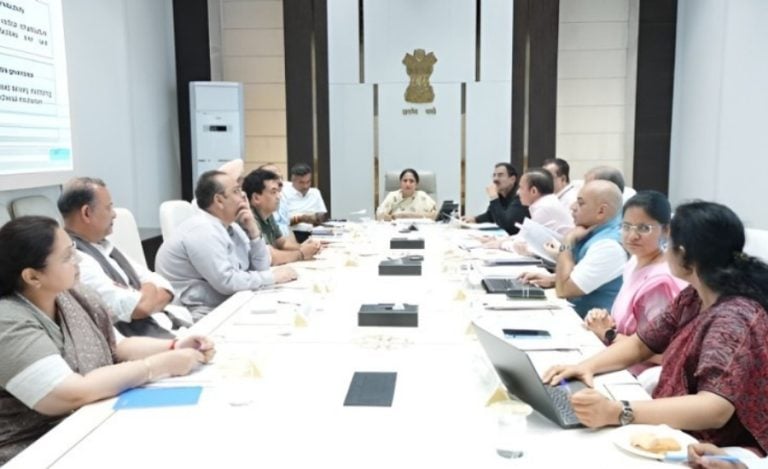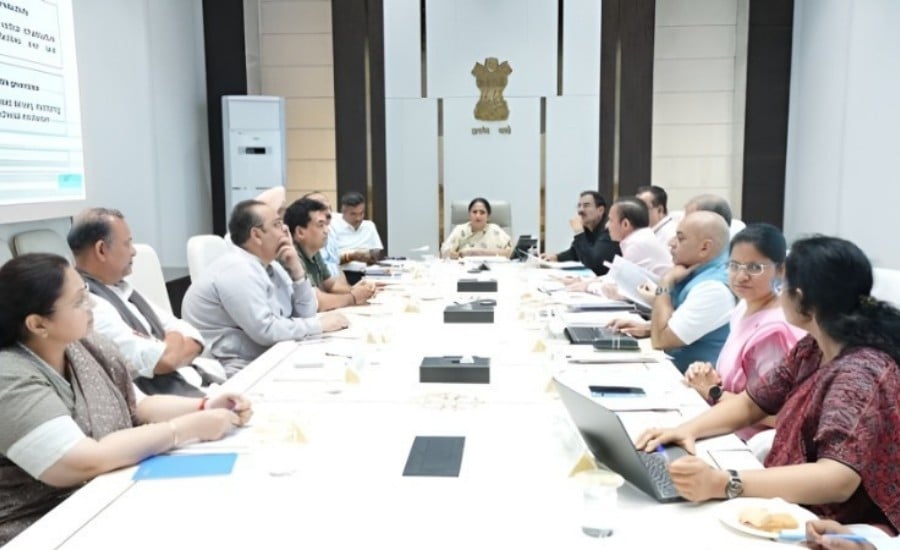
New Delhi: The Delhi Cabinet, chaired by Chief Minister Rekha Gupta, has approved the Delhi Industrial Policy 2026, a 10-year framework designed to attract investment, modernise existing industries and expand employment opportunities through clean, technology-driven and knowledge-based sectors.
The policy provides for an allocation of ₹1,000 crore under the Mukhyamantri Udyamshree Yojana between financial years 2026–27 and 2030–31. The initiative is intended to support industrial development and encourage the establishment and expansion of businesses in the national capital.
The government has identified 10 priority sectors for targeted support, including information technology, Global Capability Centres (GCCs), data centres, healthcare, research and development, urban logistics, circular economy, precision manufacturing, skill development and technological modernisation of micro, small and medium enterprises (MSMEs).
Delhi Industrial Policy Targets 10 Priority Sectors
The policy seeks to build Delhi’s industrial ecosystem around specialised services, advanced technology and modern manufacturing while encouraging investment in cleaner, higher-value industries.
Read Also: Delhi’s ₹924 Crore Yamuna Clean-Up Push: Two New Sewage Plants Get Approval
Businesses in the identified sectors will be eligible for incentives covering capital expenditure, workspace rentals, recruitment, research, certification, energy conservation and technology upgrades. The policy also proposes higher incentive limits for women-led enterprises.
The 10 priority sectors are:
- Information technology and digital services
- Global Capability Centres
- Data centres
- Healthcare
- Research and development
- Urban logistics
- Circular economy and waste management
- Precision manufacturing
- Skill development
- Technological modernisation of MSMEs
The proposed incentives vary by sector and are subject to the applicable eligibility conditions.
IT Firms and Global Capability Centres to Receive Investment Support
Under the policy, eligible IT and digital-services businesses can receive incentives of up to ₹10 crore for digital infrastructure investment. The ceiling increases to ₹12 crore for women-led enterprises.
Additional assistance is proposed for office rentals, bandwidth and cloud services, as well as the recruitment of new employees.
For Global Capability Centres, the investment incentive ceiling is ₹50 crore, rising to ₹60 crore for women-led enterprises. Support will also cover research and development, certification and workspace development.
Data centres will be eligible for assistance related to capital investment, water-efficient cooling systems and data-security expenditure.
These measures are intended to attract specialised technology businesses and strengthen Delhi’s position as a centre for digital services and corporate operations.
Healthcare and Large Hospitals Included in Incentive Framework
Healthcare is another sector identified for targeted industrial incentives.
Eligible healthcare projects can receive capital-investment assistance of up to ₹10 crore, with a higher ceiling of ₹12 crore for women-led enterprises. Hospitals with 1,000 or more beds may qualify for assistance of up to ₹100 crore.
The policy also proposes support for healthcare-related certifications and the recruitment of specialist doctors.
The measures are intended to encourage investment in healthcare infrastructure and specialised services in the capital.
MSMEs to Get Up to ₹5 Crore for Technology Modernisation
The policy includes incentives for existing MSMEs seeking to upgrade technology, improve productivity and adopt more efficient production methods.
Eligible MSMEs can receive assistance of up to ₹5 crore for technological modernisation. The ceiling rises to ₹7 crore for women-led enterprises.
Additional support is proposed for energy-efficiency improvements, rooftop solar installations and apprenticeships.
Key provisions for MSMEs include:
- Financial assistance for technological upgrades.
- Support for energy-efficient equipment and processes.
- Incentives for rooftop solar installations.
- Assistance linked to apprenticeship programmes.
- Higher incentive ceilings for women-led enterprises.
The government has also included precision manufacturing and industry-linked skill development among its priorities, connecting industrial growth with workforce training and employment generation.
Circular Economy and Cleaner Industrial Practices
The policy seeks to promote industrial activities that reduce waste and encourage resource reuse.
Priority areas include recycling, organic-waste processing and electronic-waste management. Support for energy conservation and environmental certification is also part of the broader incentive framework.
The focus on cleaner production is intended to encourage industries to adopt more sustainable practices while supporting the development of specialised businesses in waste management and resource recovery.
The policy also envisages the redevelopment of existing industrial areas and the modernisation of industrial units.
Invest Delhi to Serve as Single Point of Contact for Investors
To facilitate investment, the government has proposed Invest Delhi as a dedicated agency and single point of contact for businesses.
The agency is expected to guide investors through the process of identifying suitable sites, obtaining approvals, accessing incentives and resolving grievances.
The process will be supported by the Delhi Udyog Mitra Portal, which provides an online platform for industrial registrations, clearances, licences and related services.
The proposed framework aims to simplify administrative procedures and make the process of establishing or expanding businesses more transparent.
Women Entrepreneurs and Employment Generation in Focus
The policy provides for higher incentive ceilings for women-led enterprises across priority sectors. It also includes provisions related to recruitment, apprenticeships and skill development.
According to the government’s stated objectives, the framework is intended to attract fresh investment, support the modernisation of existing businesses and expand opportunities for young people and women.
Delhi’s corporate headquarters, educational institutions, research centres, skilled workforce and access to major markets are among the resources the government plans to leverage in developing the capital’s industrial ecosystem.
A 10-Year Roadmap for Delhi’s Industrial Economy
The Delhi Industrial Policy 2026 establishes a long-term framework for investment promotion, industrial modernisation and employment generation, with the ₹1,000-crore allocation for the Mukhyamantri Udyamshree Yojana covering five financial years.
Its implementation will involve sector-specific incentives, support for women-led enterprises, industrial-area redevelopment and a proposed single-window mechanism for investors.
Read Also: Delhi Govt Approves ₹17,969 Crore ‘One Zone, One Operator’ Project to Upgrade Sewerage Network