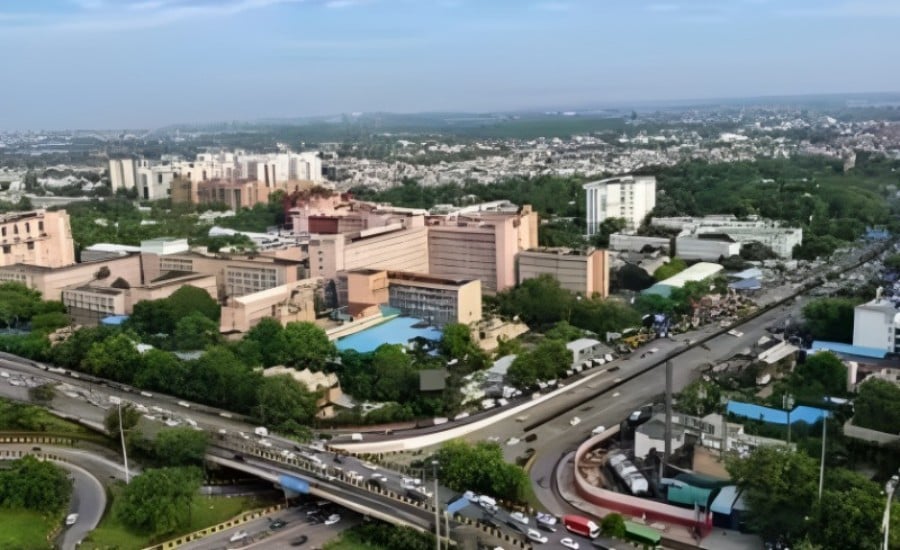
New Delhi: Delhi’s Master Plan 2047 envisages major urban expansion to accommodate a projected population of around 3.2 crore by 2047, but the scale of future demand is expected to put significant pressure on the capital’s water, housing, waste management and urban infrastructure systems.
The plan, officially notified on August 21, 2026, sets out a long-term framework for Delhi’s development, with emphasis on housing, transport, land use, environmental sustainability and infrastructure.
Water Demand to Rise Sharply
One of the major requirements identified for Delhi’s future is potable water supply. The city’s daily potable water requirement is projected to reach around 1,600 million gallons per day (MGD) by 2047.
Read Also: Delhi’s MPD 2047 Takes Shape: DDA Brings Civic, Transport and Heritage Bodies Together
The projection comes as Delhi’s population and built-up areas continue to expand. Recent reporting on MPD-2047 has highlighted the gap between future water requirements and the city’s existing supply capacity.
The plan also places emphasis on more efficient water use, including the use of treated and recycled water for suitable purposes and greater reliance on rainwater harvesting.
Nearly 26,000 Tonnes of Waste a Day
The projected population growth is also expected to substantially increase Delhi’s solid waste generation.
According to projections associated with MPD-2047, the city could generate around 25,764 tonnes of municipal solid waste per day by 2047, compared with an estimated 13,500 tonnes per day in 2026.
This makes waste collection, processing and disposal an important part of the city’s long-term infrastructure planning.
Key 2047 Projections
- Population: Around 3.2 crore
- Potable water requirement: Around 1,600 MGD per day
- Municipal solid waste: Around 25,764 tonnes per day
- Additional housing requirement: Around 40 lakh homes
- Metro network target: Around 695 km
The plan also proposes large-scale housing creation, with around 40 lakh new homes envisaged to meet future requirements.
Push for Compact and Vertical Development
MPD-2047 proposes greater use of vertical development and high-density growth, particularly around transport corridors, as Delhi faces limited land availability.
The framework also includes mixed-use development, land pooling, redevelopment of older areas and measures to improve public transport connectivity.
Environmental measures form another component of the plan. Proposals include strengthening green and blue infrastructure, improving drainage, creating green buffers and rehabilitating the Yamuna and its associated drainage network.
The Implementation Challenge
The scale of the targets means that implementation will be a key part of Delhi‘s long-term planning. Housing, water supply, waste management, transport and environmental infrastructure will need to be developed alongside population growth.
MPD-2047 therefore provides a long-term development framework, but its effectiveness will depend on how its proposed land-use, infrastructure and sustainability measures are implemented across the capital.
Read Also: Delhi Master Plan 2047 Draft Gets DDA Nod, Sets Out New Framework for Urban Development