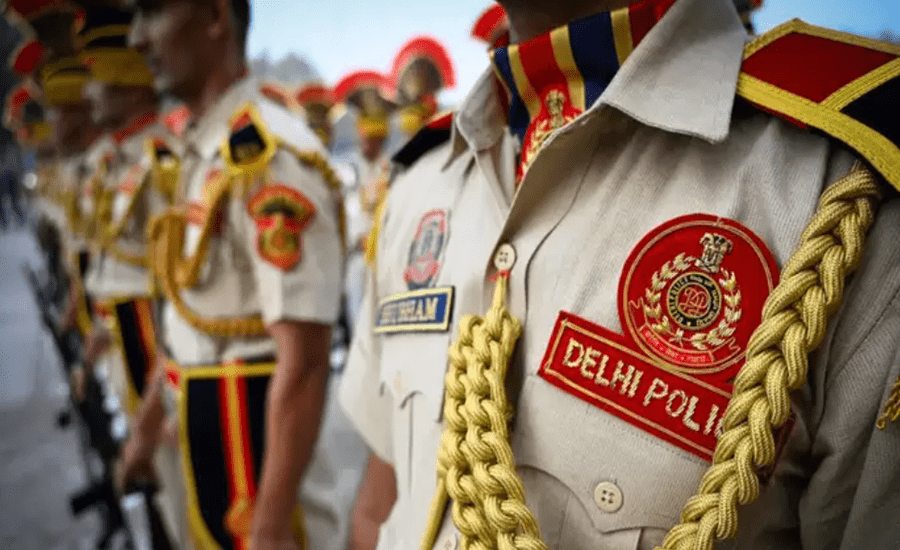
New Delhi: In a significant move to strengthen the integrity of India’s public examination system, the Delhi Police has constituted a Special Task Force (STF) under its Crime Branch to investigate paper leaks, examination fraud, and other offences related to public examinations under the Public Examinations (Prevention of Unfair Means) Act, 2024.
The decision comes amid nationwide concerns over alleged irregularities in the NEET-UG 2026 examination and follows weeks of protests demanding accountability in the conduct of competitive examinations.
STF to Function Under Crime Branch
According to a press note issued by Delhi Police on Friday, the STF has been established with the approval of the Commissioner of Police, Delhi.
The task force will function under the Crime Branch and will be headed by the Deputy Commissioner of Police (Crime Branch), while the Special Commissioner of Police (Crime Branch) will exercise overall administrative supervision and control.
Delhi Police said the STF has been specifically created to ensure prompt, professional and comprehensive investigations into examination-related offences and to facilitate speedy prosecution.
Will Investigate UPSC, NTA, SSC, RRB and Other Recruitment Exams
The newly constituted STF has been empowered to investigate offences linked to examinations conducted by several major national recruiting agencies, including:
- Union Public Service Commission (UPSC)
- National Testing Agency (NTA)
- Staff Selection Commission (SSC)
- Railway Recruitment Boards (RRBs)
- Institute of Banking Personnel Selection (IBPS)
- Various Central Government ministries and departments
- Any other authority notified by the Central Government from time to time
The task force will also coordinate closely with prosecuting agencies to ensure that cases are pursued on a day-to-day basis before trial courts for speedy justice.
Move Comes Amid NEET-UG 2026 Controversy
The creation of the STF comes against the backdrop of the ongoing NEET-UG 2026 paper leak controversy, which has triggered widespread protests across the country.
Student groups, under the banner of the ‘Chalo Sansad Jantar Mantar’ (CJP) protest, have been demonstrating in the national capital for over three weeks. Protesters have demanded greater accountability from the National Testing Agency (NTA) and sought the resignation of Union Education Minister Dharmendra Pradhan.
The controversy has intensified scrutiny over the examination system and prompted the Centre to initiate a series of institutional reforms.
NTA Undergoing Major Institutional Overhaul
Earlier this week, the National Testing Agency initiated one of its biggest administrative restructuring exercises.
The agency terminated 47 officials as part of an internal overhaul following the NEET-UG paper leak controversy. Reports also indicate that legal and criminal proceedings are being considered against some of the terminated officials.
In addition, the NTA has begun recruiting senior professionals and young experts while revamping its outsourcing model as part of reforms aimed at strengthening examination security and institutional governance.
Supreme Court Monitoring Examination Reforms
The issue has also reached the Supreme Court.
On Friday, a Bench comprising Justice P.S. Narasimha and Justice Alok Aradhe heard petitions seeking structural reforms within the NTA.
The Court directed the Centre and the NTA to file a fresh affidavit detailing progress on examination reforms, including measures relating to:
- Transparency
- Digital infrastructure
- Examination security
- Institutional governance
- Technology-driven monitoring
The Bench observed that examination security cannot continue to rely on ad hoc responses after every controversy and indicated that it would closely monitor the reform process. The matter has been listed for further hearing on August 3.
A New Legal Framework Against Examination Fraud
The STF will function under the Public Examinations (Prevention of Unfair Means) Act, 2024, which was enacted to combat organised cheating, paper leaks, impersonation and other examination malpractices.
With the creation of this specialised unit, Delhi Police aims to ensure dedicated investigation of examination-related crimes, stronger coordination with central agencies, and faster prosecution of offenders.
The move is expected to strengthen the enforcement of the new anti-cheating law while restoring confidence in India’s public examination system amid increasing concerns over examination integrity.
Read also: Delhi Police Protest Controversy Deepens as Supreme Court Bar Bodies Seek Independent Inquiry