https://indianmasterminds.com

ADVERTISEMENT
ADVERTISEMENT

Make in India Boost: DRDO Fuel-Cell AIP System to Anchor Next-Gen Submarines Under Project-76

India’s indigenous fuel-cell air-independent propulsion marks a pivotal leap in under-water endurance for submarines — and the strategic balance under the seas.
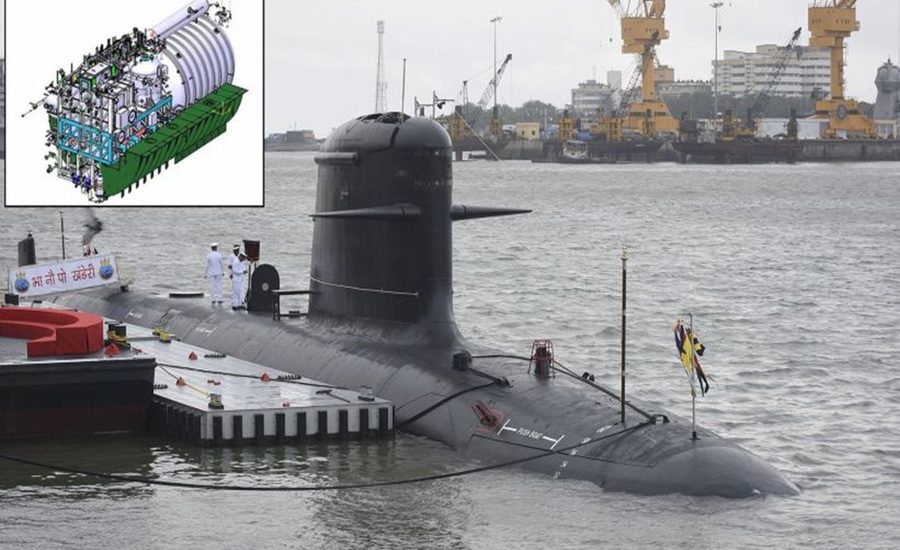
DRDO fuel-cell AIP system
Indian Masterminds Stories

New Delhi: The DRDO has announced the finalisation of a scalable phosphoric acid fuel-cell Air-Independent Propulsion (AIP) system, which will shape the future warfare system in India and it is fully made in India, means alignment with the atmanirbhar bharat defence technology.

What is DRDO fuel-cell AIP system

This system is designed for the upcoming Project‑76 conventional submarines of the Indian Navy and marks a significant step toward longer underwater missions with less need to surface.

Read also: DRDO Unveils Cutting-Edge Photonic Radar Technology to Hunt Stealth Jets With Precision, India Edges Closer to Detecting the ‘Undetectable’

By generating electrical power from hydrogen (reformed on-board from sodium borohydride) and liquid oxygen, the system operates without combustion—reducing acoustic and infrared signatures.

Importance of DRDO fuel-cell AIP system for submarine warfare

  • Submarines equipped with this AIP could remain submerged for over two weeks without surfacing for battery recharge.
  • With lower detection risk (less noise, lower heat), the stealth and tactical survivability in contested littoral zones is significantly boosted.
  • The emphasised modular and scalable architecture implies the technology can be adapted for multiple submarine classes—not just the largest ones.

A Shift to Indigenous Clean-Energy Propulsion

The fuel-cell AIP system has been developed by DRDO’s Naval Materials Research Laboratory (NMRL), under the Ministry of Defence.

This reinforces India’s push for “Atmanirbhar Bharat” in defence and under-water platform capability—moving beyond older diesel-electric/legacy AIP solutions.

The use of hydrogen generated from substances like sodium borohydride and stored liquid oxygen underpins a cleaner, quieter propulsion technology adapted for submarine stealth operations.

Where the Technology Sits in the Indian Naval Roadmap

India’s submarine fleet development is already tied to the Project‑75 (India) programme, which envisions conventional attack submarines with AIP capability.

While the older batch (e.g., Kalvari‑class) had AIP retro-fit plans, there were delays and limitations.

With this new DRDO scalable AIP system ready for Project-76, India aims to leap-frog to a more advanced conventional submarine standard.

Key Challenges & Strategic Imperatives

While the news is promising, hurdles remain:

Prior delays: Earlier retrofit plans for the Kalvari-class faced setbacks.

Integration complexity: Inserting AIP modules often implies hull modifications, plug-in retrofits, and extended refits.

Time-to-operational readiness: While the prototype is matured, real-world sea trials and full operational deployment still mark the next phase.

Strategically speaking, this capability enhances India’s under-sea deterrence posture—particularly in the Indo-Pacific littoral region where submarine stealth, endurance and quiet propulsion matter. As regional navies bolster submarine fleets, India’s push into advanced AIP tech is timely.

Why the World is Watching

Fuel-cell based AIP is still a niche technology globally; India’s entry into this domain indicates growing defence-R&D competency and maritime autonomy.

A scalable module means India might not just equip itself but eventually export or collaborate with friendly navies.

For India’s Navy, longer submerged endurance means fewer surfacing risks and higher mission persistence—key for modern submarine operations.

What’s Next for DRDO & Indian Navy

Sea-trials: The next step will involve integrating the system into an operational submarine, running endurance missions and validating stealth performance.

Production scale-up: Transitioning from prototype to serial modules ready for multiple submarine hulls.

Indigenisation chain: Working with Indian industry partners for hydrogen-generation systems, storage modules, fuel-cell manufacture and lifecycle support.

Strategic deployment: Once validated, deploying these AIP-equipped submarines across Indian Navy’s conventional fleet will shift regional under-water power balance.

Read also: Unbelievable Defence Leap: Russia Proposal Su-57 Tech Transfer India before Putin Visit, Could Boost India Into the 5th-Gen Elite Club


Indian Masterminds Stories
Join our WhatsApp Channel
ADVERTISEMENT
ADVERTISEMENT
Related Stories
ADVERTISEMENT
ADVERTISEMENT
NEWS
money fraud IAS Fraud
Gujarat ACB IPS Officer Alleges ₹70.3 Lakh Property Fraud; Builder Couple Booked Under BNS, SC/ST Act
CM Mohan Yadav meets students
CM Mohan Yadav Meets Meritorious Students, Highlights Youth Role in Nation Building and Democracy
HAL Safran
HAL, Safran Aircraft Engines Sign Long-Term Deal to Manufacture LEAP Engine Components in India
Vishnu Deo Sai UNICEF
CM Vishnu Deo Sai Meets UNICEF India Representative to Strengthen Maternal and Child Health Initiatives 
Jharkhand highway projects
Bihar Development Boost: JP Ganga Path to Get ₹387 Crore Integrated Garden Project Along Ganga River 
Bihar-Police
Bihar Police ASI Operator Preliminary Exam Conducted at 189 Centres Across 11 Districts
Project Saksham
NHAI to Share National Highway Data with IITs, NITs and Research Institutions to Drive Infrastructure Innovation
India renewable energy transition 2030
India Achieves 288.58 GW Renewable Energy Capacity, Solar Power Leads Green Growth 
ADVERTISEMENT
ADVERTISEMENT
Videos
Piyusha Jagtap
How IFS Piyusha Jagtap Is Changing Conservation Through Stories, Communities and Compassion | Video Interview
Pulkit Khare
How Uttar Pradesh Is Preparing Its Youth for the AI Revolution
Haryana Leads India's First AI-Powered Bird Census
ADVERTISEMENT
UPSC Stories
nitesh upsc
CSE 2025 AIR 562 Nitesh Chose India Over an American Dream and Reached Civil Services After Six Attempts
UPSC CSE 2025 AIR 562 Nitesh's inspiring journey from a small village in Madhya Pradesh to IIT Bombay,...
WhatsApp Image 2026-07-19 at 9.46
Why So Many UPSC Aspirants Fail Despite Studying So Hard
Many UPSC aspirants mistake attending lectures for preparation, but the examination rewards independent...
Sanjay Bagali and Deekshith N UPSC IFS 2025
How Trust, Teamwork and Persistence Helped Two Friends Crack UPSC IFS 2025
Read the inspiring UPSC IFS 2025 success story of Deekshith N (AIR 14) and Sanjay Bagali, whose friendship,...
CSR NEWS
WCL
WCL Partners with Narayana Institute Nagpur to Provide Free JEE Coaching Under Project TARASH
WCL signs MoU with Narayana Institute for the 4th batch of Project TARASH, offering expert JEE coaching...
REC Smart Classrooms
REC Limited to Set Up 20 Smart Classrooms in West Bengal Government Schools, Benefiting 1,500+ Students
Under its CSR initiative, REC will establish technology-enabled Smart Classrooms in Alipurduar district...
REC CSR
REC Foundation Signs MoA for RO Water Systems in Delhi Schools, Supporting Healthier Futures for 8,000 Students 
REC Foundation signs MoA with UPSIC to provide safe drinking water facilities, improve hygiene standards...
ADVERTISEMENT
ADVERTISEMENT
ADVERTISEMENT
Latest
How India Is Using Data to Transform 2
How India Is Using Data to Transform 2.6 Lakh Gram Panchayats: The Story Behind the PAI's Gold-Winning Success
money fraud IAS Fraud
Gujarat ACB IPS Officer Alleges ₹70.3 Lakh Property Fraud; Builder Couple Booked Under BNS, SC/ST Act
ADVERTISEMENT
ADVERTISEMENT
ADVERTISEMENT
ADVERTISEMENT
ADVERTISEMENT
ADVERTISEMENT
ADVERTISEMENT
Videos
Piyusha Jagtap
Pulkit Khare
Haryana Leads India's First AI-Powered Bird Census
ADVERTISEMENT
ADVERTISEMENT