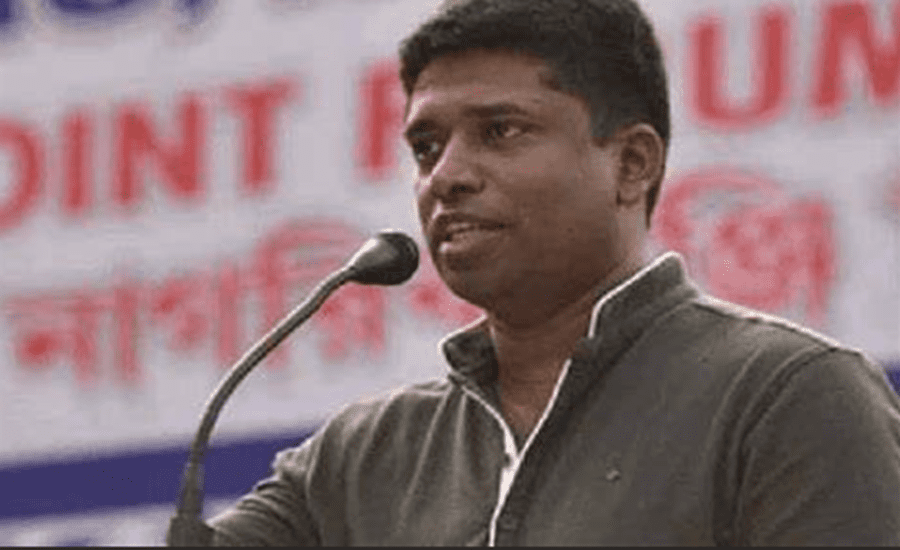
New Delhi: Former IAS officer Kannan Gopinathan, who resigned from the Indian Administrative Service in 2019 over differences with the Centre’s handling of Jammu and Kashmir following the abrogation of Article 370, has once again urged Prime Minister Narendra Modi to formally accept his resignation, while also taking a dig at the Prime Minister. The appeal comes nearly seven years after he left government service, with the former bureaucrat claiming that his resignation continues to remain pending.
Gopinathan, now a Congress leader, made the appeal through a post on social media platform X, combining the request with criticism of the government over the prolonged delay in processing his resignation.
Fresh Appeal to the Prime Minister
In his post, the 2012-batch AGMUT cadre IAS officer wrote, “Dear PM Narendra Modi, now that you have started accepting resignations, please accept mine. It’s been 7 years!!”
The remark appeared to reference the recent resignation of Dharmendra Pradhan as Union Education Minister amid nationwide protests over alleged irregularities in competitive examinations.
Responding to another user who asked whether he continued to receive a government salary because his resignation had not been accepted, Gopinathan replied:
“Nope. No salary, no suspension, nothing. Just sitting on it. Just like on every other issue.”
Resigned in 2019 Over Article 370
Kannan Gopinathan, a Kerala native belonging to the Arunachal Pradesh-Goa-Mizoram and Union Territories (AGMUT) cadre, resigned from the IAS in 2019.
He has consistently maintained that his resignation was prompted by his inability to openly express disagreement with the government’s actions after the abrogation of Article 370, particularly the restrictions imposed in Jammu and Kashmir.
Explaining his decision after joining the Congress in 2025, Gopinathan had said that while the government was free to take a policy decision on Article 370, he objected to the broader restrictions imposed in the region.
He questioned whether shutting down communications, detaining political leaders and restricting journalists was compatible with democratic values, adding that he stood by the concerns he had raised.
Departmental Proceedings Followed
According to Gopinathan, the government initiated disciplinary proceedings against him a few months after he resigned.
In October 2025, he stated that he was charged with “dereliction of duty” and for speaking critically about the government while technically remaining in service because his resignation had not yet been formally accepted.
He said the proceedings were subsequently closed.
However, he added that the Union Public Service Commission (UPSC) informed him that his pay scale would be reduced because he had criticised the government while still officially being a government servant.
Questioning the decision, Gopinathan remarked that he had not been drawing any salary and therefore reducing his pay scale had little practical significance.
Comparison With Other Officers
The former IAS officer also pointed to instances where resignations of other civil servants were processed.
He cited the example of Sasikanth Senthil, another IAS officer who resigned in 2019 over concerns about the state of Indian democracy. Senthil’s resignation was formally accepted in 2022, and he later entered politics and is currently a Congress Member of Parliament from Tamil Nadu.
Shah Faesal Case Highlights Complexity
Mr Gopinathan’s case has also drawn comparisons with that of former Jammu and Kashmir cadre IAS officer Shah Faesal.
Faesal resigned from the IAS in 2019, citing concerns over violence in Kashmir and issues relating to Indian Muslims. His resignation remained pending for several years while he briefly entered politics.
Following a change in his political stance, Faesal returned to government service in 2022, with the Centre allowing him to rejoin the IAS.
At the time, Union Minister Jitendra Singh had described Faesal’s return as a “heart transplant.”
Another Example: K. Annamalai
Former IPS officer K. Annamalai, who resigned from the Karnataka cadre in 2019, represents another contrasting example.
His resignation was accepted in the same year, following which he entered politics by joining the Bharatiya Janata Party before later launching his own political outfit.
From Bureaucrat to Politician
Kannan Gopinathan formally joined the Indian National Congress in 2025 after several years of public activism and criticism of government policies.
Since entering politics, he has continued to raise issues relating to democratic institutions, governance and civil liberties while maintaining that his resignation from the IAS remains officially unresolved.
With his latest public appeal to the Prime Minister, the former IAS officer has once again brought attention to the unusually long delay in the formal acceptance of his resignation and renewed the debate over how resignation requests from civil servants are processed.
About Him
Kannan Gopinathan is a former Indian Administrative Service (IAS) officer known for resigning from the service in 2019 to protest against what he described as restrictions on civil liberties following the abrogation of Article 370 in Jammu and Kashmir. Born in Kerala, Gopinathan completed his engineering education before clearing the UPSC Civil Services Examination and joining the IAS in 2012 as part of the AGMUT cadre. During his tenure, he served in various administrative roles, including as a district magistrate in the Union Territory of Dadra and Nagar Haveli. He gained public attention for his work in disaster relief and governance initiatives.
In August 2019, he submitted his resignation, stating that he could not continue in government service while disagreeing with certain policy decisions. Since then, he has remained active in public discourse on democracy, constitutional values, and civil rights.
Read also: Kannan Gopinathan’s IAS Resignation Row: What the Rules Say