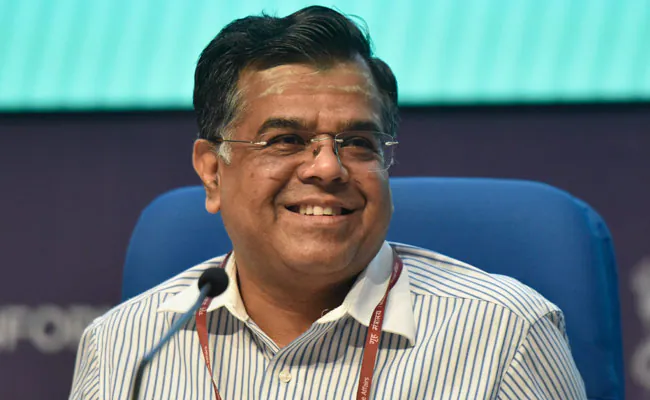
New Delhi: In a significant push to improve governance and administrative efficiency, Cabinet Secretary TV Somanathan, a 1987-batch Indian Administrative Service (IAS) officer of the Tamil Nadu cadre, has initiated a series of practical reforms aimed at changing the way India’s bureaucracy functions. Through a set of detailed letters and guidance notes addressed to senior civil servants, Somanathan has called for faster decision-making, greater delegation of authority, efficient meetings, and continuous self-improvement among government officers.
The initiative, seen as an attempt to promote behavioural and managerial reforms within the civil services, seeks to reduce bureaucratic delays and encourage a more responsive and accountable administrative culture.
Series of Governance Guidelines Issued
According to letters, the Cabinet Secretariat has begun issuing practical guidance notes covering various aspects of government administration.
In a communication dated June 12, Mr Somanathan informed senior officers that the Cabinet Secretariat, in consultation with the National Centre for Good Governance (NCGG), would periodically issue simple, practical guidelines to help civil servants become more effective administrators and managers.
He said many middle-level officers had shared that while they received adequate subject-specific training, they often lacked practical guidance on day-to-day administrative management.
A Call for Self-Reflection
In what he himself described as a “long preamble,” the Cabinet Secretary urged officers to introspect on their professional growth.
He asked bureaucrats to reflect on whether they were genuinely becoming better administrators with experience or merely continuing established habits without making conscious efforts to improve.
The message encouraged officers to embrace continuous learning rather than relying solely on experience accumulated over the years.
Making Government Meetings More Effective
The first guidance note focused on one of the most routine yet time-consuming aspects of government functioning—official meetings.
Explaining why this subject was chosen first, Mr Somanathan observed that meetings consume a substantial portion of bureaucrats’ working hours every day.
The guide offers practical suggestions on:
- Deciding whether a meeting is actually necessary.
- Scheduling meetings at appropriate times.
- Preparing clear agendas in advance.
- Ensuring discussions remain focused.
- Ending meetings with defined action points and accountability.
He directed that the guide be circulated among all civil servants working under the jurisdiction of Chief Secretaries and State Administrative Training Institutes so that its principles could be adopted across government departments.
Delegate More, Don’t Play Safe
The second letter, issued on July 21, addressed a long-standing challenge within the bureaucracy—the tendency of senior officers to retain decision-making authority rather than empowering junior officials.
IAS Somanathan argued that excessive centralisation slows governance, burdens senior officers with routine matters, and prevents younger civil servants from developing decision-making abilities.
To address this, he enclosed another practical guide explaining:
- What should be delegated.
- What should not be delegated.
- Whom to delegate responsibilities to.
- How much authority can safely be delegated.
Taking Calculated Risks
Acknowledging that many officers hesitate to delegate because of fears of mistakes, inefficiency or corruption, the Cabinet Secretary urged bureaucrats to move beyond a “playing safe” mindset.
In the letter, he cited American author John A. Shedd’s famous quote -“A ship is safest at the harbour, but that is not what ships are built for.”
Using the quotation, Somanathan argued that governance requires calculated risk-taking, trust in subordinates, and a willingness to empower junior officers rather than concentrating every decision at the top.
Reducing Bottlenecks in Government
The Cabinet Secretary believes that better delegation can significantly improve the speed and quality of governance.
By distributing responsibilities more effectively, senior officers can focus on strategic issues while junior officers gain valuable administrative experience.
The proposed approach is expected to:
- Reduce delays in decision-making.
- Improve administrative efficiency.
- Build leadership capacity among younger officers.
- Prevent excessive workload on senior bureaucrats.
- Create a more accountable and responsive governance structure.
Part of a Broader Reform Agenda
This is not the first time Somanathan has attempted to reshape administrative practices.
Last year, he reportedly wrote to senior bureaucrats encouraging greater engagement with the private sector, arguing that closer collaboration between government and industry would be essential for achieving the vision of Atmanirbhar Bharat.
The latest series of governance guides expands that reform agenda by focusing on everyday administrative practices that directly affect government efficiency.
Will the Bureaucracy Change?
The Cabinet Secretary’s initiative is being viewed as one of the most structured attempts in recent years to improve governance through behavioural change rather than procedural reforms alone.
Unlike policy directives, these communications focus on the practical aspects of administration—how officers conduct meetings, manage teams, delegate responsibilities and develop leadership skills.
Whether these recommendations translate into measurable improvements in governance will depend on how effectively ministries, departments and state governments adopt them in everyday administration.
For now, the initiative signals a clear message from India’s top bureaucrat: better governance begins with better management inside the bureaucracy itself.