Mumbai: In a landmark achievement for India’s indigenous nuclear technology programme, the Atomic Energy Regulatory Board (AERB) has granted the Licence for Operation of Units 3 and 4 at Kakrapar Atomic Power Station (KAPS) in Gujarat. These two units are India’s first-ever indigenously developed 700 MWe Pressurized Heavy Water Reactors (PHWRs) — a significant leap from the earlier 540 MWe designs.
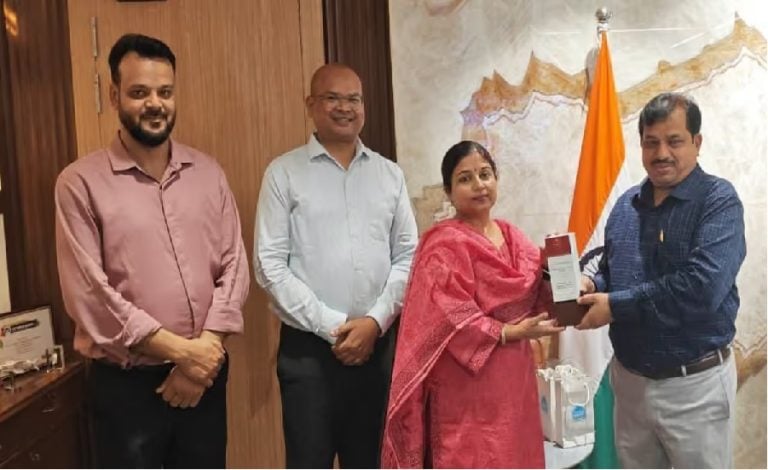
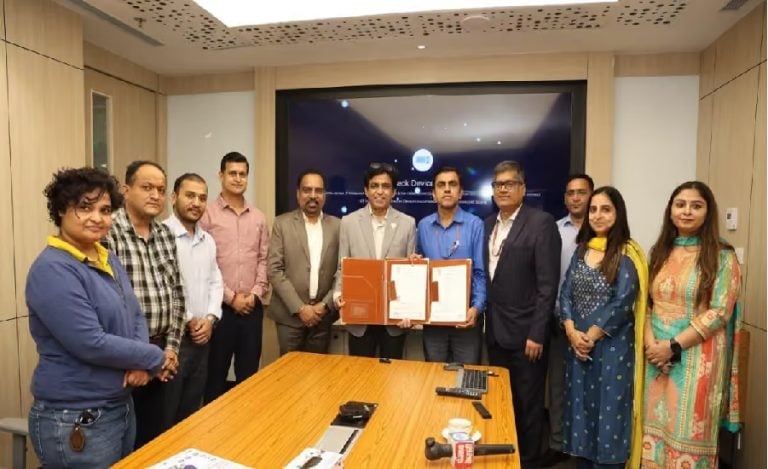
The licence was formally handed over by Dr D. K. Shukla, Chairman, AERB, to Mr B. C. Pathak, Chairman & Managing Director, Nuclear Power Corporation of India Limited (NPCIL) at a brief ceremony held on July 3, 2025, at Niyamak Bhavan, AERB Headquarters in Mumbai. The event was attended by senior officials from both AERB and NPCIL.
Rigorous Safety Reviews Lead to Operational Clearance
As the first-of-its-kind reactors in India, the licensing of KAPS-3 and KAPS-4 underwent extensive safety and design reviews by the AERB. The process included a comprehensive evaluation of reactor lifecycle stages — from siting, construction, and commissioning to full-power operation.
Phase-C commissioning of KAPS-3 was completed in August 2023, followed by KAPS-4 in August 2024. After successful plant performance reviews, AERB has now granted a five-year operational licence to NPCIL for both units.
700 MWe PHWR: Indigenous Tech Milestone for India
These 700 MWe reactors represent an upgraded design based on the proven 540 MWe PHWR technology, developed and refined by Indian nuclear scientists and engineers. The scaling up to 700 MWe reflects India’s capability to design, build, and operate large-scale nuclear plants using domestic expertise — crucial to the nation’s long-term energy security and clean energy goals.
With the success at Kakrapar, India is now operating its first fleet-mode deployment of 700 MWe PHWRs, with 10 reactors planned or under development.
Also Read: NPCIL Extends Bid Deadline to September 30 for Bharat Small Reactor (BSR) Co-Development
Expansion Across the Country: Rawatbhata Joins the 700 MWe Club
This licensing milestone at Kakrapar comes just months after a similar 700 MWe PHWR at Rawatbhata, Rajasthan, commenced commercial operations in March 2025. The commissioning of these advanced reactors is expected to significantly bolster India’s nuclear generation capacity.
Strategic Implications for Energy Security
The move signals a strong push towards self-reliance in nuclear reactor design and construction. It also reaffirms the government’s focus on increasing the share of clean, base-load energy in the national grid, amid rising energy demands and climate commitments.
The successful licensing and operation of these indigenous reactors is being seen as a win-win for NPCIL and India’s nuclear roadmap, marking the beginning of a new era in domestic nuclear power generation..
About AERB
The Atomic Energy Regulatory Board (AERB) is a statutory body in India responsible for ensuring the safety of nuclear and radiation facilities and activities. Its primary goal is to prevent undue risk to human health and the environment from the use of ionizing radiation and nuclear energy. AERB was established in November 1983 and is empowered by the Atomic Energy Act of 1962.
About NPCIL
Nuclear Power Corporation of India Limited (NPCIL) is a public sector enterprise under the administrative control of the Department of Atomic Energy (DAE). It is responsible for the design, construction, commissioning, and operation of nuclear power reactors in India. Established in 1987, NPCIL is a “Maharatna” Public Sector Undertaking (PSU). NPCIL is the sole entity responsible for the development of nuclear power in India, focusing on electricity generation from nuclear sources.
Also Read: NPCIL Gets Green Light to Build Four 700 MWe Nuclear Reactors at Mahi Banswara, Rajasthan