New Delhi: NITI Aayog Member Rajiv Gauba, an IAS officer of 1982 batch from the Jharkhand cadre, has called for strategic electrification of India’s freight sector, emphasising that accelerating the adoption of electric vehicles is critical for the country’s energy security, environmental goals and the vision of Viksit Bharat by 2047.
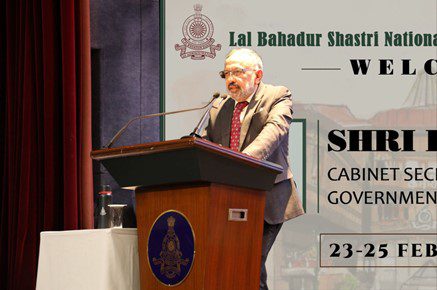
Gauba made the remarks while delivering the inaugural address at the 5th e-FAST India Summit 2026, where he also launched the Platform for Aggregating Clean Transport (PACT) and the Zero Emission Truck (ZET) Marketplace.
The two platforms mark an important step towards creating coordinated mechanisms for accelerating the transition to zero-emission freight transport by bringing together demand, financing, infrastructure and other stakeholders.
e-FAST Moves From Dialogue to Coordinated Action
In his address, Gauba noted that e-FAST India has evolved over four years from being primarily a forum for dialogue into a platform for coordinated action.
He said this evolution mirrors the broader transformation in India’s clean-mobility discourse, which is moving from intent to implementation.
Read Also: Who Is K S Rejimon? 1998-Batch ISS Officer Gets One-Year Extension as NITI Aayog Joint Secretary
Gauba stressed that the transition towards electric mobility is not merely an environmental objective but an economic, environmental and strategic imperative.
According to him, faster adoption of electric mobility is essential for India to contribute to the global commitment of achieving Net Zero by 2070, while simultaneously advancing the country’s development ambitions for 2047.
He also underlined the importance of electric mobility for strengthening India’s energy security and improving the quality of life of citizens.
Government Initiatives Driving EV Adoption
Gauba highlighted several measures undertaken by the government to create an enabling ecosystem for electric mobility.
These include the Production Linked Incentive (PLI) schemes for automobiles and Advanced Chemistry Cells, expansion of public charging infrastructure supported by investments from Oil Marketing Companies, and demand-side interventions aimed at increasing electric vehicle adoption.
He cited initiatives such as FAME, PM e-DRIVE, PARIVARTAN and PM e-Bus Sewa as important measures supporting the growth of India’s EV market.
Together, these interventions have contributed to an increase in EV sales while also helping build the manufacturing, charging and policy ecosystem required for the country’s transition towards cleaner transportation.
Heavy Trucks: Small Share of Fleet, Large Share of Emissions
Turning specifically to the heavy-duty commercial vehicle segment, Gauba highlighted the disproportionate environmental impact of heavy trucks.
Although heavy trucks account for only around 3–4 per cent of the total vehicle fleet, they contribute more than one-third of transport-sector carbon emissions.
This makes the electrification of heavy-duty vehicles particularly important for reducing emissions from road transport.
The challenge, however, is substantially different from electrifying passenger vehicles and smaller commercial vehicles.
India’s freight sector remains highly fragmented, while electric trucks face relatively high financing costs and the country lacks coordinated planning for charging infrastructure along major freight corridors.
Gauba identified these structural constraints as some of the key factors holding back the electric heavy-truck market.
Only Around 800 Heavy Electric Trucks Sold in 2025
The scale of the challenge is reflected in the relatively low adoption of heavy-duty electric trucks.
Only around 800 heavy-duty electric trucks were sold in India in 2025, highlighting the gap between the country’s broader EV ambitions and the pace of electrification in the freight sector.
This assumes greater significance because around 70 per cent of India’s freight moves by road.
Gauba therefore stressed the need to focus on the strategic electrification of major freight corridors rather than treating electric trucks simply as individual vehicle purchases.
A corridor-based approach could allow charging infrastructure, vehicle deployment, financing and freight demand to be planned together.
PACT and ZET Marketplace to Address Structural Gaps
According to Gauba, PACT and the ZET Marketplace have been designed to address precisely these gaps.
The platforms seek to facilitate demand aggregation, financing innovation and corridor-based projectisation, helping bring together stakeholders that currently operate across fragmented parts of the freight ecosystem.
Demand aggregation could help create sufficient scale for electric truck deployment, while coordinated corridor planning can provide greater certainty for charging infrastructure and logistics operators.
The financing component is equally important because the upfront cost and cost of capital remain significant barriers to electric truck adoption.
Call for Blended Finance and Leasing Models
Gauba called for innovative financing mechanisms to narrow the cost gap between electric trucks and their diesel-powered counterparts.
He emphasised the potential role of blended finance mechanisms and leasing models in reducing the financial barriers faced by fleet operators.
He also stressed the need for stronger data systems that can help improve decision-making and enable stakeholders to better understand freight demand, vehicle utilisation, charging requirements and corridor economics.
The objective, he said, should be to bring the cost of capital for electric trucks closer to that of comparable diesel vehicles.
Stakeholders Asked to Shape Electric Freight Ecosystem
Gauba called upon logistics providers, vehicle manufacturers, charge point operators and financiers to actively engage with the newly launched platforms.
He urged stakeholders to contribute to the development of the corridors, financing instruments and commercial models that will shape the future of electric freight in India.
The success of electric freight, therefore, will depend not only on vehicle technology but also on how effectively the broader ecosystem can coordinate demand, infrastructure and finance.
Government’s Role Is to Build Systems for Markets
Gauba also highlighted a broader institutional lesson emerging from the experience of e-FAST.
He said that in complex and capital-intensive sectors, government is most effective not necessarily when it directly allocates outcomes, but when it creates systems that allow markets to discover and shape those outcomes.
He described PACT as an example of such an enabling mechanism.
The approach seeks to allow private and public-sector stakeholders to identify viable opportunities, develop commercial models and coordinate investments while using a common platform to overcome fragmentation.
The launch of PACT and the ZET Marketplace at the 5th e-FAST India Summit thus represents an attempt to move India’s electric-freight conversation from broad commitments towards coordinated, commercially viable implementation.