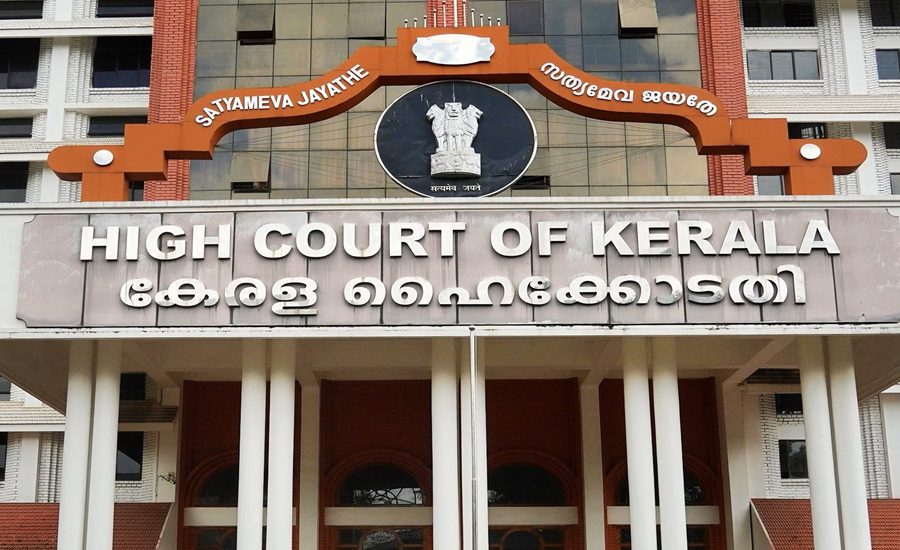
New Delhi: Kerala High Court ruled that an investigating officer may also act as a prosecutor in the same court-martial proceedings. The court said that this arrangement does not automatically violate the accused person’s right to a fair trial under Article 21 of the Constitution.
The judgment came while deciding appeals related to a Master Chief Petty Officer of the Indian Navy who challenged the appointment of the investigating officer as prosecutor in his case.
Details of Kerala High Court Navy Court-Martial Case Ruling
A Master Chief Petty Officer with over three decades of service faced court-martial proceedings under the Navy Act, 1957.
The charges reportedly included allegations related to influencing fellow officers to transfer funds of approximately ₹1.10 lakh each. The case also involved allegations connected to forgery and false entries under relevant legal provisions. The officer challenged the validity of the prosecution process and argued that the investigating officer should not also serve as the prosecutor.
What Did The Kerala High Court Say
A Division Bench comprising Justice K. Natarajan and Justice Johnson John delivered the ruling on September 18, 2026.
The Bench set aside the earlier observation of a Single Judge that an investigating officer could not be treated as a “suitable person” to conduct prosecution in the same matter.
According to the court, the Navy (Discipline and Miscellaneous Provisions) Regulations, 1965 do not contain any specific prohibition against such an appointment.
Kerala High Court Navy Court-Martial Case Ruling: Why Did The Court Allow The Dual Role
The court examined Regulation 163(1), which requires the convening authority to appoint a “suitable person” as prosecutor.
It also looked at Regulation 178(3), which treats the prosecutor as a competent witness if required. The Bench observed that these provisions indicate that a person familiar with the facts of the case and the charge-sheet may conduct the prosecution and, if necessary, provide evidence.
Fair Trial Rights Must Be Examined Separately
The High Court stated that appointing the investigating officer as prosecutor does not automatically result in unfairness. The court said that any claim of prejudice or unfair treatment should be examined based on the actual conduct of the trial rather than on the appointment alone.
Kerala High Court Navy Court-Martial Case Ruling: Constitutional Issues Considered
The petitioner argued that the appointment violated the constitutional guarantee of a fair trial under Article 21. However, the Union of India argued that court-martial proceedings operate under a special statutory framework.
The court accepted that Article 33 of the Constitution empowers Parliament to modify or restrict certain fundamental rights of armed forces personnel to maintain discipline and ensure effective discharge of duties. Because of this special framework, the court held that Regulation 178(3) could not be treated as unconstitutional merely because an investigating officer was appointed as prosecutor.
Final Verdict Of The Court
The Kerala High Court dismissed the appeal filed by the Master Chief Petty Officer. At the same time, it allowed the appeal filed by the Union of India. The court further clarified that remarks made earlier regarding possible prejudice caused by the dual role should not affect future proceedings.
Court-Martial Findings To Be Examined Separately
The Bench said that any conviction, sentence, or challenge pending before the Armed Forces Tribunal must be assessed independently on its own merits. The judgment makes it clear that the legality of appointing an investigating officer as prosecutor cannot alone be used to invalidate court-martial proceedings.
Read also: Why Kerala High Court Has Ordered Action Against 1,157 Advocates
FAQs
No. The court held that such an appointment does not automatically violate the right to a fair trial under Article 21.
Yes. The Kerala High Court ruled that Navy regulations do not prohibit an investigating officer from acting as a prosecutor in the same court-martial case.
The court dismissed the appeal filed by the Master Chief Petty Officer and allowed the appeal filed by the Union of India, upholding the validity of the appointment.