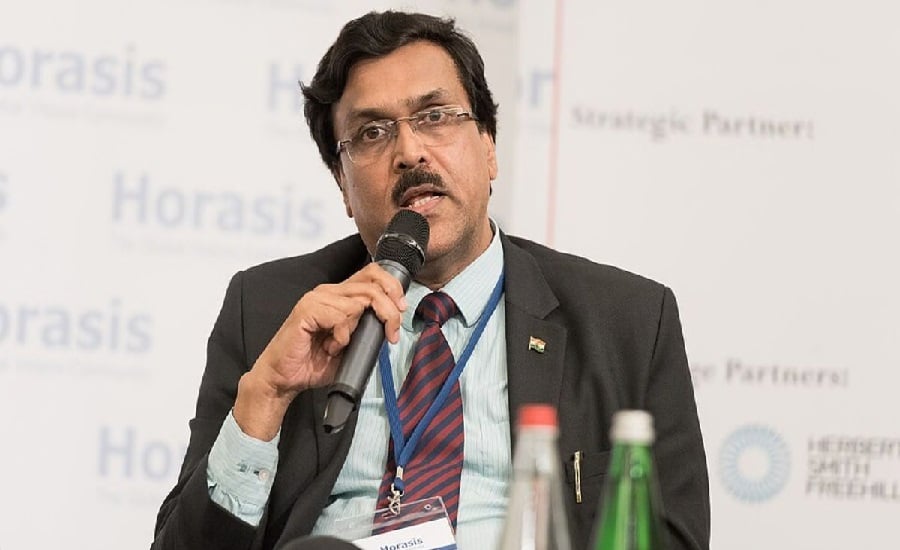
New Delhi: Former telecom secretary J.S. Deepak, a 1982-batch IAS officer of the Uttar Pradesh cadre, has said that senior officers in key government positions failed to advise political leaders to follow an economic development path similar to China’s, pointing to the widening gap between the two countries’ per capita incomes.
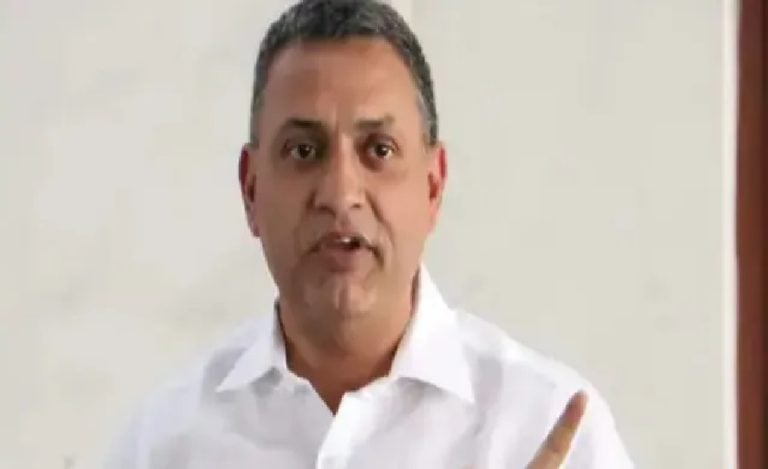
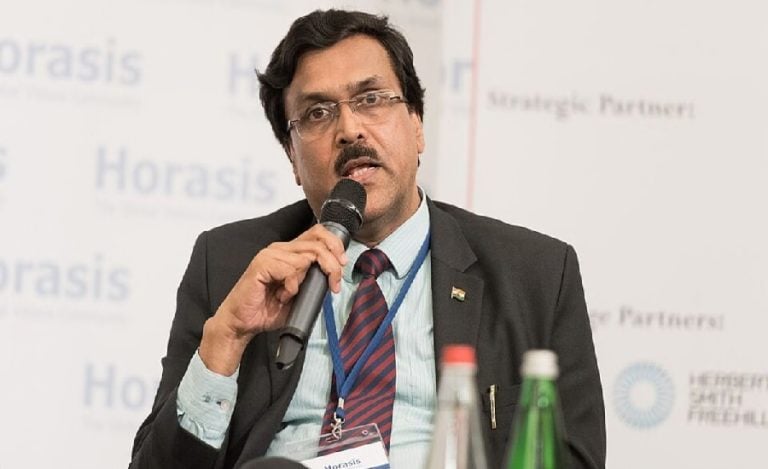
Deepak made the remarks on Monday during a discussion on his memoir, I Dared to Dial Differently: An Insider’s Account of the IAS, at the India International Centre (IIC). The discussion was moderated by ThePrint Editor-in-Chief Shekhar Gupta and featured trade expert Abhijit Das and other prominent attendees.
Reflecting on India’s economic performance, Deepak said that when he joined the civil service, India’s per capita income was higher than China’s. He noted that China’s per capita income is now approximately five times India’s, describing the difference as a missed opportunity.
While acknowledging shortcomings in several areas, Deepak said the civil service had also contributed significantly to India’s development.
J.S. Deepak Calls India’s RCEP Exit a Failure of Economic Diplomacy
One of the central themes of Deepak’s memoir is India’s decision not to join the Regional Comprehensive Economic Partnership (RCEP), a major regional trade agreement.
During the discussion, trade expert Abhijit Das read from the book’s chapter on RCEP, in which Deepak describes India’s negotiating position as a mystery. According to Das, the memoir suggests that by mid-2015, India had secured negotiating terms that could have protected its interests against China, but those gains were subsequently given up.
Das questioned why India had moved away from those terms, arguing that the reasons remained unclear.
Prime Minister Narendra Modi announced on November 4, 2019, at the RCEP summit in Bangkok that India would not join the agreement.
Deepak’s account refers to opposition to free trade agreements, including remarks by the Rashtriya Swayamsevak Sangh (RSS) chief during a Dussehra speech and efforts by the Swadeshi Jagran Manch to prevent India from joining the pact.
Although Deepak believes the Prime Minister took the right decision by staying out of RCEP, he argues that the negotiations exposed serious shortcomings in India’s economic diplomacy.
Das also questioned whether the Department of Commerce had conducted an internal review of the negotiations or taken corrective action following the decision.
Why J.S. Deepak Wrote His Memoir After Retirement
Deepak said his book was intended partly for people who question why civil servants remain silent during their service but speak more openly after retirement.
He explained that civil servants operate under conduct rules that restrict what they can publicly disclose while in office. At the same time, the media and civil society expect them to speak openly about government decisions and administrative shortcomings.
This creates tension between the restrictions imposed on serving officers and public expectations of transparency, he said.
Deepak described the life of a civil servant as difficult and sometimes demanding, but never dull. He added that he had tried to be as candid as possible in the memoir without getting into trouble.
He also highlighted the importance of documenting instances in which civil servants intervened to prevent wrongdoing, noting that such cases often remain buried in official files.
Comparing civil servants to the foundations of a building, he said their contributions frequently go unnoticed even when they help support larger institutional achievements.
J.S. Deepak Raises Concerns Over Corruption in the IAS
The former telecom secretary also discussed changes in perceptions of corruption within the Indian Administrative Service (IAS).
Recounting his early years in the service, Deepak said that in Uttar Pradesh in 1982, corrupt officers were few enough to be counted on the fingers of one hand. He said such officers were often ostracised, blackballed or blacklisted.
However, he argued that the situation had deteriorated considerably by 1996.
According to Deepak, that year, members of the Uttar Pradesh IAS Association held a vote to identify three of the most corrupt bureaucrats among them.
He also challenged the perception that most dynamic civil servants are corrupt, pointing to examples of officers who delivered results, maintained professional integrity and advanced to senior positions.
His memoir includes case studies of officers who worked effectively while adhering to their principles despite administrative and political challenges.
Deepak Says He Nearly Lost His Job Four Times
Deepak recalled several occasions during his career when he came close to losing his position. He identified four episodes associated with Ballia, Varanasi, the Department of Telecommunications and Uttar Pradesh’s education department.
He credited senior officers he described as “guardian angels” with helping him navigate those difficult periods. Among them was D.K. Mittal, who attended the discussion.
The memoir also examines his tenure in the telecommunications sector and the decisions that brought him into conflict with aspects of government and industry policy.
BSNL Tender and 2G Spectrum Controversy
Deepak’s memoir revisits major controversies in India’s telecommunications sector, including the Bharat Sanchar Nigam Limited (BSNL) equipment tender and the 2G spectrum allocation case.
According to the book, government directors on BSNL’s board blocked a single-vendor equipment tender worth more than ₹30,000 crore. Deepak argues that the decision prevented a potential loss of approximately ₹8,000 crore.
He also contends that the loss associated with the 2G spectrum allocation exceeded ₹2 lakh crore, higher than the ₹1.76 lakh crore estimate reported by the Comptroller and Auditor General (CAG).
These figures reflect the arguments presented in his memoir and should be distinguished from official estimates and findings associated with the respective controversies.
Why J.S. Deepak Was Moved Out as Telecom Secretary
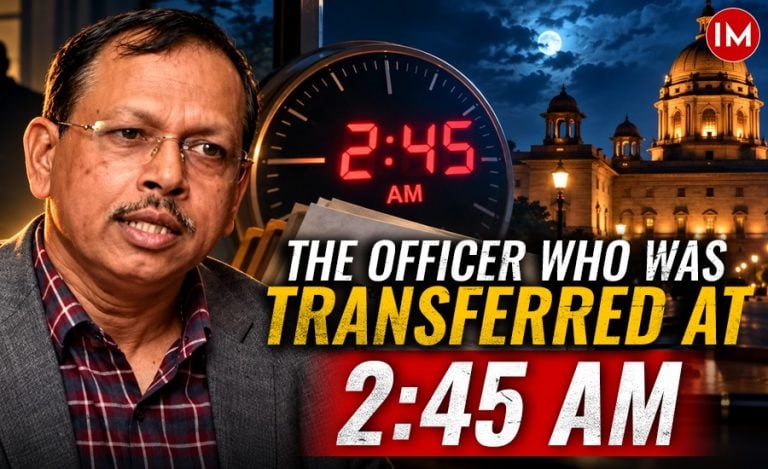
Deepak was moved out of the post of telecom secretary on March 1, 2017, while attending the Mobile World Congress in Spain.
The move came shortly after he wrote to the Telecom Regulatory Authority of India (TRAI), requesting restrictions on promotional offers by telecom companies. His letter argued that Reliance Jio’s free offers had cost the government nearly ₹800 crore.
The episode forms part of the broader account in his memoir of the administrative decisions, policy disagreements and professional challenges he encountered during his career.
What Deepak Says About IAS Aspirants and Civil Services
Deepak said his memoir was also intended for candidates preparing for the civil services examination.
Recalling his own examination experience, he said approximately 95,000 candidates competed for 100 positions when he appeared for the examination.
He questioned whether today’s aspirants, many of whom are drawn to the profession through coaching-centre advertisements, fully understand the responsibilities and constraints associated with a career in the civil services.
The Union Public Service Commission (UPSC) had notified 1,016 vacancies for that year’s Civil Services Examination, according to the figures cited in the report.
Deepak’s message to aspirants centres on understanding the realities of public service, including professional ethics, administrative responsibility and the restrictions placed on serving officers.
‘Civil Service or Circus?’: Deepak Calls for Course Correction
The final chapter of Deepak’s memoir asks whether the IAS is a civil service or a circus.
He said he continued to believe that the institution was fundamentally a service, but acknowledged concerns among some observers and former associates that it could lose its effectiveness without meaningful reforms.
Deepak also cited a former ICICI Bank chief’s observation that the IAS sometimes mistakes articulation for action, highlighting the gap that can emerge between presenting ideas and delivering tangible outcomes.
His remarks point to the need for stronger accountability, practical decision-making and institutional improvements within the civil services.
Former Cabinet Secretary Rajiv Gauba Praises the Memoir
Former cabinet secretary Rajiv Gauba, a batchmate of Deepak who is now a member of NITI Aayog, praised the book for its candid account of administrative life.
Gauba observed that many civil service memoirs focus on officers who overcame difficult circumstances to achieve significant results, whereas Deepak had avoided excessive self-praise.
Deepak Bagla, director of the Atal Innovation Mission, described the book as a master class in understanding how to do business in India.
The discussion also featured observations from Shekhar Gupta about the importance of civil servants writing memoirs, arguing that such accounts can provide valuable insights into the functioning of government and the people who shape public policy.
Deepak Reflects on Ministers, Politicians and Bureaucrats
The discussion touched on Deepak’s descriptions of ministers and senior officials in his book. Das read passages describing four unnamed ministers, including one characterised as taking little action and another who allegedly used bullying as a tactic.
Deepak said he had been equally frank in his assessment of bureaucrats.
He also quoted cartoonist R.K. Laxman’s observation that he stopped drawing cartoons of politicians when cartoons themselves became politicians.
At the same time, Deepak praised several political leaders he had worked with, including former Prime Minister Manmohan Singh, whom he described as among the best in his field.
Gupta also recalled former Haryana Chief Minister Om Prakash Chautala telling him that civil servants should remain honest regardless of the mistakes politicians make. Chautala and his son Ajay were sentenced to 10 years in prison in 2013 in connection with the Junior Basic Trained (JBT) teachers’ recruitment scam.
Who Is J.S. Deepak? Education, IAS Career and Key Positions
J.S. Deepak is a retired Indian Administrative Service (IAS) officer from the 1982 batch of the Uttar Pradesh cadre. Born on July 16, 1958, he held several senior administrative positions during his career, working across government departments, telecommunications, trade policy and industry.
J.S. Deepak’s Educational Qualifications
Deepak has an academic background in science and business administration. His educational qualifications include:
- Graduate degree in Physics: He completed his undergraduate studies in the subject.
- M.Sc. in Physics: He also holds a postgraduate degree in Physics.
- Postgraduate qualification in Business Administration: His education includes further studies in business administration.
His academic background, combined with his administrative experience, contributed to his work in public policy, telecommunications and economic negotiations.
Key Positions Held by J.S. Deepak
During his career, Deepak served in several administrative capacities, including Sub-Divisional Magistrate (SDM), Joint Secretary, Additional Secretary, Principal Secretary, Divisional Commissioner and Secretary in various departments.
His key assignments included:
- Department of Telecommunications: As Joint Secretary, he designed and conducted India’s 2010 3G spectrum auction.
- Department of Commerce: He served as India’s chief negotiator for the World Trade Organization (WTO), RCEP and European Union trade agreements.
- Industries and Commerce Department: He held responsibilities connected with industry and commerce during his administrative career.
- Telecom Secretary: He served in the senior position before being moved out of the post in March 2017.
- Ambassador and Permanent Representative: The supplied biographical information lists his tenure in this role from June 1, 2017, to May 31, 2020.
- Bharti Enterprises: Following his government service, he became associated with the private-sector group.
His 344-page memoir, published by Hachette India on August 20, draws on his experiences in administration, economic diplomacy, telecommunications and public policy to examine the challenges and responsibilities of India’s civil services.
Read also: Centre Appoints IAS Officers Rahul Hooda, Jitender Yadav & IRS Iftakhar Ahmed Chowdhry to Key Posts