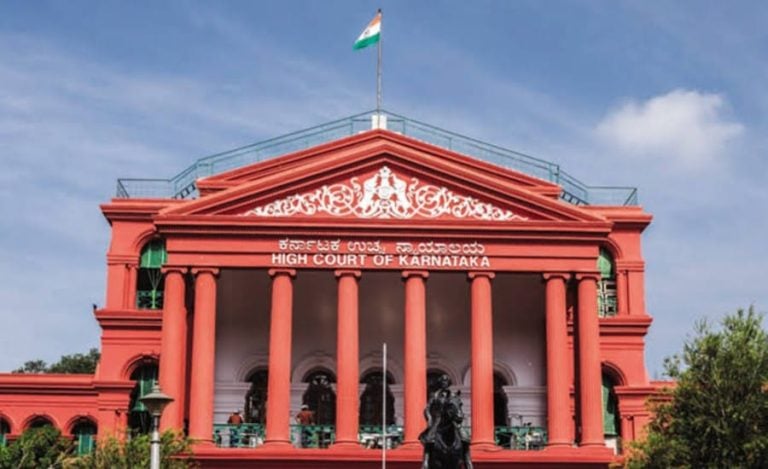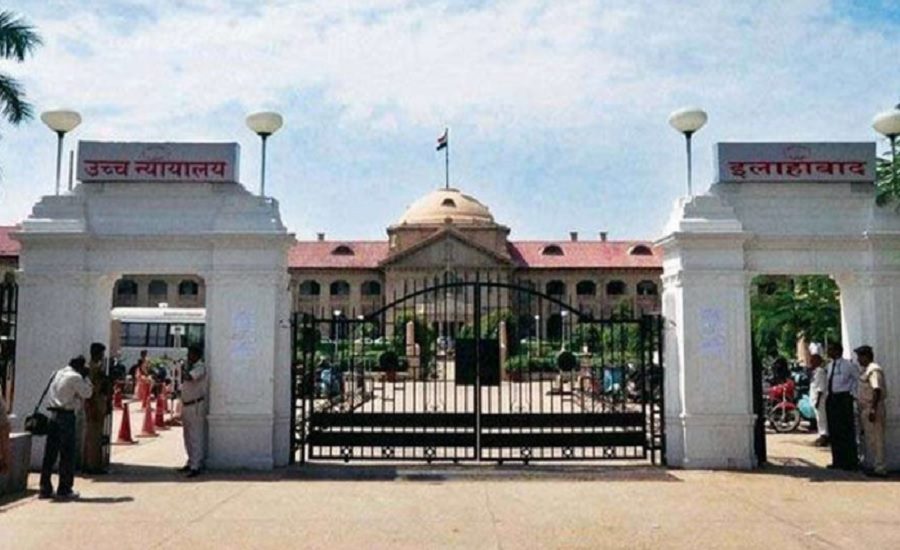
Allahabad: The Allahabad High Court has set aside a divorce decree passed by a Family Court in Banda, citing serious legal errors. The High Court found that the Family Court relied on a statute that does not exist, raising concerns about judicial accuracy and diligence.
Background of Banda Family Court Divorce Case
The case began when a husband challenged a January 2026 divorce order passed by a Family Court in Banda district. The Family Court had granted divorce to the wife.
However, during the appeal, the husband’s lawyer pointed out a major legal mistake — the divorce petition was filed under a law titled “Muslim Women Marriage Dissolution Act, 1986”, which does not exist in Indian law.
Banda Family Court Divorce Case: High Court Bench Observations
A division bench of Justice Atul Sreedharan and Justice Vivek Saran strongly criticized the Family Court’s approach.
The Court observed that:
- The Family Court repeatedly referred to a non-existent law in its judgment.
- This was not just a minor or typographical error.
- The judge even granted relief based on that incorrect law.
The bench called the approach “casual” and “most unfortunate,” emphasizing that courts must ensure the legal provisions they rely on are valid and existing.
Which Laws Were Actually Applicable?
The High Court clarified the correct legal position:
- The petition likely intended to refer to the Muslim Women (Protection of Rights on Divorce) Act, 1986
- However, for seeking divorce, the correct law should have been the Dissolution of Muslim Marriages Act, 1939
The Court stressed that while mentioning a wrong provision in a petition is not always fatal, the final judgment must rely on a valid law — which did not happen in this case.
Why the Judgment Was Set Aside
The High Court ruled that:
- Repeated reliance on a non-existent statute made the judgment legally invalid.
- The trial court failed in its duty to verify the correctness of the law applied.
The bench stated clearly:
“It is the responsibility of the Court to ensure that the law it refers to actually exists.”
Read also: Power of Attorney vs Advocates Act: Allahabad High Court Ends Confusion on Who Can Argue in Court