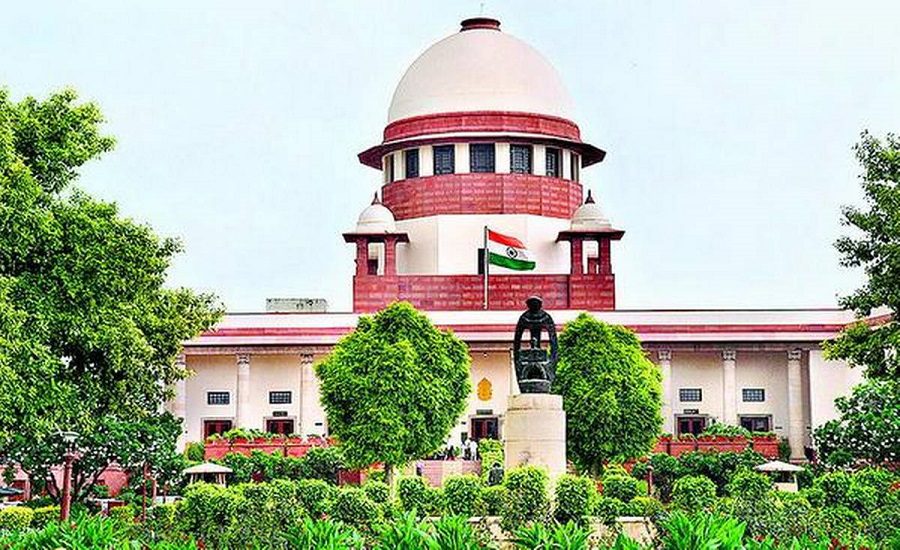
Jammu and Kashmir: Supreme Court ReT appointment ruling has brought major relief to hundreds of candidates in Jammu and Kashmir who were waiting for jobs under the Rehbar-e-Taleem (ReT) Scheme. In a significant judgment, the Supreme Court of India allowed their appointments despite the scheme being closed in 2018.
The Court made it clear that selected candidates cannot be denied jobs due to delays caused by litigation. However, it also ensured that education standards are maintained by making it mandatory for candidates to pass the Teachers Eligibility Test (TET) within a fixed timeline.
Details of Supreme Court ReT Appointment Ruling
A bench of Justice J.K. Maheshwari and Justice Atul S. Chandurkar used its special powers under Article 142 of the Constitution of India to deliver a balanced judgment.
The Court ordered that:
- All eligible candidates in approved select panels must be given appointment (engagement) orders
- Appointments must be issued within 8 weeks
- Candidates must clear Teachers Eligibility Test (TET) within 3 years and 3 attempts
This decision ensures fairness for candidates while maintaining teaching quality standards.
What Was the ReT Scheme?
The Rehbar-e-Taleem (ReT) Scheme was launched in 2000 to solve teacher shortages in remote areas of Jammu and Kashmir.
- It allowed local people to work as teachers
- Focus was on improving primary education in underserved regions
However, the scheme was officially closed on November 16, 2018, and:
- All pending advertisements were cancelled
- Select panels without issued appointments were scrapped
This led to widespread legal disputes.
Why the Case Reached the Supreme Court
Many candidates argued that:
- Being selected in official panels gave them a right to appointment
- They were denied jobs due to ongoing court cases, not their fault
The High Court had earlier supported the closure but gave limited relief. Both the government and candidates then approached the Supreme Court.
Pendency of Litigation Cannot Deny Jobs
The Supreme Court made a strong observation:
“Pendency of litigation cannot be a valid reason to deny appointment.”
The Court said:
- Candidates cannot be punished for circumstances beyond their control
- The government’s classification was arbitrary and unconstitutional
It held that the closure violated Article 14 of the Constitution of India, as it treated similar candidates differently without valid reason.
Supreme Court ReT Appointment Ruling: Focus on Education Quality
While granting relief, the Court also emphasized maintaining teaching standards under the Right of Children to Free and Compulsory Education Act, 2009.
Key safeguards include:
- Mandatory qualification norms set by the National Council for Teacher Education
- Compulsory TET qualification within the given timeline
- Failure to qualify may lead to termination of service
The State has also been directed to conduct TET every year.
Seniority and Wider Impact
The Court clarified:
- Seniority will be based on original panel ranking, not appointment date
- The judgment applies to all similarly placed candidates, even if they were not part of the case
However, it also made clear:
- This ruling does not revive the ReT Scheme
- It will not serve as a general precedent
Impact of Supreme Court ReT Appointment Ruling
This judgment brings a balanced outcome:
- Immediate job relief for selected candidates
- Clear pathway to meet eligibility requirements
- Protection of education standards for students
It also sets an important example of how courts can balance fairness with quality in public employment.