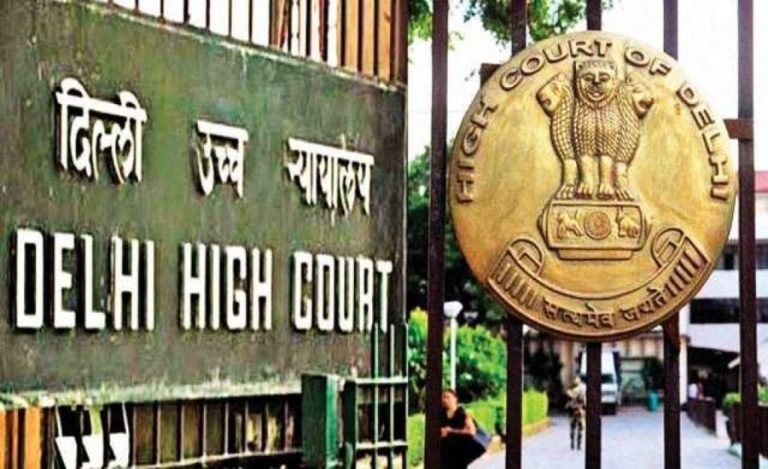
New Delhi: The Delhi High Court has ruled that marriage to an Indian citizen does not automatically give a foreign national the right to stay in India or obtain a Spouse Visa.
The court dismissed a petition filed by a US citizen seeking to convert her e-Tourist Visa into an Entry (X-1) Visa after marrying an Indian man. The court said that granting and extending visas falls under the authority of the government, which can examine the circumstances of each case.
What is the Reason of Delhi High Court Marriage Visa Ruling
Justice Amit Mahajan dismissed the petition filed by Lisa Hall Srivastava, a US citizen who wanted to convert her existing e-Tourist Visa into an Entry (X-1) or Spouse Visa.
Read also: Aadhaar Attendance Row: Delhi High Court Stays Order For Public Prosecutors Over Privacy Challenge
She had approached the court after the Foreigners Regional Registration Office (FRRO), Delhi, did not grant her the requested visa conversion.
The petitioner argued that she had submitted the required documents and was legally married to an Indian citizen. She also alleged that immigration authorities had repeatedly questioned her and her husband about their relationship and age difference. However, the Central Government explained that the authorities had examined her immigration history and other circumstances before making their decision.
Background of Delhi High Court Marriage Visa Ruling
According to the court order, Lisa Hall Srivastava married Mohd. Wasim Akram on December 7, 2025, following Muslim customs and traditions.
Their marriage was subsequently registered before a Marriage Officer under the Special Marriage Act, 1954, on March 18, 2026.
On March 27, 2026, she applied to the FRRO for conversion of her existing e-Tourist Visa into an Entry (X-1) Visa.
Her existing e-Tourist Visa was valid until September 14, 2027. However, the authorities examined her previous immigration records and matrimonial relationships before considering her application.
Delhi High Court Marriage Visa Ruling: What Were The Government’s Concerns
The Central Government told the court that the petitioner had previously been involved in two matrimonial relationships through which she had also sought immigration benefits.
According to the government’s submission, her first marriage ended in July 2021, and her Overseas Citizen of India (OCI) status was cancelled in November 2023.
She later entered into another matrimonial relationship in December 2022 and sought immigration benefits through that relationship. The second marriage ended in November 2025.
The authorities also considered her prolonged stay in India, residential arrangements, previous visa applications and explanations about her income and financial support.
The government of India further informed the court that she had been living as a tenant in a property owned by her present husband even before their marriage.
Based on these circumstances, the competent authority formed a preliminary opinion that the present marriage could be a marriage of convenience intended to obtain immigration benefits.
The court found the explanation given by the government satisfactory. However, these concerns were the authorities’ assessment and were not a judicial finding that the marriage was fake.
What Did The Court Say About Marriage And Spouse Visas
The court made it clear that marriage to an Indian citizen does not automatically create a legal right to obtain a particular category of Indian visa.
It observed that a foreign national cannot demand an Entry (X-1) Visa simply because they have married an Indian citizen.
The court also explained that immigration authorities have the power to examine relevant circumstances before granting, converting or extending visas.
It further noted that a marriage certificate issued under the Special Marriage Act, 1954, does not prevent immigration authorities from checking the surrounding circumstances and the applicant’s eligibility.
The court also observed that the petitioner’s husband had not filed an affidavit supporting her statements about their marriage and living arrangements. However, it clarified that the absence of such an affidavit alone could not establish whether the marriage was genuine.
Court Explained Foreigners’ Rights Under Article 21
The Delhi High Court also referred to the Supreme Court’s judgment in Louis De Raedt v. Union of India (1991).
The Supreme Court had explained that foreign nationals enjoy protection under Article 21 of the Indian Constitution, which protects life and personal liberty. However, the right to reside and settle in India under Article 19(1)(e) is available to Indian citizens, not foreign nationals.
The Delhi High Court explained that the entry and continued stay of foreign nationals in India fall under the government’s authority and are subject to the applicable immigration laws.
It also referred to its earlier judgment in Randa Chehab v. Union of India, which discussed the government’s authority over the entry and stay of foreign nationals.
Delhi High Court Clarifies Its Decision
While dismissing the petition, the court made an important clarification. It stated that it had not examined or decided whether the marriage between Lisa Hall Srivastava and Mohd. Wasim Akram was genuine or legally valid.
The court said its observations were limited to the petitioner’s demand for immigration benefits and the authorities’ examination of her visa application.
It also directed that any pending or future representation by the petitioner should be decided by the concerned authorities according to law.
The judgment was delivered by Justice Amit Mahajan on November 17, 2026, in Lisa Hall Srivastava v. Union of India & Anr.
Read also: Why Has Delhi High Court Ordered Proceedings Against 6 CBI Officers?
FAQs
An Entry (X-1) Visa is a category of Indian visa associated with certain eligible foreign nationals, including qualifying spouses of Indian citizens. Its grant or conversion is subject to applicable immigration rules and approval by competent authorities.
No. The Delhi High Court has ruled that marriage to an Indian citizen does not automatically give a foreign national the right to stay in India or obtain a particular category of visa.
The court explained that foreign nationals are protected under Article 21 of the Constitution, which guarantees life and personal liberty. However, the right to reside and settle in India under Article 19(1)(e) is available only to Indian citizens.