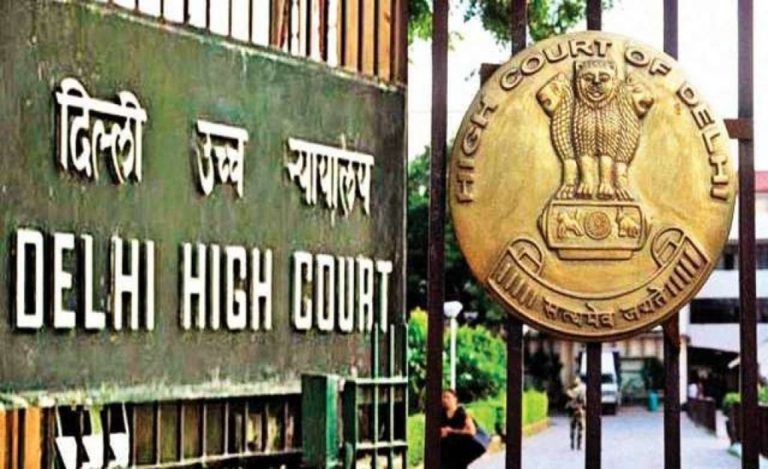
New Delhi: The Delhi High Court stayed the Delhi government’s order making Aadhaar-based biometric attendance compulsory for public prosecutors. Justice Amit Mahajan passed the order on October 9, 2026, after the Delhi Prosecutors Welfare Association challenged the directive.
The association argued that mandatory Aadhaar authentication could violate the constitutional rights to privacy and equality. The case is scheduled for its next hearing in December 2026.
Aadhaar Attendance Row: Delhi High Court Puts Biometric Attendance Order On Hold
The Delhi High Court has stayed an order requiring public prosecutors, additional public prosecutors and assistant public prosecutors to mark their daily attendance through the Aadhaar Enabled Biometric Attendance System (AEBAS).
Read also: Delhi High Court Sets Aside Railway Board Decision in UPSC ESE Disability Case
The order was issued by the Director of Prosecution on October 5, 2026. It was scheduled to take effect from October 12, 2026. The Court passed the stay after the Delhi Prosecutors Welfare Association filed a petition challenging the government’s decision. The case will be heard again in December.
Why Did Public Prosecutors Challenge The Order
The Delhi Prosecutors Welfare Association argued that making Aadhaar-based biometric attendance compulsory could violate Article 21 of the Indian Constitution, which protects the right to life and personal liberty, including the right to privacy.
The petition also questioned the order under Article 14, which guarantees equality before the law. The association further alleged that the directive was inconsistent with provisions of the Aadhaar Act, 2016. These are the petitioner’s claims and legal arguments. They should not be treated as the Court’s final findings on the matter.
Prosecutors Say Their Court Attendance Is Already Recorded
The association argued that public prosecutors are officers of the Court appointed under Sections 18 and 19 of the Bharatiya Nagarik Suraksha Sanhita, 2023.
According to the petition, prosecutors perform their duties in court, and their presence is already recorded in daily judicial order sheets. The association questioned the need to make Aadhaar authentication compulsory for recording their attendance.
What Did The October 5 Order Require
The Director of Prosecution’s October 5 directive required prosecuting officers to register on the Aadhaar Enabled Biometric Attendance System and mark their attendance every day.
The system uses Aadhaar-based authentication to verify an individual’s identity while recording attendance. The requirement was due to begin on October 12. However, the High Court’s stay has put the challenged order on hold, subject to the terms of the Court’s order.
Earlier Dispute Between Prosecutors And The Government
The association had previously challenged attendance-related circulars before the Delhi High Court. On August 17, the Court directed the authorities to treat the association’s petition as a representation and decide it within four weeks after giving the association a personal hearing. The Court also allowed the association to approach it again if it remained dissatisfied with the authorities’ decision.
Association Questions Government’s Decision
According to the petition, the hearing took place on September 15, after the four-week period had expired.
The association further claimed that the Home Department rejected its representation through minutes dated September 30 without giving reasons or properly addressing its members’ objections to Aadhaar authentication. These issues formed part of the background to the fresh challenge before the High Court.
FAQs
The October 5, 2026, directive covered public prosecutors, additional public prosecutors and assistant public prosecutors working under the relevant prosecution authorities.
The Court stayed the order after the Delhi Prosecutors Welfare Association challenged it, raising concerns about privacy, equality and compliance with the Aadhaar Act, 2016.
The case is scheduled for its next hearing in December 2026. The High Court’s stay is an interim measure, and the final outcome remains pending.