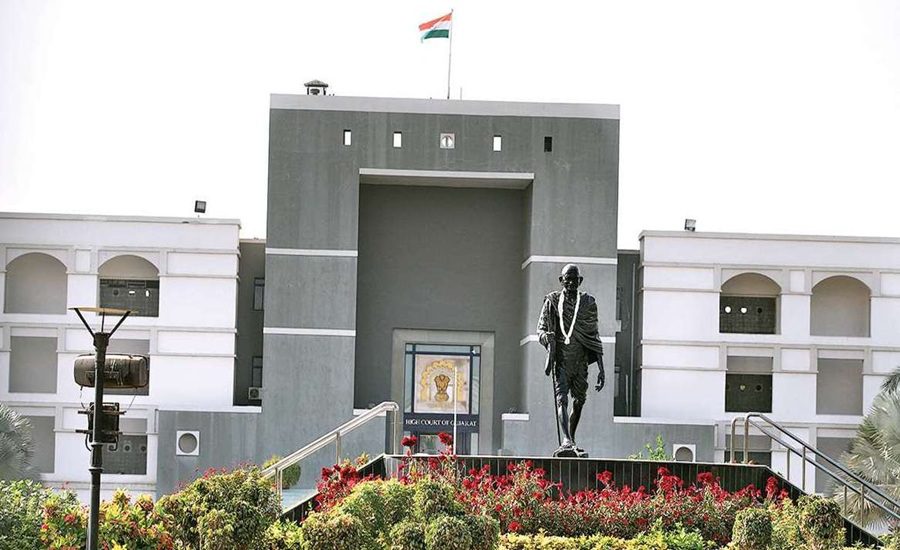
Ahmedabad: AI-generated case laws have come under judicial scrutiny after the Gujarat High Court warned State tax officers against relying on artificial intelligence without proper verification.
In a significant ruling, the Court directed tax authorities to strictly follow official guidelines governing the use of AI while drafting adjudication and appellate orders. The Court also cautioned that violations of these safeguards could amount to contempt of court.
AI-generated Case Laws: Why Did The Gujarat High Court Intervene
The matter arose in the case Faiz Enterprises vs State Tax Officer. During the proceedings, the High Court found that a State Tax Officer had cited judgments that either did not exist or were legally irrelevant to the dispute. The Bench observed that the order appeared to rely heavily on AI-generated case laws without proper human verification.
Read also: Big Relief for Women Prisoners: Gujarat High Court Seeks Equal Access to Open Prisons
Court Found Serious Errors In Legal Citations
The Court noted that several citations and legal principles referred to in the tax order had no connection with the case. According to the Bench, such mistakes can affect the fairness of legal proceedings and undermine confidence in the justice system.
AI-generated Case Laws: What Did The Court Say
A Bench comprising Justice A.S. Supehia and Justice Vaibhavi D. Nanavati directed that instructions issued on August 18, 2026, regarding AI use must be followed strictly. The Court made it clear that any violation of these directions could invite contempt proceedings.
Officer Admitted Using AI During Drafting
The State Tax Officer, Devang Arvindkumar Yadav, submitted an affidavit before the Court. He admitted that he had used AI while drafting the order and had referred to judgments that were either non-existent or irrelevant. He also tendered an unconditional apology before the Court.
The officer stated that he was a probationary officer and that the mistake occurred due to lack of experience. He further informed the Court that he had attended a training programme on the responsible use of AI in adjudication and drafting.
AI-generated Case Laws: New Rules For Using AI In Tax Proceedings
Following the Court’s intervention, the Additional Commissioner of State Tax issued statewide instructions regulating AI usage by adjudicating and quasi-judicial authorities.
AI Can Assist, But Cannot Decide
The new guidelines clearly state that AI can only serve as an assisting tool. Officials cannot blindly rely on AI-generated outputs while making legal decisions or drafting orders. Every legal reference identified through AI must be independently verified using primary official sources before being included in any order.
Verification Of Judgments Made Mandatory
The instructions require officers to verify:
- Court judgments cited by AI tools.
- Statutory provisions and legal rules.
- Government notifications and circulars.
- Whether a judgment remains valid law.
- The original source of any AI-generated legal summary.
If AI paraphrases a court judgment, officers must locate the original paragraph and verify its accuracy before relying upon it.
AI Cannot Replace Human Legal Reasoning
One of the most important observations in the guidelines is that AI cannot replace independent application of mind by a judicial or quasi-judicial authority. The instructions emphasize that every order must reflect the officer’s own legal reasoning and analysis of facts. AI may assist research and reasoning, but it cannot substitute human judgment.
Growing Concern Over AI Hallucinations In Law
Legal experts have increasingly warned about “AI hallucinations,” where AI systems generate incorrect facts, fake citations, or non-existent judgments. Courts in India and abroad have repeatedly cautioned lawyers and officials against blindly relying on AI-generated legal content without verification.
Read also: Gujarat High Court Rules Government Employees Cannot Claim Right to Buy Official Quarters
FAQs
Yes. However, AI can only assist officers. All legal citations, rules, and judgments generated by AI must be independently verified from official sources.
The Court found that a tax officer relied on AI-generated legal citations, including non-existent and irrelevant judgments, while drafting an order.
The Gujarat High Court has warned that failure to follow the prescribed safeguards may amount to contempt of court.