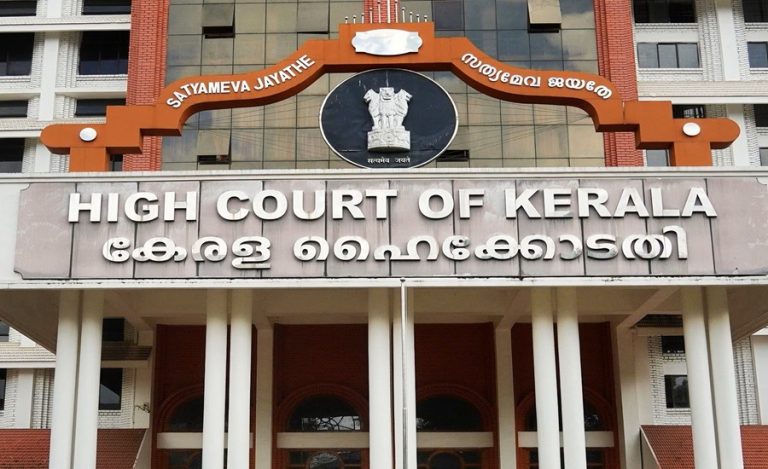
Thiruvananthapuram: The Kerala High Court organ donation ruling has put the spotlight on major changes needed in the state’s organ transplantation system. The court has asked the Kerala government to accept and implement recommendations made by its Transplantation Advisory Committee.
The proposed reforms include a digital platform for altruistic organ donation, a kidney swap programme, transparent transplant costs and faster approval procedures. These measures aim to improve access to organ transplants and make the system more transparent.
Details of High Court Kerala Digital Organ Donation Platform Directions
A Division Bench of Chief Justice Soumen Sen and Justice Syam Kumar V.M. passed the order on November 11, 2026.
Read also: What is the Arrested Persons 5 PM Rule, Kerala High Court Clarified It
The court was hearing a petition filed by Advaidh M. in WP(C) No. 4269 of 2025. The case raised concerns about organ donation and the availability of suitable donors for patients who need transplants.
During the hearing, the Kerala government placed before the court a report of the Transplantation Advisory Committee meeting held on November 19, 2025.
After examining the recommendations and considering directions previously issued by the Supreme Court, the High Court said that implementing these recommendations was now the duty of the State. The court disposed of the petition with this direction.
Digital Platform For Altruistic Organ Donation
One of the major recommendations is to establish a digital platform through the Kerala State Organ and Tissue Transplant Organisation (K-SOTTO).
The platform will allow people to express their willingness to donate a kidney, a portion of their liver or skin to patients they do not personally know.
This type of donation is known as non-directed altruistic organ donation.
Under the proposed system, only K-SOTTO will invite applications from the public. The organisation will also maintain strict confidentiality and protect the identities of donors.
The platform aims to connect willing donors with patients suffering from serious organ failure.
Medical And Psychological Checks For Donors
The committee has also recommended proper medical, psychological and socioeconomic evaluations of potential donors.
K-SOTTO will initially bear the cost of these evaluations. After a successful transplant, the expenses may be recovered from the recipient.
This process aims to protect donors and ensure that organ donation takes place safely and voluntarily.
Kerala Plans Kidney Swap Donation Programme
The Advisory Committee has also recommended introducing a kidney swap donation programme in Kerala.
This system can help patients whose family members are willing to donate a kidney but are medically incompatible with them.
For example, if one donor is not a suitable match for their family member but matches another patient, two families may exchange donors.
This arrangement can help both patients receive compatible kidneys. The proposed programme will follow Section 9(3A) of the Transplantation of Human Organs and Tissues Act.
The committee believes that such a programme can increase the number of available kidneys and create more opportunities for patients waiting for transplants.
Kerala Digital Organ Donation Platform: New Rules Proposed For Organ Allocation
The committee has also suggested clear rules for allocating donated organs among patients.
For kidney transplants, priority will initially be given to the transplant centre selected by the donor. The system may also support kidney donation chains and swap donation pairs.
If suitable patients are not available at that centre, the allocation process may consider regional and state-level waiting lists, subject to the donor’s consent to surgery at another hospital.
Patients without a suitable living donor among their close relatives will receive priority when equally compatible patients are being considered.
Similar allocation rules have been proposed for liver and skin transplantation. These recommendations aim to make organ allocation more organised and fair.
Kerala May Introduce Transparent Organ Transplant Costs
The Advisory Committee has also raised concerns about the need for greater transparency in organ transplant charges.
It has recommended that transplant centres clearly publish the charges for different procedures and treatments.
K-SOTTO has also been asked to publish an upper ceiling on charges for different organ transplant procedures.
The proposed cost limits will be prepared after consultation with major transplant centres and experts from both public and private hospitals.
This step could help patients and their families understand treatment expenses before undergoing transplantation. However, the committee’s recommendations do not specify the final price limits.
Kerala Digital Organ Donation Platform: Faster Approval Process For Organ Transplants
The committee has also recommended simplifying the approval process for organ transplantation.
Currently, applications may need to pass through hospital-level competent authorities and District-Level Authorisation Committees.
The proposed reforms aim to introduce a single-window and time-bound clearance system.
This could reduce paperwork, avoid unnecessary delays and help patients receive timely decisions.
The committee has also recommended creating a digital platform to assess the number of patients suffering from end-stage kidney disease, liver disease and heart conditions requiring transplantation. Such information could help the state prepare better long-term healthcare policies.
Kerala Digital Organ Donation Platform: Supreme Court Directions Also Considered
The Kerala High Court also referred to the Supreme Court’s directions in Indian Society of Organ Transplantation v. Union of India.
The Supreme Court had called for uniform national organ allocation guidelines through the National Organ and Tissue Transplant Organisation (NOTTO).
It also highlighted the need for national guidelines on kidney swap transplantation, better protection for living donors and improved transplant facilities.
The Supreme Court further asked states and Union Territories to ensure that hospitals regularly report organ donation and transplantation data to the national registry maintained by NOTTO.
Strict action was also recommended against hospitals that fail to provide the required information.
The Kerala High Court considered these directions along with the state’s Advisory Committee recommendations while passing its order.
Read also: Cyberbullying Case: Kerala High Court Seeks State Response On Specialised Investigation Mechanism
FAQs
The proposed platform will be developed by K-SOTTO to allow people to register their willingness to donate kidneys, portions of their liver or skin to unrelated patients on an altruistic basis.
The Kerala High Court directed the Kerala government to accept and implement the Transplantation Advisory Committee’s recommendations on organ donation and transplantation reforms.
A kidney swap programme allows two families with incompatible donor-recipient pairs to exchange donors when medical compatibility permits. It can help more patients receive suitable kidneys through legally approved transplantation arrangements.