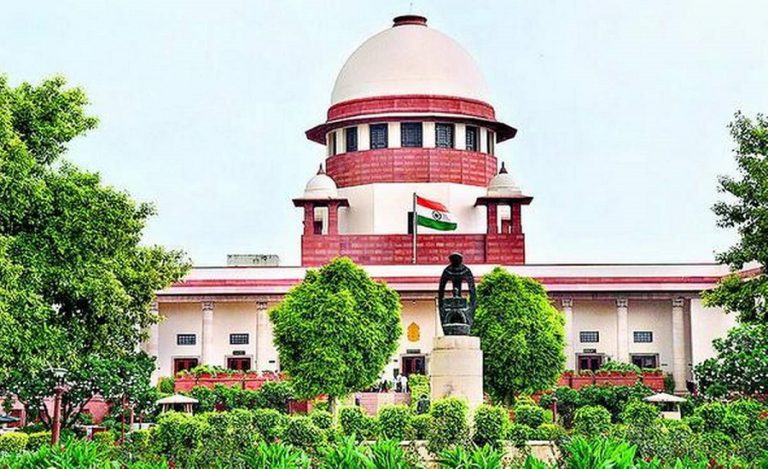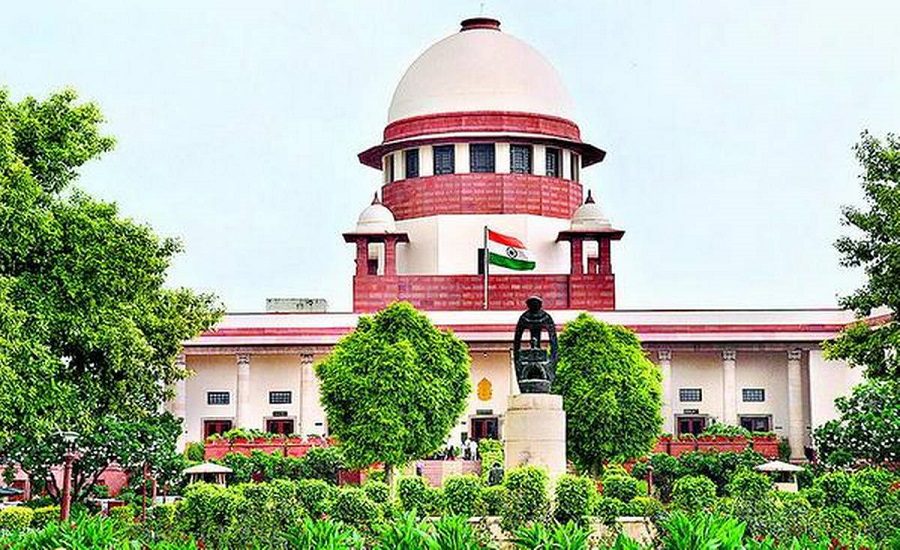
New Delhi: The Supreme Court of India has clarified that a divorce granted by a foreign court does not automatically end a marriage under Indian law. The foreign divorce decree validity in India depends on whether the judgment meets the legal conditions set under Indian law, particularly Section 13 of the Code of Civil Procedure (CPC).
The court also ruled that a divorce granted on the ground of irretrievable breakdown of marriage cannot automatically be recognised in India when the marriage was solemnised under the Hindu Marriage Act 1955.
Supreme Court Key Observation On Foreign Divorce Decree Validity
A Supreme Court bench comprising Justice Prashant Kumar Mishra and Justice Shree Chandrashekhar made these observations while hearing a case involving allegations of bigamy and criminal conspiracy.
Read also: Supreme Court Questions Two-Child Election Rule As India’s Fertility Rate Falls
The court refused to cancel the criminal proceedings against a man who relied on a divorce decree from the United Kingdom (UK) before marrying another woman.
The court explained that foreign divorce judgments must satisfy Indian legal requirements before they can be accepted by Indian courts. It also observed that a foreign court cannot automatically decide the legal status of a marriage solemnised under Indian law.
Why Did The Supreme Court Reject The Foreign Divorce Decree
The case involved a man who married his first wife on April 18, 2003, in Sattenapalli, Andhra Pradesh, according to Hindu customs and traditions. The couple later moved to the United Kingdom, where the husband pursued his medical career.
Their relationship eventually faced difficulties, and the husband initially approached an Indian court for divorce and child custody proceedings. However, those proceedings were dismissed. He later withdrew his appeal before the Andhra Pradesh High Court.
Foreign Divorce Decree Validity Case: Husband Obtained Divorce In The UK In 2014
The husband acquired British citizenship on February 1, 2013. After that, he approached the Cambridge County Court in England for a divorce.
In 2014, the UK court granted him a divorce on the ground of irretrievable breakdown of marriage. He subsequently married another woman in Norfolk, United Kingdom. However, his first wife later filed a police complaint in India, alleging bigamy and criminal conspiracy.
The complaint raised questions about whether the first marriage was still legally valid under Indian law despite the foreign divorce decree.
What Does Section 13 Of The CPC Say About Foreign Divorce
Section 13 of the Code of Civil Procedure explains when a foreign court judgment can be recognised in India. A foreign judgment may not be considered conclusive if it:
- Was passed by a court without proper legal jurisdiction.
- Was not decided on the merits of the case.
- Refused to recognise Indian law when Indian law applied.
- Violated the principles of natural justice.
- Was obtained through fraud.
- Supported a claim that violated Indian law.
The Supreme Court explained that foreign matrimonial judgments must satisfy these legal conditions before they can receive recognition in India.
Can A Person Remarry After Getting A Foreign Divorce
The Supreme Court made it clear that obtaining a divorce from a foreign court does not automatically give someone the right to remarry under Indian law.
If the foreign divorce decree is not legally recognised in India, the first marriage may continue to be treated as valid under Indian law.
In such circumstances, a second marriage could lead to allegations of bigamy. The court also rejected the argument that obtaining foreign citizenship could protect the husband from legal consequences.
It explained that a change in nationality does not automatically remove the legal consequences of a marriage originally solemnised under Indian law.
Supreme Court’s Decision In The Bigamy Case
The Supreme Court refused to quash the criminal proceedings against the husband. However, it set aside the proceedings against his parents and second wife.
The court clarified that the question of bigamy cannot be examined only by looking at where the second marriage took place. Indian courts must also consider whether the first marriage was legally dissolved under the applicable Indian law.
Read also: Why The Supreme Court Has Ordered A Major Crackdown On Dowry Cases Across India
FAQs
A person should not assume that a foreign divorce automatically permits remarriage in India. The decree must be legally recognised under Indian law, and the validity of the first marriage must be considered.
A foreign divorce decree is not automatically valid in India. It must satisfy the conditions under Section 13 of the Code of Civil Procedure and other applicable legal requirements.
Yes, a UK divorce can be recognised in India if it satisfies the applicable legal requirements, including Section 13 of the CPC. Recognition depends on the facts, jurisdiction and legal grounds involved.