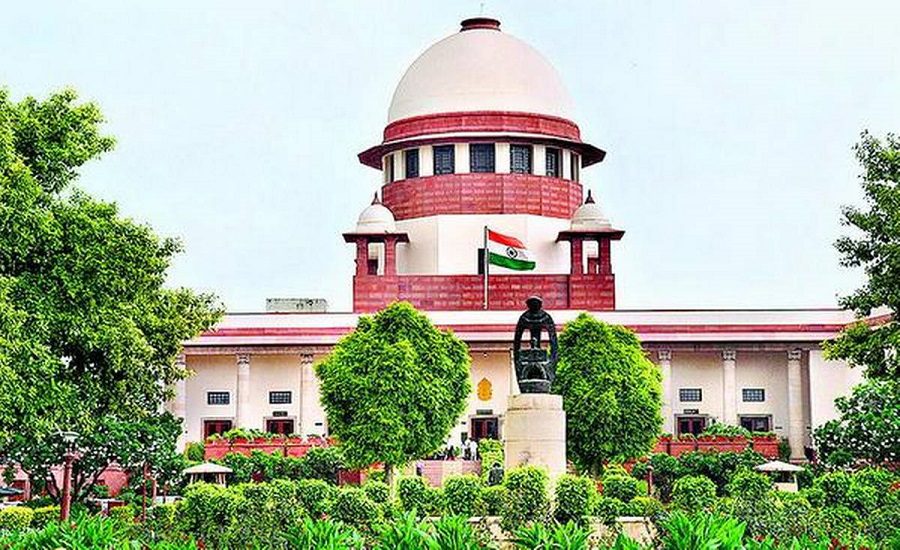
New Delhi: In a significant judgment, the supreme court ruled that employees of the Indian Railways hold a civil post under the Central Government and are entitled to receive service weightage benefits when they join another eligible government organization.
The ruling came from a Bench of Justice Dipankar Datta and Justice Satish Chandra Sharma, which set aside an earlier Kerala High Court Division Bench decision.
Background of Railway Employees Central Government Servants Ruling
The case involved a former Indian Railways employee who worked in the Railways for nearly 10 years before joining the Kerala State Electricity Board (KSEB) as a Sub-Engineer.
Read also: Indian Railways Hydrogen Train Project Explained: Route, Technology, Launch Timeline
Key facts:
- The employee joined Indian Railways in 1990.
- He later joined KSEB in 2001.
- Railways transferred the required pro-rata pension amount to KSEB.
- His previous railway service was initially counted for pay fixation and benefits.
- In 2012, KSEB withdrew those benefits and ordered recovery of the amount paid, claiming railway service was not Central Government service.
The dispute eventually reached the Supreme Court.
What Did The Supreme Court Say?
The Supreme Court clearly stated that railway employees remain Central Government servants even though they are governed by separate Railway Service Rules.
According to the Court:
- Indian Railways is owned and controlled by the Central Government.
- Railway servants hold civil posts connected with the affairs of the Union.
- Separate service rules do not change their status as Central Government employees.
- Railway service must be treated as Central Government service for relevant benefits.
The Court observed that many government departments have separate service rules for administrative convenience, but that does not change the constitutional status of employees.
Constitutional Basis Of The Railway Employees Central Government Servants Ruling
The Supreme Court relied on several constitutional and legal provisions:
Article 309
Rules governing both Central Civil Services and Railway Services are framed under Article 309 of the Constitution.
Article 311
Railway employees enjoy protections available to members of the civil service of the Union.
Railways Act, 1989
The Court noted that:
- A Government Railway is owned by the Central Government.
- Railway servants work under the authority of the Union Government.
Why The Kerala High Court Decision Was Rejected
The Kerala High Court Division Bench had held that Railway employees were not covered by the Central Civil Services (Conduct) Rules, 1964 and CCS (CCA) Rules, 1965.
Based on this reasoning, the High Court concluded that Railway service could not be counted as Central Government service.
The Supreme Court disagreed and called this reasoning legally incorrect because separate service rules do not remove an employee’s status as a Central Government servant.
Impact Of Railway Employees Central Government Servants Ruling
The judgment is expected to benefit thousands of current and former railway employees across India.
Possible benefits include:
- Recognition of previous Railway service for pay fixation.
- Service weightage in eligible organizations.
- Protection of pension-related benefits.
- Stronger legal recognition of Railway employees as Central Government servants.
- Better clarity in future service disputes.
Supreme Court’s Key Observation
The Court emphasized that a railway servant does not stop being a member of the Union civil service merely because Railway-specific rules govern service conditions.
It further clarified that the Railway Board functions as part of the Government of India for railway administration and therefore service under Railways is fundamentally service under the Central Government.