https://indianmasterminds.com

ADVERTISEMENT
ADVERTISEMENT

Why The Supreme Court Closed The Landmark Legislative Privilege Case Without A Final Ruling

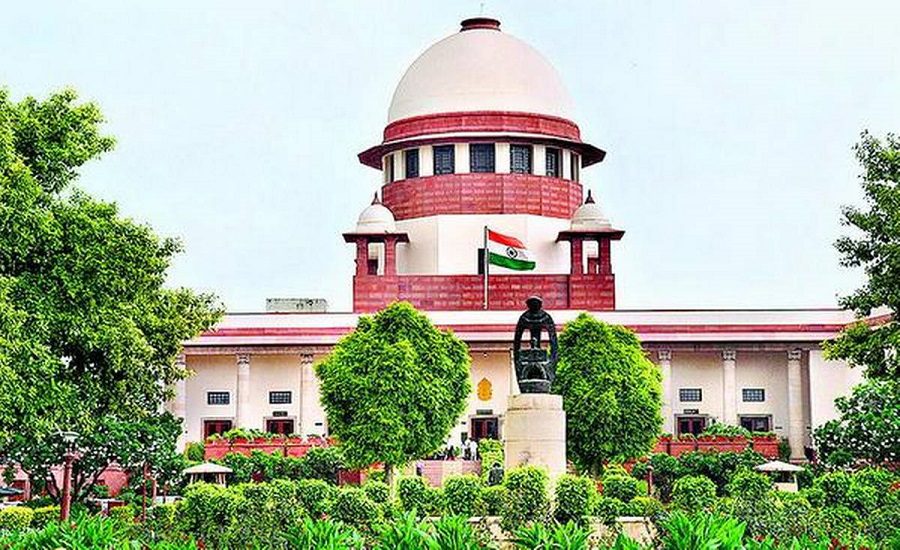
The Supreme Court has closed the long-pending Constitution Bench reference on legislative privilege and free speech after finding that the Tamil Nadu Assembly had withdrawn the 2003 resolution that triggered the dispute.
Tamil Nadu Legislative Assembly 2004 Resolution Issue
Indian Masterminds Stories

New Delhi: The seven-judge Constitution Bench held that the petitions were now infructuous because the Tamil Nadu Assembly had already withdrawn the resolution that led to the case. However, the Court clarified that the larger constitutional questions regarding legislative privilege and freedom of speech remain open for future cases.

Details of Tamil Nadu Legislative Assembly 2004 Resolution Case 

The case began in 2003 when the Tamil Nadu Legislative Assembly initiated privilege proceedings against five journalists of The Hindu.

Read also: Why Did The Supreme Court Refuse The Centre’s Plea In The Great Nicobar Project Case?

The Assembly accused the journalists of breaching legislative privilege through an editorial that criticized the then State government led by Chief Minister J. Jayalalithaa.

The Assembly sentenced Editor N. Ravi, Executive Editor Malini Parthasarathy, Publisher S. Rangarajan, Bureau Chief V. Jayanth and Special Correspondent Radha Venkatesan to 15 days of simple imprisonment. The journalists challenged the decision before the Supreme Court, which stayed their arrest in November 2003.

Why Was The Matter Referred To A Constitution Bench

In December 2003, the Supreme Court observed that the dispute raised important constitutional questions. The key issue was the relationship between:

Legislative Privilege

Legislative privilege refers to the special powers and protections given to Parliament and State Legislatures under the Constitution.

Freedom Of Speech

The case also involved Article 19(1)(a), which guarantees freedom of speech and expression to citizens.

Constitutional Conflict

The Court had to examine how legislative privileges under Article 194 interact with fundamental rights, including free speech and personal liberty. Because of the importance of these issues, the matter was first referred to a five-judge Constitution Bench and later to a seven-judge Constitution Bench for an authoritative ruling.

Tamil Nadu Legislative Assembly 2004 Resolution Issue: What Happened During The Latest Hearing

The seven-judge Constitution Bench was headed by Chief Justice of India Surya Kant. The Bench also included Justices Aravind Kumar, Prashant Kumar Mishra, Joymalya Bagchi, Vipul M. Pancholi, Shree Chandrashekhar and V. Mohana.

During the hearing, the Court was informed that the Tamil Nadu Legislative Assembly had already withdrawn the original 2003 resolution through another resolution passed on July 30, 2004. As a result, the Court concluded that the dispute no longer required adjudication.

Supreme Court’s Observation

The Court noted that the 2004 resolution effectively recalled the 2003 action taken against the journalists. Therefore, the petitions no longer survived for consideration. The Bench stated that the petitions had become infructuous and were liable to be disposed of. However, the Court also clarified that the larger legal questions concerning legislative privileges and free speech were not being decided and may be examined in future appropriate proceedings.

Read also: Form 6 Row: Supreme Court to Hear PIL Against CEC Gyanesh Kumar on October 27; ECI, Centre Put on Notice

FAQs

What Was The Main Issue In The Case?

The case involved the relationship between legislative privileges under Article 194 and the fundamental right to freedom of speech and expression under Article 19(1)(a).

Why Did The Supreme Court Close The Legislative Privilege Case?

The Supreme Court closed the case because the Tamil Nadu Legislative Assembly had already withdrawn the 2003 resolution that formed the basis of the dispute through a 2004 resolution.

Did The Supreme Court Decide The Larger Constitutional Questions?

No. The Court specifically kept the larger legal questions open and said they can be examined in future appropriate proceedings.
Indian Masterminds Stories
Join our WhatsApp Channel
ADVERTISEMENT
ADVERTISEMENT
Related Stories
ADVERTISEMENT
ADVERTISEMENT
NEWS
Tamil Nadu Legislative Assembly 2004 Resolution Issue
Why The Supreme Court Closed The Landmark Legislative Privilege Case Without A Final Ruling
BHAVYA-Scheme
Chhattisgarh’s 406-Acre Industrial Push: Nava Raipur Park Moves Under BHAVYA
Allahabad High Court Advocate Pending Disciplinary Inquiry Ruling
2022 HC Pay Order: Allahabad High Court Holds 4 Senior UP IAS Officers Liable for Contempt Over Pay and Pension
ECI Form 8 Rejection
‘What Is The Purpose Of SIR If Citizens Are Removed?’ Bombay High Court Questions ECI Over Form 8 Rejections 
Air Marshal Ashutosh Dixit
Who Is Air Marshal Ashutosh Dixit? Hero of Operation Sindoor Named As New IAF Chief
Bank Fixed Deposit Interest Rule
Delhi HC Clarifies Rules On Fixed Deposit Interest In Landmark Banking Judgment
DRDO Advanced High-Altitude Parachute
India Achieves Major Defence Milestone As DRDO Conducts AHAP Live Jump Trial At 16,000 Feet In Ladakh
M
Trainee IPS Uday Krishna Reddy Gets Bail After 67 Days in Custody - How Sexual Harassment Case Unfolded
ADVERTISEMENT
ADVERTISEMENT
Videos
Keshav kumar
From Police Officer to Forensic Pioneer: How Dr Keshav Kumar Made Science a Weapon Against Crime
ChatGPT Image Aug 20, 2026, 05_46_21 PM
How IPS Officer Keshav Kumar Used Forensics to Crack Gujarat’s Lion Poaching Case
Shakeel Ahmad Ganie IRS Interview
‘My Path Has Not Been Straight’: Shakeel Ahmad Ganie’s Journey to the IRS
ADVERTISEMENT
UPSC Stories
Aayush Sharma
Three CDS Attempts, Five AFCAT Qualifications & Medical Setback: How Aayush Sharma Secured CAPF AIR 135
After three unsuccessful SSB attempts, five AFCAT qualifications and a medical setback, Aayush Sharma...
Tushar Chaudhary IRMS
He Left Intel, Built COPAL-19, Spent Months at AIIMS, Ran Half Marathons, and Returned to UPSC—Tushar Chaudhary’s Journey to IRMS
UPSC ESE AIR 4 Tushar Chaudhary left a ₹25 LPA Intel job, built COPAL-19, spent months at AIIMS, ran...
Mayank Sachan UPSC CAPF
15+ Exam Failures, 15 Years in the Navy: How Mayank Sachan Secured AIR 343 in UPSC CAPF
Former Indian Navy sailor Mayank Sachan secured AIR 343 in UPSC CAPF 2025 after 15+ exam failures, two...
CSR NEWS
BEL medical equipment
BEL Hands Over Advanced Medical Equipment to NIMHANS Bengaluru to Strengthen Mental Healthcare
The CSR initiative includes Deep TMS stimulators, TMS systems and EEG equipment to enhance diagnosis,...
POWERGRID Establishes Centre of Excellence at Punjab Engineering College, Chandigarh Under CSR Initiative
The ₹17.19-crore Centre of Excellence aims to strengthen research, innovation and industry-academia collaboration...
NALCO LVPEI Eye Care Centre
NALCO Foundation and LVPEI Sign Addendum to Operationalise Eye Care Centre in Odisha
The renewed agreement aims to make the Secondary Plus Eye Care Centre operational within the next few...
ADVERTISEMENT
ADVERTISEMENT
ADVERTISEMENT
Latest
Tamil Nadu Legislative Assembly 2004 Resolution Issue
Why The Supreme Court Closed The Landmark Legislative Privilege Case Without A Final Ruling
BHAVYA-Scheme
Chhattisgarh’s 406-Acre Industrial Push: Nava Raipur Park Moves Under BHAVYA
ADVERTISEMENT
ADVERTISEMENT
ADVERTISEMENT
ADVERTISEMENT
ADVERTISEMENT
ADVERTISEMENT
ADVERTISEMENT
Videos
Keshav kumar
ChatGPT Image Aug 20, 2026, 05_46_21 PM
Shakeel Ahmad Ganie IRS Interview
ADVERTISEMENT
ADVERTISEMENT