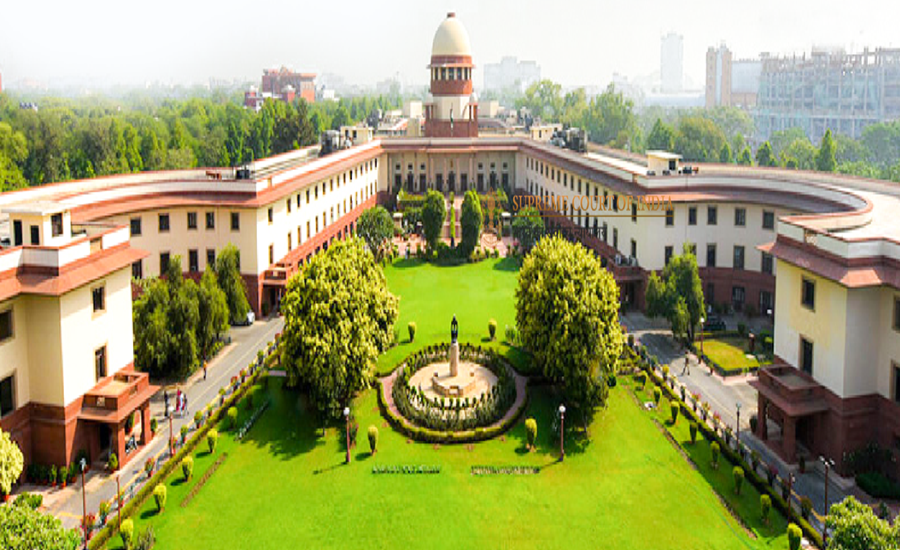
New Delhi: In an important interim order, the Supreme Court allowed provisional enrolment of affected candidates as advocates, subject to document verification and the final outcome of pending appeals. The Court said eligible candidates should not face unnecessary hardship while the legal dispute remains unresolved.
Details of Rule 5 Eligibility Dispute
The dispute relates to Rule 5 of the Bar Council of India Rules, which deals with eligibility requirements for admission into law courses and subsequent enrolment as advocates.
Read also: Supreme Court Seeks Urgent Assurance On Tribunal Appointments Amid Growing Vacancies
Several candidates completed their graduation through distance learning and later earned regular LL.B. degrees from recognized universities. However, their enrolment applications were rejected by State Bar Councils due to questions surrounding the validity of their pre-law educational qualifications.
One appellant had completed a B.Com degree through distance education before obtaining a regular LL.B. degree from a recognized institution. His enrolment application was rejected, and the decision was later upheld by the Telangana High Court.
The matter eventually reached the Supreme Court. According to reports of the proceedings, the issue centers on the interpretation of Rule 5 and eligibility requirements for enrollment.
Rule 5 Eligibility Dispute: Supreme Court Grants Interim Relief
The Supreme Court clarified that it has not yet decided the final legal issue regarding the interpretation of Rule 5. However, the Court observed that the candidates had successfully completed their three-year LL.B. courses through regular mode from recognized universities. The obstacle to their enrolment arose only because of questions relating to their earlier educational qualifications.
To prevent avoidable prejudice, the Court allowed provisional enrollment while keeping the final decision open.
Enrolment Subject To Final Verdict
The bench emphasized that provisional enrolment does not create any special rights in favour of the candidates. The Court stated that enrolment will remain subject to:
- Verification of educational documents
- Compliance with applicable requirements
- Final outcome of the pending civil appeals
- Future judicial determination on Rule 5 interpretation
This means the final legal position will be decided when the appeals are heard in detail.
Why The Judgment Matters
The order offers immediate relief to law graduates who have already completed recognized LL.B. degrees but were unable to begin their legal careers due to enrolment disputes.
Without interim protection, many candidates could have faced delays in entering the legal profession despite successfully completing their law education.
Protection Of Legal Rights
The Court’s approach attempts to balance two objectives:
- Protecting aspiring advocates from unnecessary delays.
- Preserving the authority of the final judicial decision.
This ensures that candidates are not permanently disadvantaged while the legal controversy remains pending.
Rule 5 Interpretation To Be Decided Later
The Supreme Court specifically noted that it has not expressed any final opinion on the merits of the dispute. The key question regarding the interpretation of Rule 5 and its application to candidates with distance education backgrounds will be examined during the final hearing.
The Court’s current order is only an interim arrangement aimed at preventing hardship to affected candidates.
Impact On The Legal Profession
The case could have broader implications for legal education and advocate enrollment across India.
A final ruling may clarify how educational qualifications obtained through distance learning should be treated for enrolment purposes and could affect future law graduates facing similar situations.
Legal experts are closely watching the matter because the decision may provide important guidance to State Bar Councils and law graduates nationwide.
Read also: Can The Army Deny Disability Pension? Supreme Court Gives A Clear Answer
FAQs
Their applications were rejected due to disputes concerning the validity of their pre-law educational qualifications and interpretation of Rule 5 of the Bar Council rules.
The Supreme Court allowed provisional enrolment of certain law graduates as advocates, subject to verification of documents and the final outcome of pending appeals.
No. The Supreme Court clarified that provisional enrolment remains subject to verification and the final judgment in the pending appeals.