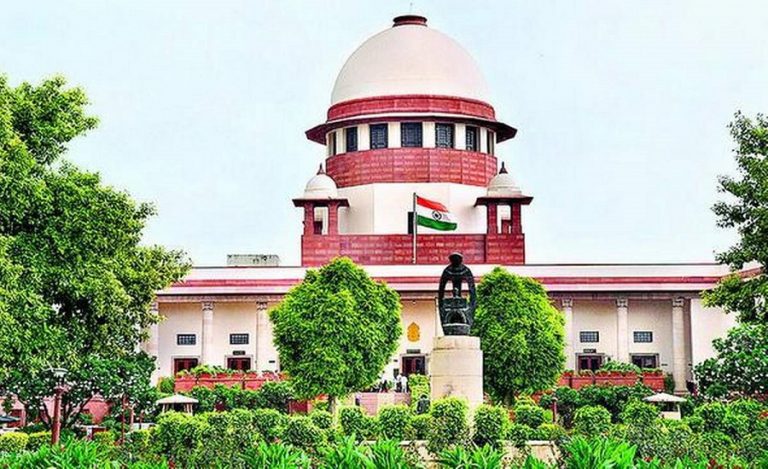
New Delhi: The missing child kidnapping presumption has now become a major focus in India after the Supreme Court issued strong directions to police and government agencies to fight child trafficking and improve the tracing of missing children.
The Court said every missing child case should immediately be treated as a possible kidnapping or abduction case so that investigations begin without delay.
Missing Child Cases Ruling: Supreme Court Raises Serious Concern
A bench of Justice Ahsanuddin Amanullah and Justice R Mahadevan expressed concern over the growing number of missing children in India.
Read also: What the Supreme Court’s Proposed SOP Means for Thousands of Missing Children Cases in India
According to the Court:
- Nearly 47,000 children are still untraced across the country.
- Thousands of new missing child cases are added every year.
- Many missing children become victims of interstate trafficking gangs.
- Delays in police response can destroy important evidence.
The Court warned that authorities cannot treat such cases casually and must act immediately.
Missing Child Cases Ruling: Supreme Court Directions To Police And Governments
The Supreme Court issued several important directions to improve investigation and rescue systems.
1. Missing Child Cases Must Be Treated As Kidnapping
The Court said police should proceed with the assumption that a missing child may have been kidnapped or trafficked.
This means:
- FIRs should be registered immediately.
- Police should not wait for 24 hours.
- Investigations must begin at once.
- Anti-trafficking laws should be considered from the beginning.
2. Stronger Coordination Between Agencies
The Court highlighted poor coordination between different databases and departments.
It directed the Ministry of Home Affairs to improve integration between:
- Police databases
- Crime and Criminal Tracking Network & Systems (CCTNS)
- Child protection systems
- Welfare authorities
- Missing child tracking portals
The goal is to allow real-time sharing of information across states.
3. Anti-Human Trafficking Units Must Become Fully Functional
The Court ordered states and union territories to strengthen Anti-Human Trafficking Units (AHTUs).
These units must:
- Have trained officers
- Work actively on trafficking cases
- Coordinate with local police stations
- Respond quickly in missing child complaints
4. Cases Must Stay Active Until Child Is Found
The Court said investigations should not remain active only “on paper.”
Authorities were told to continue real ground-level investigation until the missing child is traced.
Why Missing Child Cases Ruling Is Important
Child rights experts have long argued that many missing children are actually victims of trafficking, forced labour, illegal adoption, sexual exploitation, or organized crime.
The latest Supreme Court directions aim to:
- Speed up police action
- Prevent delays in FIR registration
- Improve interstate coordination
- Increase rescue rates
- Break trafficking networks
Legal observers say the ruling strengthens earlier Supreme Court positions that missing children cases should be treated seriously from the first moment.
Background Of Missing Child Cases Ruling
This is not the first time the Supreme Court has intervened on the issue.
In earlier rulings connected to child trafficking and missing children, the Court had already directed that:
- Every missing child complaint should lead to FIR registration.
- Police should presume kidnapping or trafficking until proven otherwise.
- States should create proper rescue and rehabilitation systems.
The latest directions expand and reinforce those safeguards.