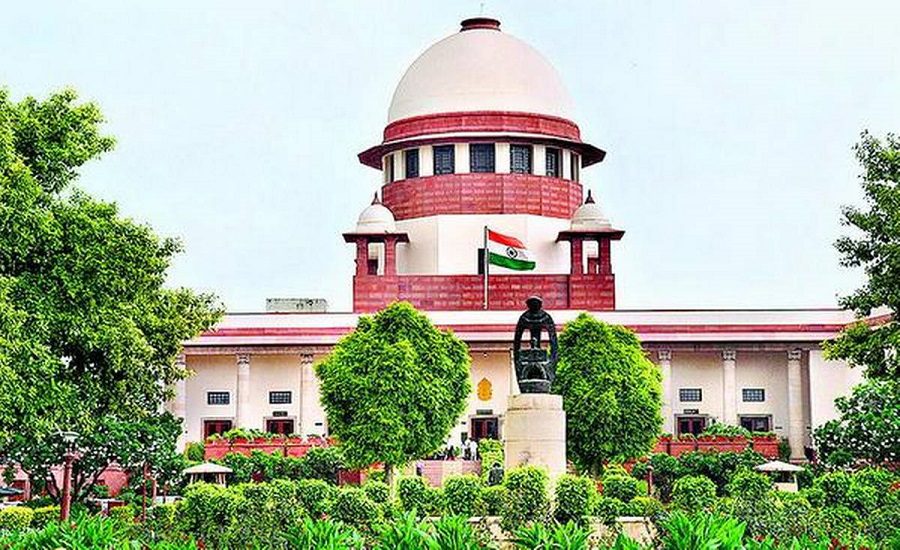
New Delhi: The Supreme Court wetland verification order has given all states and Union Territories a final two-month deadline to physically verify and demarcate every wetland listed in the Space Applications Centre (SAC) Wetland Atlas. The court said this process is necessary to protect India’s wetlands and ensure compliance with the Wetlands (Conservation and Management) Rules, 2017.
The order came while hearing a long-running public interest litigation on wetland conservation. The bench made it clear that satellite mapping alone is not enough and that physical verification on the ground is essential before wetlands receive full legal protection.
What is the Reasons of Supreme Court Wetland Verification Order
The case relates to wetlands identified by the Space Applications Centre (SAC) under the Indian Space Research Organisation (ISRO) Wetland Atlas. Earlier surveys showed that the number of wetlands larger than 2.25 hectares increased from 201,503 in earlier records to 231,195 in the 2021 SAC Atlas. Because of this increase, the court said every identified wetland must be physically verified before conservation measures are extended. The Supreme Court noted that many states have been slow in completing ground verification and boundary demarcation despite repeated directions.
Read also: Supreme Court Ends Long-Running Seniority Dispute of Uttarakhand Deputy Collectors
Two-Month Deadline for States and UTs
The court has now directed every state and Union Territory to complete:
- Physical verification (ground-truthing) of all identified wetlands.
- Boundary demarcation of wetlands.
- Submission of compliance reports before the court.
- Publication of wetland details on official government websites.
- Coordination with the Central Government for issuing wetland notifications.
The judges described this as the final two-month opportunity for authorities to complete the exercise.
Supreme Court Wetland Verification Order: Officials Warned of Personal Appearance
The Supreme Court warned that if states fail to complete the verification process, senior officials will have to personally appear before the court. According to the order, the Secretaries of the Ministry of Environment, Forest and Climate Change and the Vice-Chairpersons of the respective State Wetland Authorities may be asked to explain why action should not be taken for non-compliance. The bench also stated that any violation of its previous directions would be treated very seriously.
Court Says Satellite Images Alone Are Not Enough
The petitioners argued that although several states claimed compliance, many wetlands had only been identified using satellite imagery. They said physical inspection had not been carried out in many cases, defeating the purpose of proper ground verification before boundary demarcation. Accepting this concern, the Supreme Court said that ground-truthing and demarcation must happen on the field and not remain only on paper.
Supreme Court Wetland Verification Order: Previous Directions Repeated
The court recalled that it had already directed all states in December 2024 to complete the process within three months. These directions were repeated in August 2025, October 7, 2025, and October 28, 2025, but compliance remained incomplete in several states. The latest order is considered a stronger step to ensure nationwide implementation.
Supreme Court Wetland Verification Order: Funding Requests Rejected
During the hearing, the bench also considered applications seeking financial assistance for:
- Restoration of over 1,000 kunds in Vrindavan.
- A nationwide riverbank waste management project.
The court appreciated the objectives but refused to release public funds, saying such matters fall within the responsibility of statutory authorities and state governments.
What is the Importance of Wetlands
Wetlands are among India’s most valuable ecosystems. They help:
- Reduce floods.
- Recharge groundwater.
- Improve water quality.
- Support wildlife and biodiversity.
- Store carbon and fight climate change.
Experts say proper identification and legal protection of wetlands are critical for protecting natural water resources and ecological balance.
Read also: Supreme Court Clarifies Life Imprisonment Without Remission: Key Takeaways From The Verdict