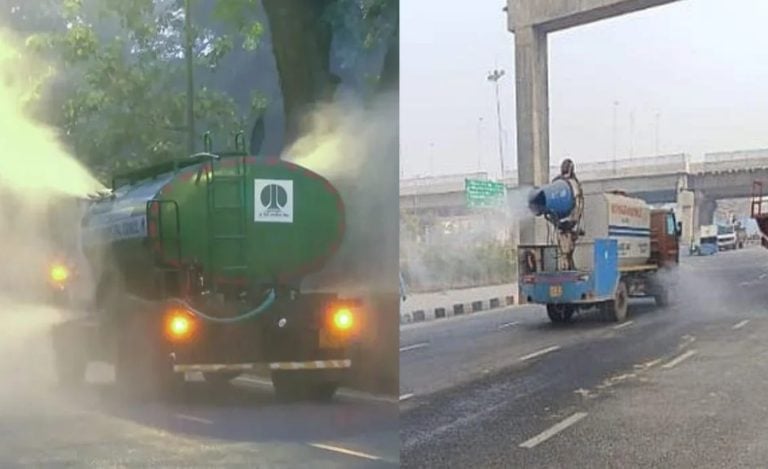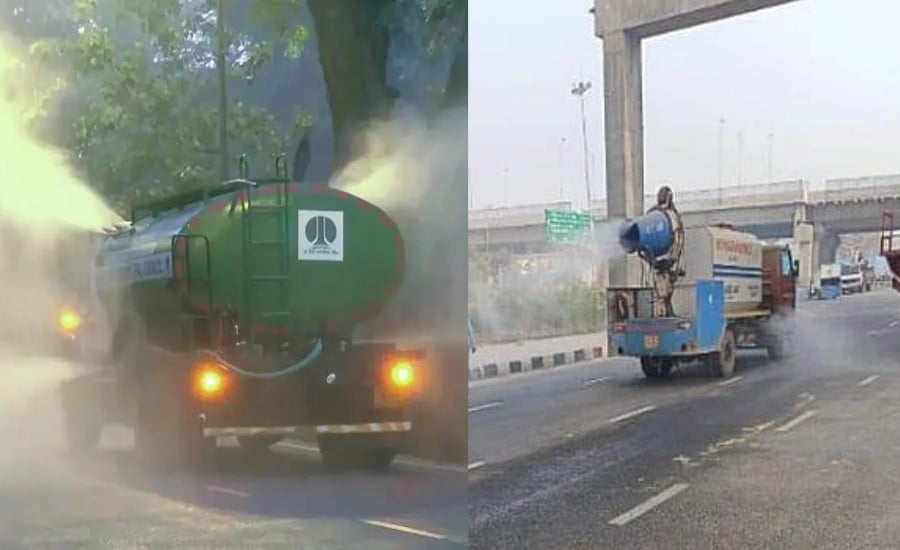
New Delhi: The National Highways Authority of India (NHAI) has stepped up measures to control dust pollution and ease traffic congestion across Delhi-NCR ahead of the winter season. The authority has deployed around 60 water sprinklers and tankers, 14 anti-smog guns, 23 mechanical road sweeping machines and more than 900 workers to reduce dust along national highways and expressways.
The measures were reviewed by Alok Deepankar, Member (Technical), NHAI, who directed field teams to ensure that equipment and personnel are deployed effectively and pollution-control activities are carried out regularly.
The initiative combines road-dust management, compliance monitoring, plantation and infrastructure development to address pollution sources associated with highway traffic and construction.
NHAI Steps Up Dust-Control Operations Across Highways
The authority has deployed machinery and personnel to strengthen dust suppression on highway stretches across the National Capital Region.
Read Also: NHAI’s Winter Pollution Plan: Emission Control Devices for 25 DG Sets
The measures include:
- Around 60 water sprinklers and tankers: To suppress dust along roads and highway stretches.
- 14 anti-smog guns: To support dust-control operations at identified locations.
- 23 mechanical road sweeping machines (MRSMs): To remove dust accumulated on road surfaces.
- Two tractor-mounted broomers: To assist with road cleaning.
- More than 900 workers: To support dust mitigation and related field operations.
Separately, 13 mechanical road sweeping machines are operating across 157 km of National Highway stretches within Delhi-NCR.
NHAI has directed its field teams to ensure regular water sprinkling, daily mechanical sweeping and the continued operation of anti-smog guns.
CAQM Norms and GRAP Measures Under Review
NHAI has instructed officials to follow the pollution-control norms prescribed by the Commission for Air Quality Management (CAQM) for Delhi-NCR.
The directions include:
- Covering construction materials to prevent dust from spreading.
- Maintaining dust-free road surfaces.
- Intensifying dust-control measures in accordance with the applicable stages of the Graded Response Action Plan (GRAP).
- Monitoring pollution-control activities on a daily basis.
- Submitting progress reports supported by geo-tagged photographs.
The monitoring mechanism is intended to improve accountability and help officials assess whether field-level measures are being implemented as directed.
NHAI Plants 9.80 Lakh Saplings in NCR
Alongside dust suppression, NHAI has undertaken plantation activities in the National Capital Region as part of its environmental initiatives.
During the financial year 2025-26, the authority planted approximately 9.80 lakh plants against a target of 9.52 lakh, exceeding its target. The reported survival rate was above 90%.
The authority has also reused inert material from Delhi’s landfill sites in highway infrastructure projects.
According to NHAI, approximately 13.58 lakh tonnes of inert material have been utilised in embankment construction for the Urban Extension Road-II (UER-II) and DND–Sohna corridors.
The initiative supports the reuse of suitable waste material in infrastructure development, reducing the need to dispose of it entirely through conventional landfill operations.
Highway Projects Aim to Reduce Traffic Congestion
The review also covered major road infrastructure projects intended to improve traffic movement across Delhi-NCR.
The projects discussed included:
- Urban Extension Road-II (UER-II)
- Dwarka Expressway
- DND–Sohna Expressway
- Delhi–Dehradun Expressway
These corridors are intended to improve connectivity and ease traffic movement. Reducing congestion can also help limit emissions associated with vehicles spending extended periods in slow-moving traffic.
NHAI emphasised the need to expedite proposed decongestion projects and address public complaints received through the Green Delhi app and social media platforms.
Focus on Cleaner Roads Ahead of Winter
Delhi-NCR typically faces heightened air-pollution challenges during the winter months. Dust from roads and construction activities, vehicular emissions and other sources contribute to the region’s air-quality concerns.
NHAI’s latest measures focus on reducing road dust, strengthening compliance with pollution-control norms and improving traffic movement along national highways.
The authority has directed its field teams to maintain regular operations and monitor implementation throughout the winter season.
Read Also: Delhi Winter Pollution Plan: No Fuel Without PUC, Vehicle Curbs and AI Monitoring from November 1