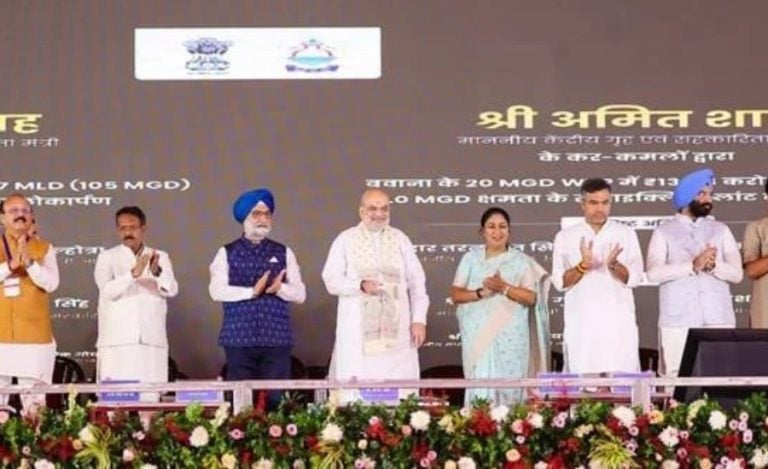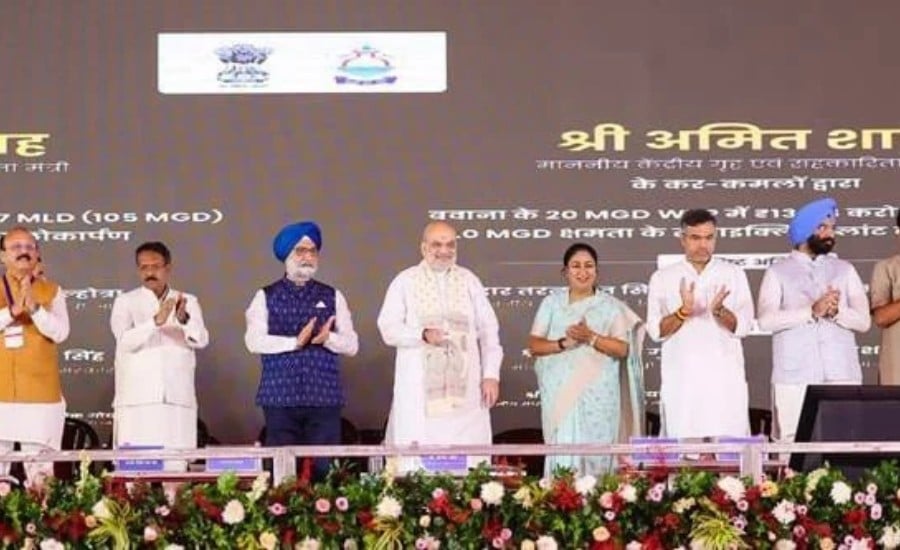
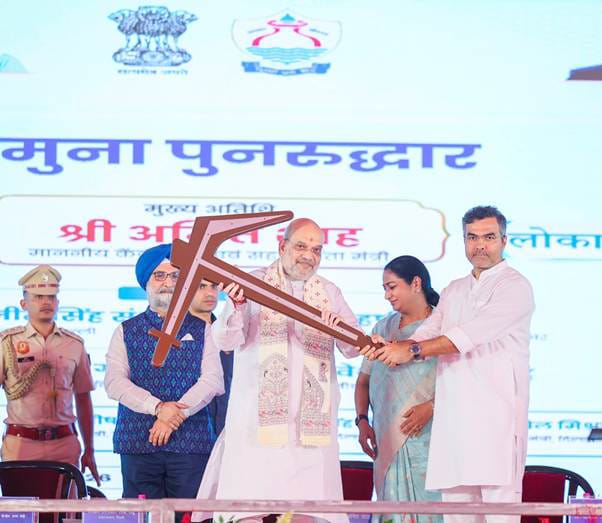
New Delhi: Union Home Minister and Minister of Cooperation Amit Shah on Thursday inaugurated and laid the foundation stone for 43 projects worth ₹8,941 crore aimed at rejuvenating the Yamuna in Delhi. The projects include upgrades to existing sewage treatment plants (STPs), new treatment facilities, sewer-line connections, sewer rehabilitation and drainage improvements.
Addressing the event, Shah said more than 40% of the work under the Yamuna-cleaning action plan had been completed since the government was formed in Delhi. He expressed confidence that the river would be cleaned by May 2029.
Delhi Lieutenant Governor Taranjit Singh Sandhu and Chief Minister Rekha Gupta were among the dignitaries present at the event.
43 Projects Planned to Improve Yamuna’s Water Quality
Shah said the projects were part of a coordinated effort by the governments at the Centre and in Delhi, Haryana and Uttar Pradesh to address pollution entering the Yamuna.
Read Also: Delhi Plans 52-Km Yamuna Riverfront on Sabarmati Model, Targets First Phase in Current Term
The ₹8,941-crore package comprises 10 inaugurated projects and 33 projects for which foundation stones were laid. According to Shah, the initiatives are intended to improve sewage treatment and prevent untreated wastewater from flowing into the river.
Key areas of work include:
- Sewage treatment: Upgrading existing STPs and setting up new treatment plants.
- Sewer connectivity: Connecting households to sewer networks to reduce the discharge of untreated wastewater.
- Sewer rehabilitation: Repairing and improving existing sewer infrastructure.
- Drainage improvements: Tapping drains and carrying out related works to control the flow of polluted water into the Yamuna.
- Pumping infrastructure: Establishing decentralised sewage treatment and pumping facilities.
Shah said the projects would help treat several lakh litres of wastewater before it enters the river.
Four-State Roadmap Targets Yamuna Cleanup by 2029
The Home Minister said the governments of Delhi, Haryana and Uttar Pradesh, along with the Centre, had prepared time-bound plans to tackle pollution affecting the Yamuna.
He attributed the river’s pollution to decades of untreated sewage discharge and other waste entering the waterway. Shah also alleged that dairy operations had been discharging around 2,000 tonnes of cow dung into the Yamuna daily.
The planned interventions aim to address pollution sources across state boundaries rather than limiting action to Delhi.
Shah said the objective was to clean the river by 2029, adding that the government was pursuing the target as part of Prime Minister Narendra Modi’s vision for the Yamuna.
Delhi’s Waste-Clearance Drive Removes 2.17 Crore Tonnes of Garbage
Shah also highlighted the Delhi government’s waste-management efforts, stating that the Rekha Gupta government, with support from the Centre, had cleared 2.17 crore metric tonnes of garbage and freed 100 acres of land from waste.
According to the Home Minister, the height of major landfill sites has also been reduced:
- Okhla landfill: Reduced by approximately 30–40 metres.
- Bhalswa landfill: Reduced by approximately 30–40 metres.
- Ghazipur landfill: Reduced by approximately 10–15 metres.
Shah said the government intended to develop gardens on the reclaimed landfill areas within two years.
He also referred to public-space development initiatives at Asita East, Bansera and Vasudev Ghat, saying the government was working to improve Delhi’s urban environment alongside river-cleaning efforts.
Three-Year Plan for Sewer Connections and Clean Drinking Water
Shah said the Delhi government had prepared a three-year action plan to provide sewerage connections to every household in the city.
The initiative is intended to ensure that wastewater is carried through sewer networks rather than discharged untreated into drains and the Yamuna. He also said the government aimed to ensure access to clean drinking water for every household.
The sewerage programme is expected to complement the new and upgraded treatment infrastructure by improving the collection and treatment of wastewater before discharge.
Amit Shah Attacks Opposition Over EVMs and Vote-Theft Allegations
Beyond the environmental projects, Shah criticised opposition parties over their allegations of electoral irregularities, including claims of vote theft and concerns about electronic voting machines (EVMs).
He accused opposition parties of questioning the Election Commission and voter lists when they lose elections, while accepting the same institutions when they win. He cited elections in several states to argue that the opposition was applying different standards depending on the results.
Shah also alleged that opposition parties were raising the issue of vote theft to protect votes cast by infiltrators. These remarks were part of his political address at the event.
He further criticised opposition protests in Delhi, arguing that political parties should focus on addressing public grievances and delivering results rather than relying on demonstrations.
Shah Targets Punjab Government Over Drug Trade
Shah also attacked the Punjab government over the drug trade, claiming that the issue had worsened under its leadership. He said his party would work to end the drug trade in Punjab by 2029.
He also criticised the political activities of opposition leaders in Punjab, arguing that governments should be judged by their performance and ability to address public concerns.
Read Also: Delhi’s ₹924 Crore Yamuna Clean-Up Push: Two New Sewage Plants Get Approval