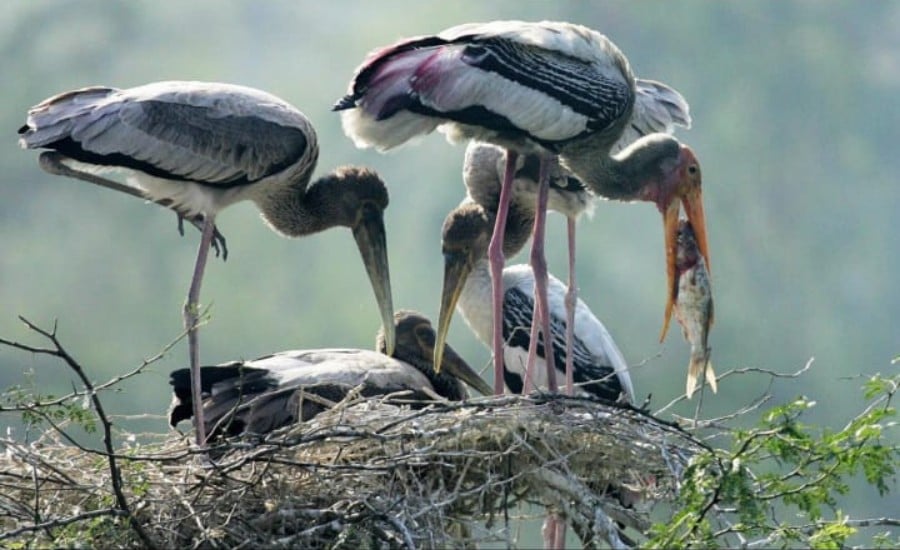
New Delhi: More than 300 Painted Storks have begun nesting at the National Zoological Park (NZP) in New Delhi, highlighting the ecological importance of its wetland and tree habitats.
The development was recorded during the zoo’s 13th Sunday Bird Walk and third Butterfly and Dragonfly Walk, organised to encourage public participation in biodiversity documentation and wildlife conservation.
44 Bird Species Recorded During Nature Walk
The morning walks brought together birdwatchers, students, wildlife photographers, nature enthusiasts and other citizens interested in biodiversity.
Read Also: Baby Gibbon, Broken Canopy, and the Woman Rewriting India’s Conservation Story
A total of 16 participants took part in the activities, documenting:
- 44 bird species
- More than 700 individual birds
- Four butterfly species
- One dragonfly species
- One damselfly species
The walks were conducted under the guidance of bird and butterfly-and-dragonfly experts and supported by zoo officials and volunteers.
The relatively low number of butterflies and dragonflies observed was attributed to intermittent rainfall in the area.
Painted Storks Arrive and Begin Nesting
A major highlight of the bird walk was the presence of more than 300 Painted Storks, which arrived at the zoo in the second week of August and have since started nesting on trees around the pond.
According to the National Zoological Park, their arrival and nesting offer an opportunity for visitors, volunteers, interns and citizen scientists to observe bird behaviour and breeding ecology.
The activity also underscores the importance of the zoo’s wetland and tree habitats in supporting bird populations.
Nature Walks Promote Citizen Science
The programme is part of NZP’s continuing efforts to involve citizens in biodiversity monitoring and species documentation.
Experts highlighted the ecological importance of birds, butterflies and dragonflies as:
- Pollinators
- Natural pest controllers
- Indicators of ecosystem health
Participants also gained practical experience in species identification and field observation while contributing to biodiversity records.
NZP Encourages Public Participation
National Zoological Park Director Dr Sanjeet Kumar said such nature walks help participants develop field-identification skills, understand ecological relationships and contribute to biodiversity documentation.
The programme concluded with an interactive discussion and participant feedback session.
Participation in each Sunday Nature Walk is limited to 20–25 people, with prior registration required on a first-come, first-served basis.
Next Bird and Insect Walks on September 20
The next activities at the National Zoological Park are scheduled for September 20, 2026.
The programme will include the third Sunday Insect and Spider Walk along with the 14th Sunday Bird Walk, continuing the zoo’s citizen-engagement initiative around biodiversity and wildlife observation.
Read Also: Palamau Tiger Reserve Launches AI Lab to Equip Rural Youth With Digital and Entrepreneurial Skills