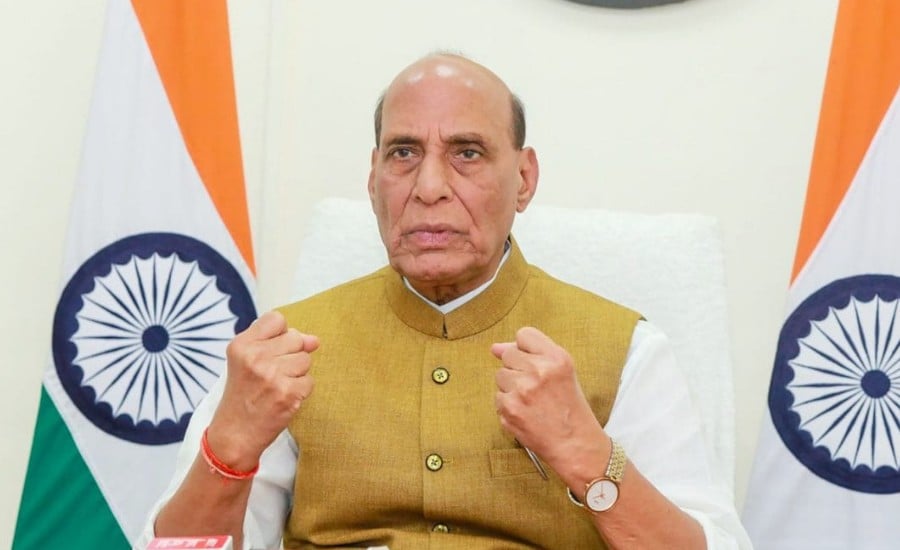
New Delhi: The Department of Defence Production under the Ministry of Defence has introduced a set of reforms to simplify India’s Defence Export Standard Operating Procedure (SOP) and Open General Export Licence (OGEL) framework under the guidance of Defence Minister Rajnath Singh.
The reforms are aimed at reducing procedural requirements for exporters, enabling faster access to international markets and helping Indian defence companies respond more efficiently to global business opportunities, while retaining safeguards for national security.
Defence Export SOP Simplified
Under the revised Defence Export SOP, stakeholder consultation requirements have been reduced for certain categories of exports.
The key changes include:
- Stakeholder consultation has been dispensed with for exports of non-lethal defence items to most destinations, while safeguards remain for sensitive countries.
- Consultation has also been dispensed with for exports of all items for international tenders and exhibitions, allowing companies to pursue such opportunities more quickly.
OGEL Framework Gets Wider Coverage
The Open General Export Licence (OGEL) is a standing, one-time export authorisation that allows eligible exporters to self-generate authorisations for multiple consignments of specified defence items.
The revised framework consolidates and expands the existing system.
Key changes include:
- Three existing OGEL SOPs covering major platforms and equipment, parts and components, and intra-company technology transfers have been consolidated into a single SOP.
- OGEL validity has been increased from two years to three years.
- OGEL coverage has been expanded from 41 countries to all countries, except negative or sensitive nations and countries subject to UN Security Council sanctions or arms embargoes.
- Indian companies with long-term contracts or agreements with Foreign Original Equipment Manufacturers (FOEMs) can obtain OGEL for eligible items and the specific FOEM, subject to prescribed conditions.
- The validity of such OGELs can be aligned with the underlying contract or agreement.
- The range of items eligible under OGEL has been expanded.
- The revised framework permits civil-end-use exports of specified parts and components of small-calibre arms and protective equipment, subject to applicable conditions.
Reforms Aim to Reduce Repetitive Authorisations
The OGEL system allows eligible exporters to handle multiple consignments under a single standing authorisation instead of seeking a separate authorisation for each consignment.
By consolidating the existing SOPs and extending OGEL validity, the reforms reduce the frequency of renewals and other repetitive procedural requirements.
The government said the changes are expected to benefit Indian defence manufacturers, including micro, small and medium enterprises (MSMEs), by helping them respond more quickly to international tenders and exhibitions and access a wider range of global markets.
National Security Safeguards Retained
While the reforms focus on facilitating defence exports, the revised framework continues to retain safeguards for sensitive items, technologies and destinations.
Exports involving sensitive countries, restricted destinations and countries facing UN Security Council sanctions or arms embargoes remain subject to the applicable controls.
India’s Defence Export Push
The reforms come as India’s defence manufacturing and exports reach record levels.
According to the Ministry of Defence:
- Defence production: ₹1.78 lakh crore in FY 2025-26
- Defence exports: ₹38,424 crore in FY 2025-26
The Department of Defence Production said the simplified export framework is intended to strengthen India’s defence manufacturing and export ecosystem and support the country’s emergence as a global defence manufacturing and export partner.
Read Also: Rajnath Singh Highlights Territorial Army’s Role in Security, Disaster Relief and Nation Building