Patna: The Bihar government is accelerating plans for a proposed Son-Phalgu river link to improve water availability in the Gaya region while also pushing ahead with infrastructure for the Integrated Manufacturing Cluster (IMC) at Gaya’s Dobhi.
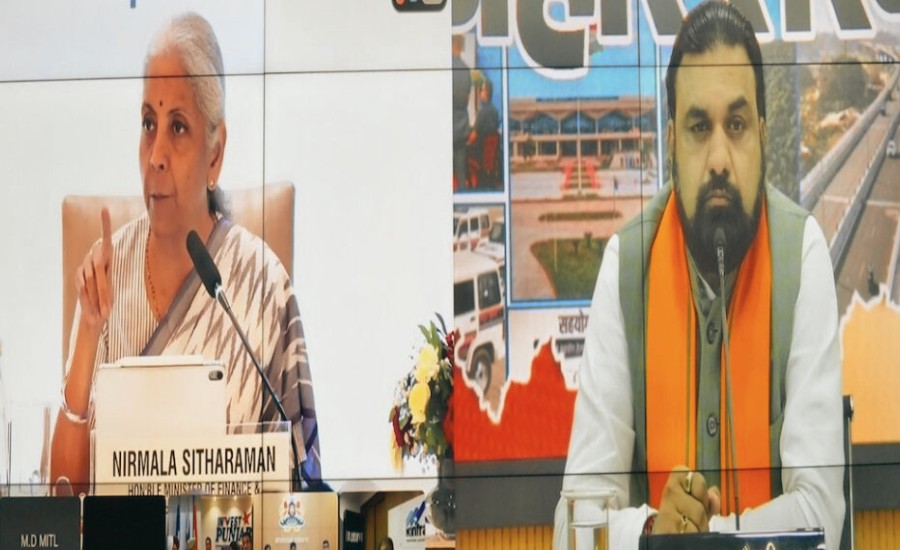
The projects were reviewed during the third meeting of the Apex Monitoring Authority of the National Industrial Corridor Development and Implementation Trust (NICDIT), chaired by Union Finance Minister Nirmala Sitharaman. Chief Minister Samrat Choudhary participated in the meeting through video conference.
The review covered industrial, infrastructure and tourism projects being developed across Bihar.
Son-Phalgu Link to Improve Water Availability
The state government is working on a plan to connect the Son and Phalgu rivers through a combination of pipeline and canal infrastructure.
The proposed link includes:
- Approximately 9 km of pipeline
- Around 22 km of canal
- Improved water availability in the Gaya region
- Infrastructure aimed at supporting the area’s long-term water requirements
Read Also: Bihar’s EV Push Accelerates: 129 Charging Stations Planned Across 23 Districts as Site Surveys Begin
The initiative is particularly significant for Gaya, where reliable water availability is important for both residential needs and upcoming industrial activity.
Gaya IMC Infrastructure to Be Fast-Tracked
The government also reviewed the progress of the Integrated Manufacturing Cluster at Gaya, being developed under the Amritsar-Kolkata Industrial Corridor.
The state has directed officials to expedite the land-related process for the project, with the relevant report expected within a week. It has also set a target for completing essential road and water-supply infrastructure in the project area before next year.
The IMC is planned at Dobhi in Gaya district and is expected to create a major manufacturing base capable of attracting investment and generating employment.
Earlier planning documents have identified the proposed cluster as a large industrial development spanning around 1,670 acres, with the potential to attract significant private investment.
Infrastructure planned for the Gaya IMC includes:
- Road connectivity within the industrial area
- Reliable water supply
- Supporting utility infrastructure
- Land and site development
- Facilities required for incoming industrial units
The state’s push for water infrastructure is particularly relevant because the cluster’s industrial operations will require a dependable water source. The Bihar Cabinet had earlier approved a reservoir project for the IMC, with an initial water requirement estimated at 8.5 million litres per day and potential demand rising to 19 million litres per day.
Darbhanga and Muzaffarpur Projects Reviewed
The meeting also reviewed projects proposed in Darbhanga and Muzaffarpur under the Bhavya scheme.
The state government said the processes related to these projects are being expedited, with a target of completing the relevant work within a month.
The move forms part of the government’s broader effort to speed up implementation of infrastructure and development projects across Bihar.
Vishnupad and Bodh Gaya Corridors Also on Agenda
Tourism infrastructure also featured in the review, particularly projects linked to the Vishnupad Temple and Bodh Gaya corridor.
The state is seeking to improve connectivity and visitor infrastructure around these major religious and tourism destinations, which are important to Gaya’s economy.
The development of the Vishnupad and Bodh Gaya corridors is expected to strengthen the city’s tourism infrastructure while complementing improvements being planned for water supply and industrial connectivity.
Focus on Investment, Employment and Regional Growth
The simultaneous push for water infrastructure, industrial development and tourism connectivity is aimed at creating stronger foundations for economic activity in the region.
The Gaya IMC, in particular, is being positioned as an industrial growth centre under the Amritsar-Kolkata Industrial Corridor, while the Son-Phalgu link and supporting water infrastructure are expected to address a key requirement for both communities and future industrial activity.
The Bihar government has indicated that faster implementation of these projects will help attract investment, create employment and support wider regional development.