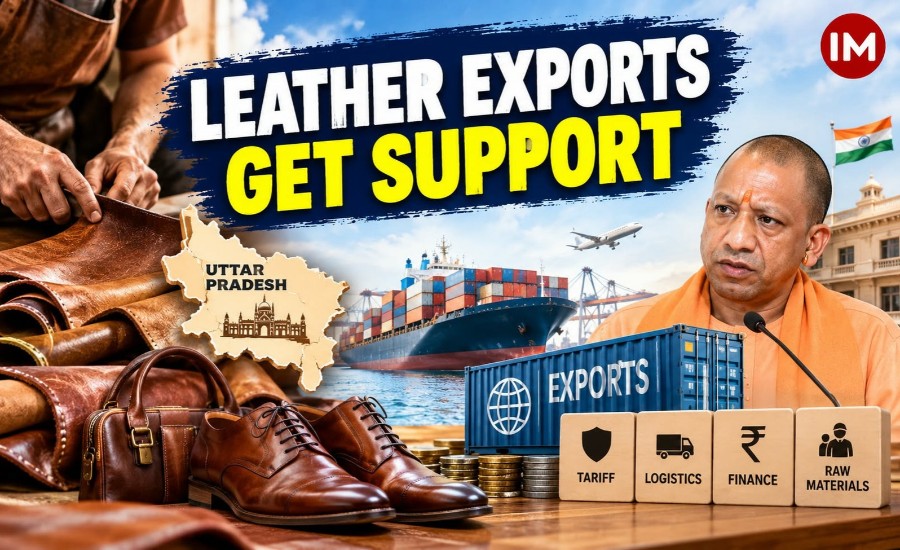
Lucknow: The Uttar Pradesh government is reviewing measures to support the state’s leather and footwear industry as exporters face tariff pressures, logistics disruptions and other challenges linked to the ongoing situation in West Asia.
Uttar Pradesh accounts for nearly 46 per cent of India’s total leather exports and around 30 per cent of the country’s raw leather production, according to the state government’s Leather & Footwear Policy 2025. The sector provides employment to more than one million people in the state.
The Uttar Pradesh State Transformation Commission (STC) recently held discussions with leather manufacturers and exporters to assess the issues affecting the sector. STC Chief Executive Officer Manoj Kumar Singh said the concerns raised during the discussions would be taken up with the departments concerned for appropriate action.
Industry Seeks Support on Raw Materials, Logistics and Finance
The issues raised by industry representatives include availability of raw materials, skilled manpower, logistics, financial assistance, skill development, marketing and policy-related concerns.
Read Also: UP Rolls Out Leather and Footwear Policy With Investment Incentives and Industry Support
The concerns come amid wider pressure on India’s leather and footwear exports. India’s leather and footwear exports declined from $4.82 billion in 2024-25 to $4.75 billion in 2025-26, according to the latest report.
Kanpur and Agra Remain Key Leather Hubs
The Kanpur-Unnao region has around 200 leather tanneries, while Agra is a major centre for leather footwear manufacturing and exports. The state’s Leather & Footwear Policy 2025 identifies Agra as the “Footwear Capital of India”, while Kanpur has a major presence in leather accessories, safety footwear and saddlery.
The policy provides several incentives for eligible investments, including land-cost grants, capital subsidies, stamp-duty exemptions, employment and training support, power-tariff subsidies and assistance for research and innovation. It also provides for support for leather parks, clusters, MSMEs and export-oriented units.
Exporters Look to Market Diversification and Trade Agreements
The industry has also pointed to the role of Free Trade Agreements (FTAs) in improving market access. Puran Dawar, an Agra-based leather exporter, said FTAs could improve competitiveness but argued that factors such as quality, traceability, sustainability, social compliance and delivery performance would also influence export orders.
The Centre has separately taken measures to address export risks arising from West Asia-related maritime disruptions. On October 2, the Department of Commerce extended timelines under the RELIEF (Resilience & Logistics Intervention for Export Facilitation) intervention, which provides support for eligible exporters obtaining ECGC cover for shipments to specified regions.
In July, Commerce and Industry Minister Piyush Goyal had also called on the leather and footwear industry to target at least $15 billion in exports over the next five to six years, with market diversification, FTAs, quality, design, branding and sustainability among the areas highlighted.
Read Also: UP Reviews IT, Electronics Policies as State Pushes Technology-Led Growth