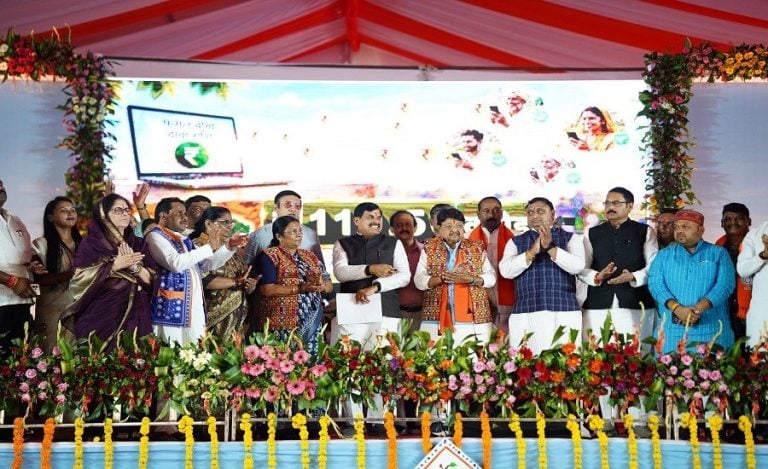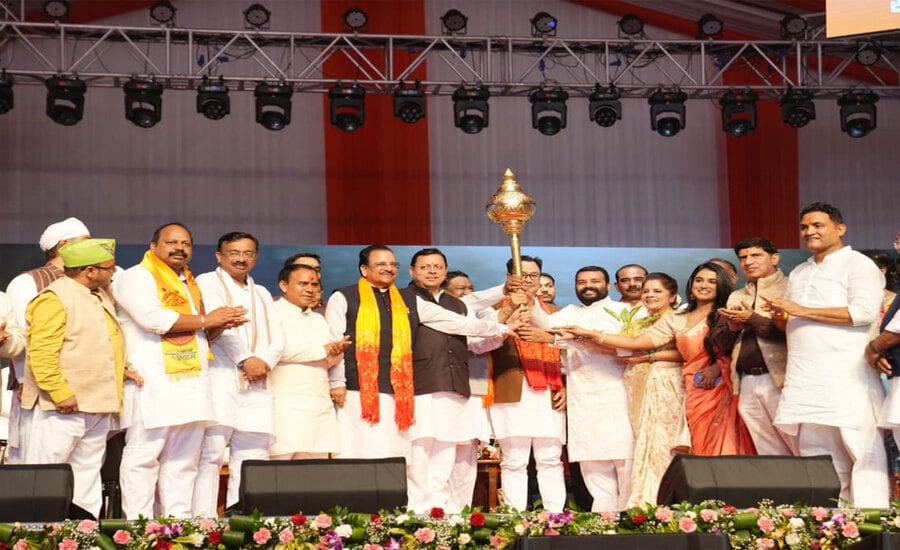
KHATIMA: Tribal art, traditions, handicrafts and cuisine took centre stage in Khatima as Uttarakhand Chief Minister Pushkar Singh Dhami, along with Union Tribal Affairs Minister Jual Oram and Union Minister Kiren Rijiju, inaugurated the three-day Uttarakhand Aadi Rangotsav on Sunday, October 4.
Organised by the State Tribal Research Institute at the Naveen Mandi complex, the festival is being held from October 4 to 6 and has brought together tribal artists, artisans and producers from more than 15 states.
The event provides a common platform for showcasing India’s diverse tribal folk traditions, traditional attire, music and dance, handicrafts, indigenous products and cuisine.
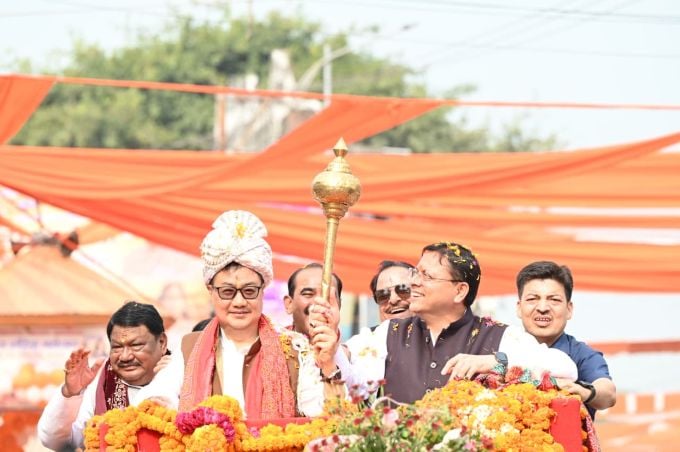
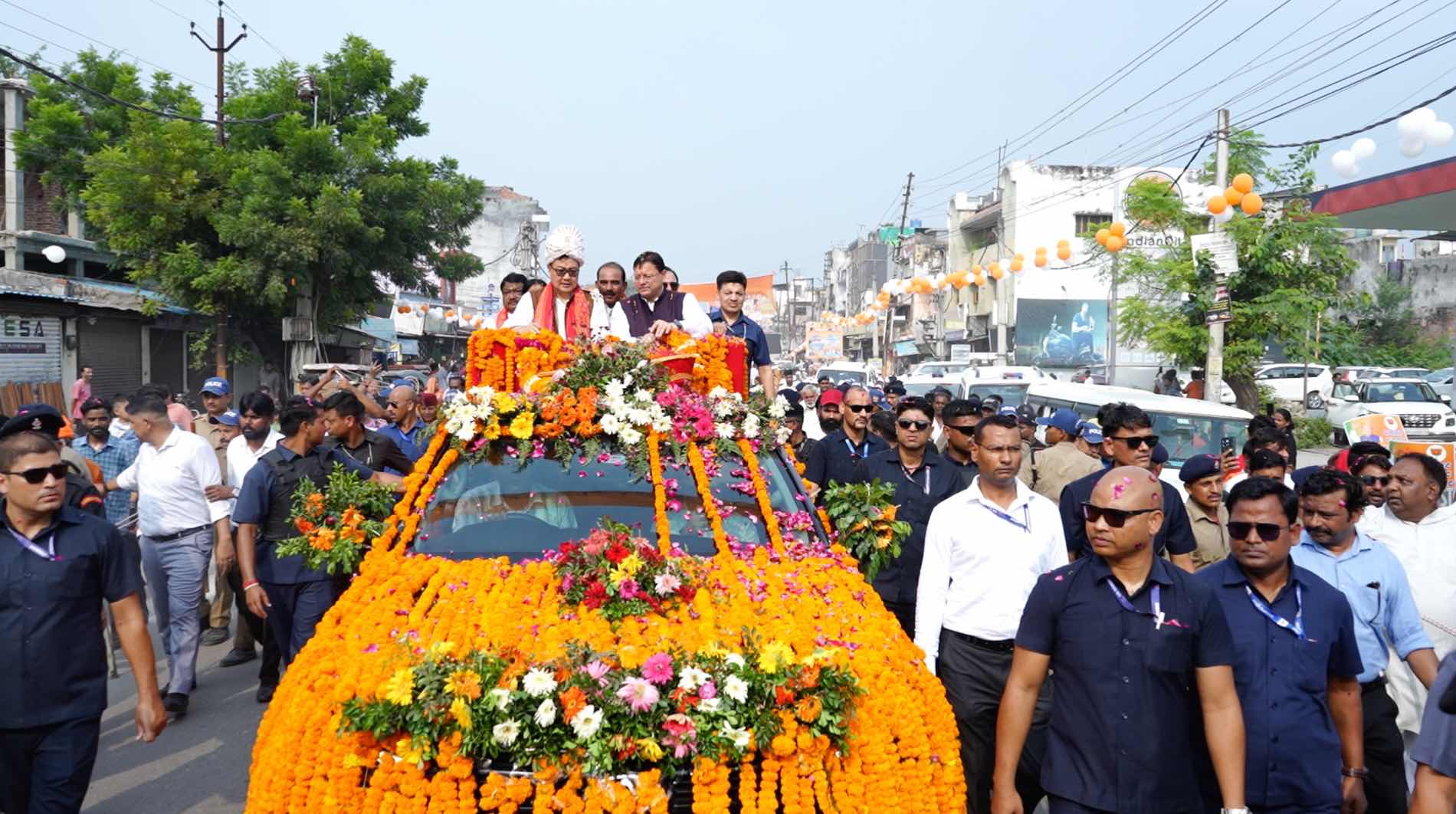
Before the inauguration, Dhami, Oram and Rijiju participated in a roadshow in Khatima, where large crowds of local residents and members of tribal communities gathered along the route.
Tribal Culture and Heritage on One Platform
The Aadi Rangotsav brings together cultural traditions from different parts of the country, with tribal communities displaying their distinctive art forms, handicrafts and traditional products.
The festival also highlights Uttarakhand’s own tribal heritage, including the Tharu, Bhotia, Jaunsari, Bhoksa and Raji communities.
Read Also: Uttarakhand CM Reiterates Development Push, Says Champawat to Become Model District
Traditional performances and displays are accompanied by stalls featuring tribal products, providing artisans and producers an opportunity to showcase their work to a wider audience.
The festival has been positioned as both a cultural platform and a means of supporting the preservation of tribal heritage and creating opportunities for the economic promotion of traditional products.
Dhami Highlights Education, Employment and Self-Reliance
Speaking at the inauguration, Chief Minister Pushkar Singh Dhami said that tribal communities had received increased policy attention since 2014 under the leadership of Prime Minister Narendra Modi.
Dhami said the Centre and state governments were working towards connecting tribal communities with development through education, healthcare, employment and economic opportunities.
In Uttarakhand, he pointed to Eklavya Model Residential Schools as an important avenue for providing better educational opportunities to tribal children. He also referred to the upgradation of Ashram-style schools to the intermediate level.
Dhami requested the Union government to establish an Eklavya Model Residential School in the Pithoragarh region as well.
The Chief Minister also highlighted efforts to connect traditional tribal products with markets, promote small enterprises and strengthen women’s economic self-reliance.
₹10 Crore for Khatima Eklavya School
A key announcement at the event came from Union Tribal Affairs Minister Jual Oram, who announced ₹10 crore from the Central Government for expansion and infrastructure development at the Eklavya Model Residential School in Khatima.
The proposed expansion includes infrastructure improvements and a hostel component. According to reports from the event, ₹4 crore has been earmarked for the hostel, while the expanded school is expected eventually to accommodate 480 students — 240 boys and 240 girls.
Oram also referred to initiatives such as PM-JANMAN, the Dharti Aaba Abhiyan and the Eklavya Model Residential School network in the context of tribal welfare and education.
The Union Minister said that schemes worth more than ₹2 lakh crore were being implemented for tribal development and welfare under the Central Government.
Push for an Eklavya School in Pithoragarh
Alongside the Khatima school expansion, Dhami sought Central support for setting up another Eklavya Model Residential School in Pithoragarh.
The request is significant in the context of Uttarakhand’s geographically diverse tribal population, which includes communities living in the state’s Terai, mid-hill and Himalayan regions.
The Central Government’s focus on Eklavya schools is aimed at providing residential education facilities to tribal students, particularly in areas where access to quality schooling can be challenging. The Tribal Affairs Ministry had also included a visit to the Khatima Eklavya Model Residential School in Oram’s Uttarakhand programme ahead of the festival.
Birsa Munda and Tribal Recognition
Dhami also referred to the decision to observe the birth anniversary of tribal freedom fighter Bhagwan Birsa Munda as Janjatiya Gaurav Diwas.
He described the move as an important recognition of the history and contributions of tribal communities.
He also referred to President Droupadi Murmu’s position as the country’s highest constitutional office as a symbol of the participation and representation of tribal society.
These references formed part of the broader discussion at the festival around tribal identity, heritage and participation in India’s development process.
Rijiju Highlights Uttarakhand’s Tribal Diversity
Union Minister Kiren Rijiju also addressed the gathering and highlighted the tribal diversity of Uttarakhand.
He referred to communities including the Tharu, Bhoksa, Jaunsari and Raji and said the distinct identity of tribal communities had received greater recognition over the years.
Rijiju also praised the organisation of the festival and the participation of communities from across the country.
The event brought together cultural preservation and economic promotion, with tribal artists and artisans displaying traditional forms alongside products that can be taken to wider markets.
A Festival of Culture and Economic Opportunity
The Uttarakhand Aadi Rangotsav is more than a series of cultural performances. By bringing together artists, artisans and producers from different states, the event creates a platform where traditional knowledge, handicrafts and indigenous products can reach audiences beyond their communities.
For Uttarakhand, the festival also provides an opportunity to showcase the state’s own tribal traditions while placing them alongside the cultural heritage of tribal communities from across India.
With the three-day event continuing until October 6, Khatima has become a meeting point for tribal art, culture, traditional livelihoods and efforts aimed at education and economic empowerment.
Read Also: From Parks to Bus Stands: Uttarakhand’s Cities Get a New Development Push