Dehradun: Uttarakhand Chief Minister Pushkar Singh Dhami has increasingly taken a hands-on approach to disaster management, personally monitoring relief and rescue operations and taking quick decisions during emergencies in the disaster-prone Himalayan state.
From restoring the approach road of Nanda Ki Chowki Bridge in Dehradun within 12 hours to directly overseeing the rescue of 41 workers trapped inside the Silkyara Tunnel in Uttarkashi, Dhami has repeatedly taken charge during critical situations.
His approach has focused on rapid decision-making, coordination between multiple agencies and reaching affected areas to assess relief and rescue operations.
Nanda Ki Chowki Approach Road Restored Within 12 Hours
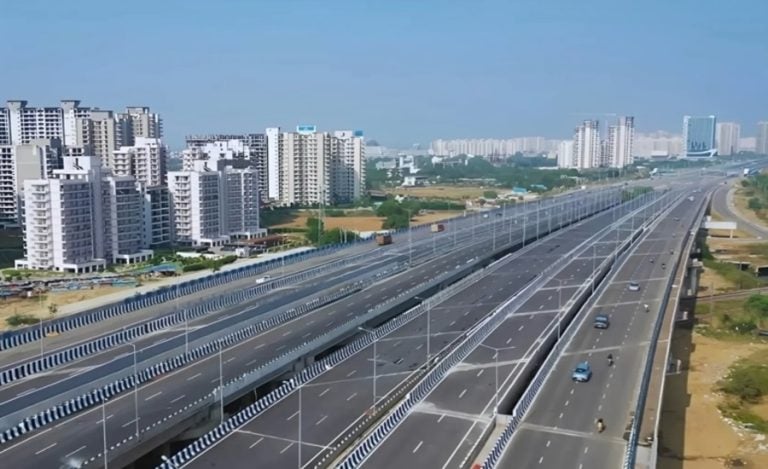
The latest example of the Chief Minister’s quick response came after heavy rainfall damaged the approach road of the Nanda Ki Chowki Bridge on the Dehradun-Ambala Highway.
After receiving information about the damage, CM Dhami directed senior Public Works Department (PWD) officials to reach the site and oversee immediate restoration work.
Despite continued rainfall, multiple agencies worked on a war footing to restore the damaged road.
The restoration operation involved:
- Public Works Department
- Irrigation Department
- District administration
- Other concerned agencies
The approach road was repaired within approximately 12 hours, allowing traffic to resume on the bridge.
The swift restoration highlighted the administration’s focus on ensuring connectivity and minimising disruption during extreme weather conditions.
Read also: Uttarakhand CM Pushkar Singh Dhami Calls for Stronger Single-Use Plastic Ban on Global Tiger Day
Silkyara Tunnel Rescue Became Major Test of Disaster Management
One of the biggest challenges faced by the Uttarakhand government came in November 2023, when 41 workers were trapped inside the Silkyara Tunnel in Uttarkashi.
CM Dhami personally monitored the rescue operation and remained closely involved throughout the 17-day rescue mission.
The operation required coordination between several agencies and organisations.
The rescue efforts involved coordination among:
- Prime Minister’s Office
- Central government agencies
- Indian Army
- National Disaster Response Force (NDRF)
- State Disaster Response Force (SDRF)
- Border Roads Organisation (BRO)
- Tunnel experts from India and abroad
After an intensive rescue operation, all 41 trapped workers were safely evacuated.
The rescue operation was later appreciated by the BRICS countries’ disaster management group as a best practice. The high-profile rescue has also reportedly inspired actor Aamir Khan and filmmaker Kabir Khan to announce a film based on the operation.
Dhami Monitored Dharali-Harsil Disaster Response
In 2025, when cloudburst and flash floods affected the Dharali-Harsil region of Uttarkashi, CM Dhami once again remained closely involved in the disaster response.
He continuously monitored the situation from the State Emergency Operation Centre and also conducted an aerial survey of affected areas despite challenging weather conditions.
The Chief Minister reviewed relief camps and regularly assessed the joint rescue and relief operations conducted by various agencies.
Agencies involved in the response included:
- Indian Army
- Indian Air Force
- Indo-Tibetan Border Police (ITBP)
- NDRF
- SDRF
The administration was directed to prioritise the safe evacuation of stranded people and ensure that essential facilities reached those affected by the disaster.
CM Active During Char Dham Yatra Emergencies
During the Char Dham Yatra, Uttarakhand frequently faces challenges such as landslides, heavy rainfall and road blockages.
CM Dhami has remained involved in monitoring such situations, particularly when routes leading to Kedarnath, Badrinath, Gangotri and Yamunotri are disrupted.
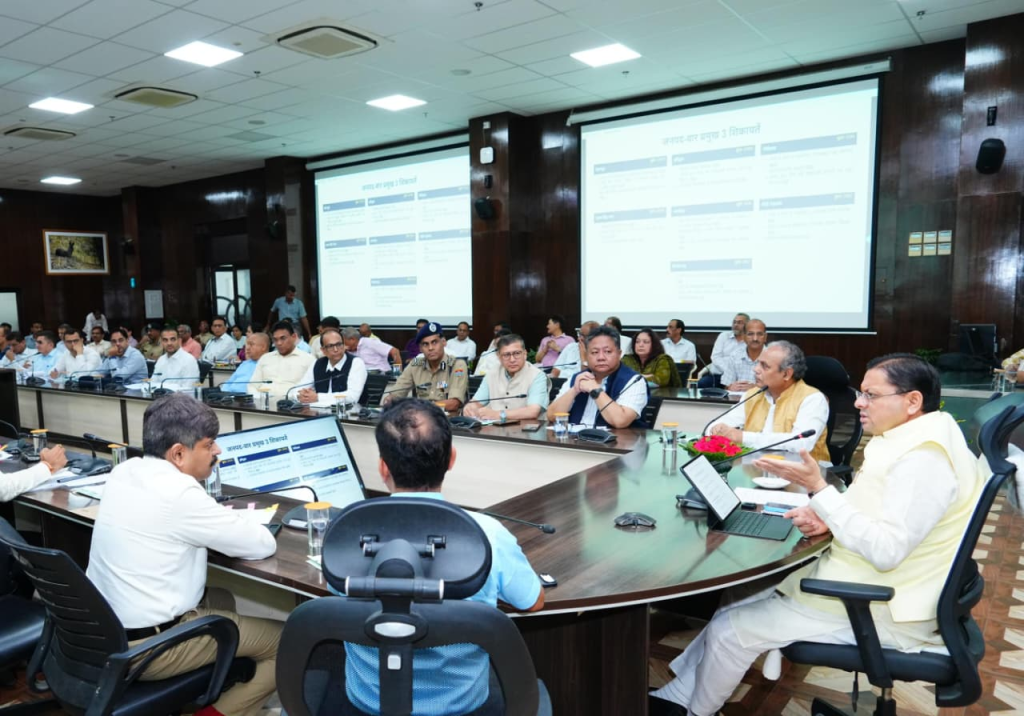
During road blockages and extreme weather events, the Chief Minister has reviewed relief operations from control rooms as well as affected locations.
The administration has been directed to focus on:
- Opening blocked roads at the earliest
- Arranging alternative routes
- Providing accommodation to stranded pilgrims
- Ensuring food and drinking water
- Providing medical assistance
- Maintaining regular communication with affected travellers
The focus has been on reducing inconvenience to pilgrims and ensuring their safety during adverse weather conditions.
Joshimath Land Subsidence Crisis Also Closely Monitored
The Joshimath land subsidence crisis was another major challenge where the Chief Minister visited affected areas multiple times.
During his visits, Dhami reviewed:
- Relief camp arrangements
- Rehabilitation plans
- Compensation distribution
- Support for affected families
- Ground-level disaster management measures
The government also continued to monitor the situation and assess the needs of people affected by the land subsidence.
CM Keeps Track of Monsoon Damage Across Uttarakhand
During the monsoon season, several districts of Uttarakhand face landslides, road damage and other weather-related emergencies.
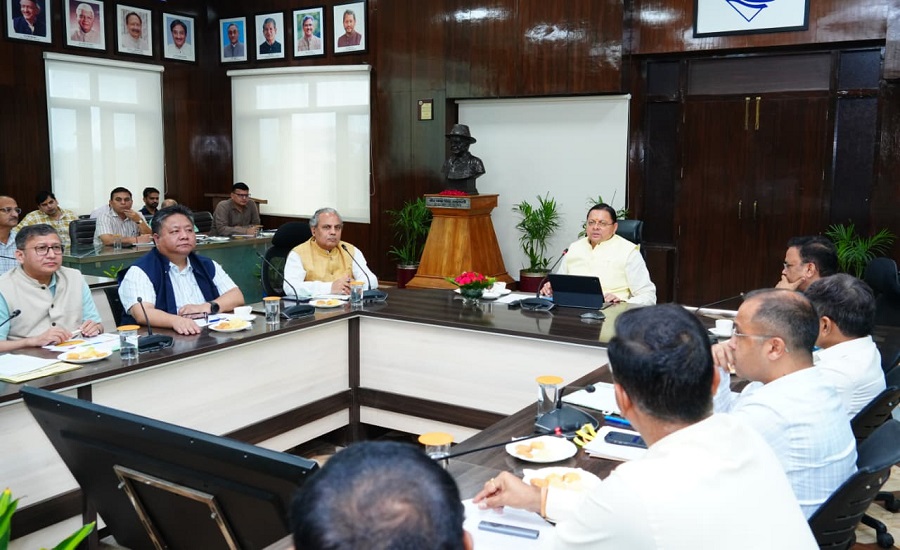
CM Dhami has remained connected with the State Disaster Management Control Room and regularly reviewed the situation in affected districts.
District administrations have been instructed to ensure quick response and immediate relief in areas affected by:
- Landslides
- Heavy rainfall
- Road damage
- Flash floods
- Other monsoon-related emergencies
The emphasis has been on ensuring that relief and rescue teams reach affected communities quickly and that essential services are restored at the earliest.
CM Dhami: Disaster Management Is a Commitment to Protect Lives
CM Pushkar Singh Dhami has emphasised that disaster management should not be viewed merely as an administrative responsibility but as a commitment to protecting people’s lives.
He said the government’s priority is to ensure that during any crisis, the administration reaches affected people at the earliest and that relief and rescue operations are carried out without any shortcomings.
The Chief Minister’s stated priorities include:
- Reaching affected people quickly during emergencies
- Ensuring effective relief and rescue operations
- Strengthening coordination among agencies
- Minimising loss of life and property
- Providing timely assistance to affected communities
Uttarakhand’s vulnerability to landslides, cloudbursts, flash floods and other natural disasters makes quick response and effective coordination critical.
From the Silkyara Tunnel rescue to the restoration of the Nanda Ki Chowki approach road, the administration has sought to highlight rapid response and direct monitoring as key components of its disaster management strategy.