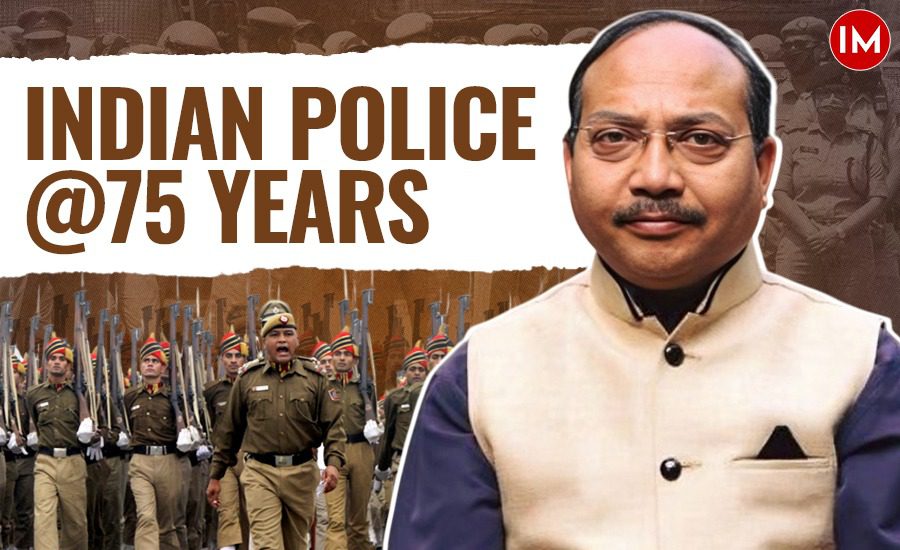
The Indian police force has completed 75 years since the nation’s independence, a journey marked by profound shifts, enduring challenges, and notable achievements. Its story is one of transformation—from a colonial instrument of control to a service-oriented institution in a democratic society.
The foundation of modern Indian policing was laid by the Indian Police Act of 1861, a response to the 1857 Rebellion. The British established a highly centralized, hierarchical, and militaristic force with a primary objective: to maintain order and suppress dissent to protect British colonial interests.
It was not a force for the people but a force of the state, often used to intimidate and oppress. Police officers were accountable to their British superiors, not to the public. This colonial legacy of an intimidating and authoritarian police force continues to influence public perception and the institution’s culture even today.
TRANSFORMATION
Post-independence, the Indian government inherited this colonial structure but with a new mandate. The new Indian Police Service (IPS) was created in 1948, replacing the Indian Imperial Police. The goal was to transform the police from a tool of repression into a guardian of a democratic society.
The focus shifted to maintaining law and order, preventing crime, and upholding the rule of law. However, despite these noble intentions, many of the colonial-era practices, laws, and the top-down structure of the force persisted, making the transition to a truly people-centric police system a long and arduous process. Indian police face a uniquely wide spectrum of threats: terrorism, insurgency, communal violence, large-scale protests, crime prevention and detection, and VIP security.
At three lakh personnel, the Indian police is the biggest contingent of cops in the world, at par with China. There are 152 policemen per one lakh population in India as compared to 240 in Britain and 250 in the United States of America.
This means overwork, slow investigations, delays, and limited ability for proactive policing. Richer countries with better systems can allocate more to oversight, crime prevention, technology, and community engagement—things that often get squeezed out here. Despite being under-resourced, police forces have shown remarkable resilience.
ACCOMPLISHMENTS
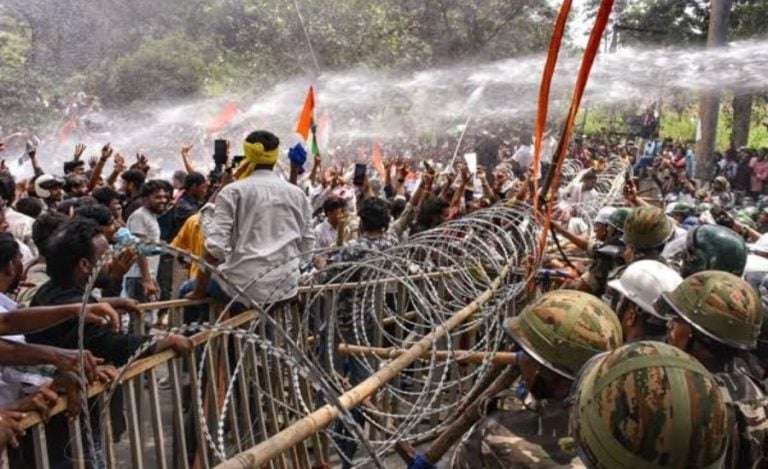
Over the last 75 years, the Indian police have been at the forefront of tackling complex internal security threats, including terrorism, insurgency, and left-wing extremism. Police forces have also demonstrated remarkable courage and resilience in managing communal clashes and large-scale public protests, often in the face of extreme pressure.
The bravery of individual officers in counter-terrorism operations and the day-to-day maintenance of law and order is undeniable, and many have been recognized with gallantry awards.
Who can forget Mumbai Police constable Tukaram Omble sacrificing his life to capture terrorist Ajmal Kasab alive? But the manner in which Mumbai police went about tackling the terror attack, with top brass falling like nine pins, demonstrated their poor training and lack of preparedness in dealing with such eventualities.
CHALLENGES
Political Interference remains one of the most significant impediments to police autonomy and professionalism. Frequent and arbitrary transfers, appointments based on political patronage rather than merit, and pressure to manipulate investigations undermine the integrity of the force.
The National Police Commission (1979) and the Prakash Singh v. Union of India (2006) Supreme Court judgment have repeatedly highlighted the need to insulate the police from political influence, yet the problem persists.
Outdated Laws: The Police Act of 1861 is still the foundational law for many state police forces. This anachronistic framework is ill-suited to address the complexities of modern society and crime. Besides the archaic laws, their faulty implementation is a bigger problem. Half the problems would be solved if the police started following the law in the letter and the spirit.
Though checks and balances are necessary in a democracy, the police need to have a little more say in prosecution in order to improve the rate of convictions. Creating an exclusive police force for specialised jobs like law & order, crime detection, and VIP security, too, might improve their efficiency and efficacy.
Poor Infrastructure: A lack of adequate funding for modern equipment, forensic labs, and training facilities further hampers their effectiveness. Most police stations still lack basic hygienic conditions, and police are always trying to play catch-up with the criminals in technological upgradation as well as modern weaponry.
Many police stations, especially in rural or remote areas, lack basic facilities: forensic tools, reliable transport, IT, or sufficient staff. Even where training exists, it often remains basic or outdated compared to global standards.
Public Trust Deficit: Due to its colonial past and instances of misconduct, including corruption, excessive force, and human rights violations like fake encounters and custodial deaths, the police face a significant lack of public trust. Visiting a police station is often described as the worst ordeal for a common citizen. Rebuilding this trust is a monumental task that requires systemic accountability, transparency, and a shift towards community-oriented policing.
Understaffing and Overburdening: With a police-to-population ratio far below the UN-recommended standard, the Indian police force is severely understaffed. This leads to long working hours, immense stress, and a compromise on the quality of investigations and service delivery. It is often said that an Indian cop works for eight to nine days a week, counting their lengthy working hours.
Political Interference: The most common request received by the three-tier government in India from the political class is the transfer of an ‘uncomfortable’ police officer from their jurisdiction or posting a ‘favourable’ officer in their area. Providing police officers with a fixed tenure at every level – of course, with exceptions for grave errors – could insulate them from such unnecessary meddling.
MODERNIZATION
In response to these challenges, the Indian government has initiated various modernization efforts. The Modernisation of Police Forces (MPF) scheme has aimed to upgrade weaponry, communication systems, and forensic capabilities. The concept of ‘SMART’ Policing (Strict and Sensitive, Modern and Mobile, Alert and Accountable, Reliable and Responsive, Tech-savvy and Trained) has also been promoted as a vision for the future.
The Crime and Criminal Tracking Network & Systems (CCTNS) is a landmark initiative to digitize records and connect police stations across the country, improving inter-state crime detection and investigation.
Looking ahead, the Indian police force faces an unprecedented paradigm shift with the rise of cybercrime, financial fraud, and artificial intelligence. These new-age threats require a complete overhaul of traditional policing methods.
NEW-AGE CRIMES
Criminals are increasingly sophisticated, using digital tools to perpetrate scams, hacks, and financial fraud on a massive scale. To counter this, the police need to invest heavily in cybersecurity training, build specialized cyber-forensic units, and establish a robust legal framework that can keep pace with technological advancements.
Initiatives like the Indian Cyber Crime Coordination Centre (I4C) and the ‘1930’ helpline are steps in the right direction, but they must be scaled up with a nationwide network of tech-savvy investigators.
Artificial Intelligence presents both a challenge and an opportunity. While it can be weaponized by criminals for more sophisticated attacks (e.g., creating deepfakes for fraud), it can also be a powerful tool for law enforcement. AI-powered analytics can help identify crime patterns, predict criminal activity, and aid in the analysis of vast amounts of data to solve complex cases.
The police must invest in AI-based surveillance systems, predictive policing models, and automated data analysis tools while also addressing the ethical concerns of privacy and bias inherent in such technologies.
FUTURE OF POLICING
The future of Indian policing lies in a commitment to deep-seated reforms. This includes replacing the outdated Police Act, ensuring fixed tenures for police leadership, separating law and order from criminal investigation, and establishing independent police complaints authorities.
By embracing technology, fostering a culture of accountability, and prioritizing public service, the Indian police can truly evolve from a force of the past into a guardian of the future. The next 25 years will determine whether this transformation from a colonial legacy to a people-centric, modern, and tech-savvy institution is fully realized.